.svg&w=384&q=75 "Pitchgist logo")
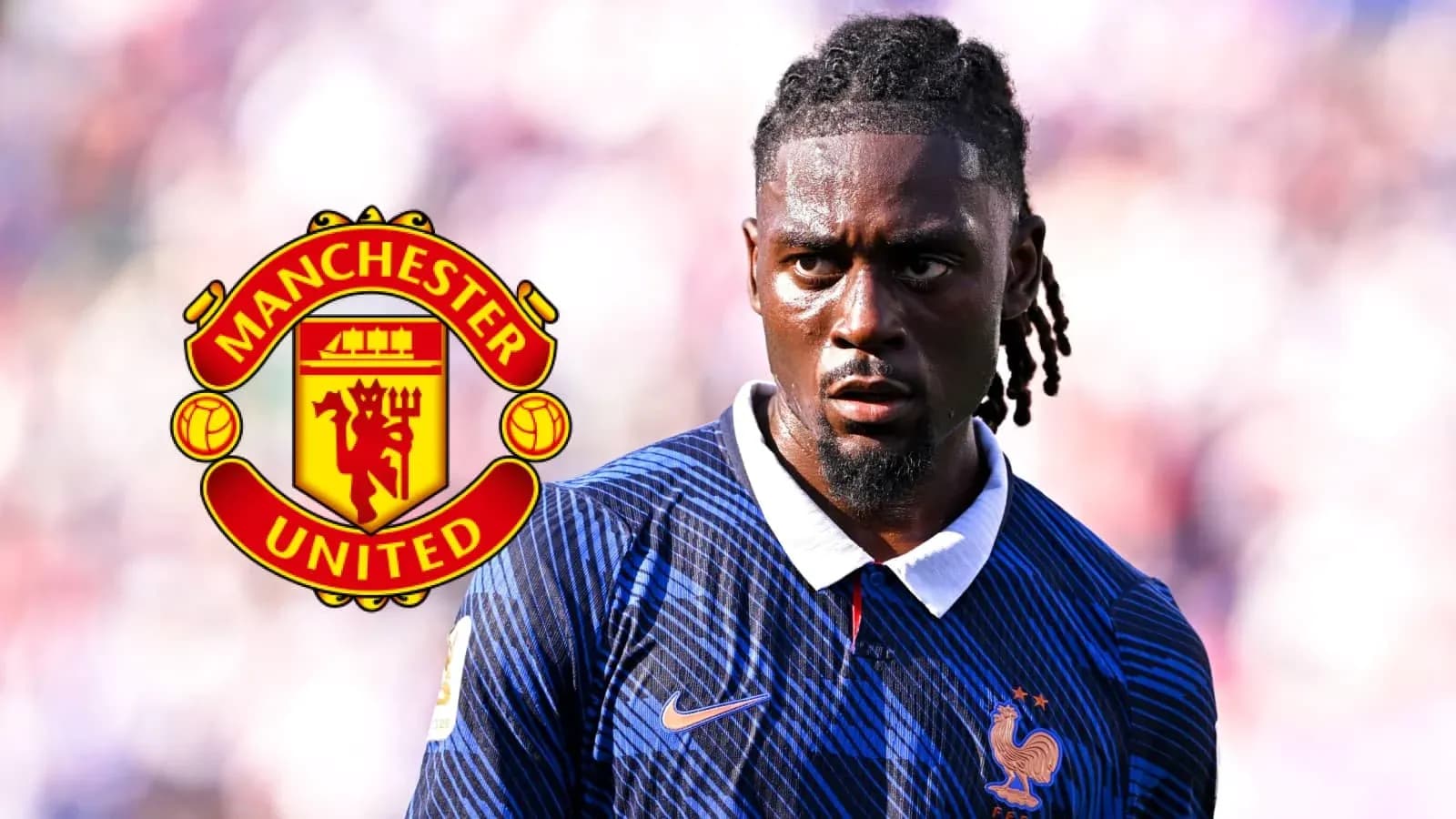
Manchester United's Midfield Dilemma: The Case for Manu Kone
Manchester United’s midfield rebuild has moved quickly, decisively, and with a clear plan. But there is still a hole at the heart of it – and if the answer to that problem is Manu Kone, then someone at Old Trafford has misread the brief.
Andrey Santos and Youri Tielemans bring energy and experience to a unit stripped of Casemiro and shorn of Manuel Ugarte through serious injury. Numerically, the balance is back. On paper, the options look deeper, more Premier League-ready.
The profile, though, is still wrong.
Carrick Needs a Carrick – Not a Runner
Michael Carrick’s team badly needs what Michael Carrick the player once gave Manchester United: a specialist presence in front of the back four. Not a destroyer in the Gattuso mould, not just a runner who can stick a foot in, but a metronome who lives in that space, reads danger, and runs the game from deep.
Carrick himself was never a blood-and-thunder tackler. He dictated, he intercepted, he positioned himself where the fires would start and quietly put them out. He was a defensive midfielder by role, not by stereotype.
That nuance matters when you look at Kone.
Kone has been one of France’s eye-catching performers at the World Cup, which can be a dangerous shop window. In his case, the tournament has largely confirmed what those who watched him in Germany and Italy already knew: he is a powerful, athletic central midfielder who loves to carry the ball and burst through lines.
He is not, by instinct, the man who sits still and guards the house.
A Box-to-Box Force, Not a Holding Screen
Now 25, Kone is entering his prime after three seasons in the Bundesliga with Borussia Monchengladbach and two in Serie A with Roma. Roma treat him as a cornerstone, one of the players they simply do not want to lose. When he arrived on deadline day in the summer of 2024, he changed the feel of their midfield almost overnight.
Not because he was racking up tackles in front of the centre-backs. Because he was rampaging.
Kone’s debut season in Serie A showcased his defining trait: ball-carrying. He drove up the pitch, shrugged off challenges, and dragged his team into advanced areas. He played more like a number eight than a number six, a midfielder who wanted to go through opponents rather than simply screen them.
The second season shifted the picture slightly. Gian Piero Gasperini arrived with his high-octane, man-to-man structure honed at Atalanta, and many assumed Kone would slot in seamlessly. The fit wasn’t that simple.
Gasperini used him differently. Kone often dropped into the defensive line during build-up, a hybrid role that asked him to start deeper and sacrifice some of his forward thrust. He still produced a strong campaign, but the fireworks were dimmer. The influence was there, just more muted, more subtle.
That’s the warning sign for United. You can park him as the deepest midfielder and he will cope. He’s too good not to. But you would be clipping his wings.
The data backs it up. Even in a season where he was encouraged to hold more than he roamed, Kone ranked in the 78th percentile among Serie A midfielders for the average distance of his progressive carries. When he’s allowed to go, he goes far.
United’s History of Miscasting Midfielders
United have been here before. The Fred–Scott McTominay partnership became a symbol of tactical compromise: two willing, industrious players asked to perform a role neither fully suited. The double pivot never quite knitted, and United’s midfield spent years lurching between gaps and firefighting.
Casemiro briefly steadied the chaos. For a time, he looked like the grown-up in the room. But he arrived at 30, not 25, and the club spent two seasons discovering what Real Madrid already knew – that version of Casemiro belonged to a previous cycle.
Ugarte was supposed to be the next solution, his outstanding Ligue 1 tackling numbers with PSG projected straight into United’s system. That translation never materialised.
Now come Santos and Tielemans, both signed with different responsibilities in mind. Neither is a pure holder. The temptation is obvious: drop Kone in as the single pivot, let Tielemans and Santos do the pretty stuff higher up, and tick the “defensive midfielder” box on the squad list.
On a whiteboard, it works. On the pitch, it wastes what Kone does best.
A Midfielder With Gaps – and a Price
Kone is not the finished article. If he is to convince fully as a box-to-box force, his shooting needs work. Four goals in 82 games for Roma is a stark return for a player who often drives into the final third. He reaches promising areas, then looks short on conviction.
Gasperini didn’t dodge the point. After Kone’s first goal of the 2025-26 season in December, the coach admitted that if his midfielder added regular goals, he would already be out of Roma’s reach. The numbers since then have done little to change the narrative: 22 more appearances for club and country, just one additional goal.
That lack of end product feeds a lazy perception: he doesn’t score, so he must be a defensive midfielder. It’s misleading. At his best, Kone is a central midfielder who can defend, not a specialist defender who occasionally steps out.
He also has work to do without the ball when his team are in possession. Too often last season he failed to slide into the right pockets to offer a passing angle, or he drifted into spaces that clogged up lanes for others. A lone six in the Premier League cannot afford to be loose in his positioning. That role demands constant awareness, constant availability.
Then there is the fee. In a market where Elliot Anderson, with fewer than 10 goal contributions last season, has just gone to Manchester City for £116m, and Tottenham have paid £85m for Mateus Fernandes, nothing feels cheap. Roma have already rejected an offer of around £38m from Inter and are expected to ask for £50m or more, a figure the World Cup will only inflate.
For that money, clubs need to be crystal clear about what they are buying.
How United Could Make It Work – and Who Else Might
There is a version of United where Kone makes sense. In a 4-2-3-1, he could sit alongside Tielemans or Santos in a genuine double pivot, not as the lone sentinel. One goes, one stays; then they switch. Simple on the training ground, harder in the chaos of a Premier League game, but essential if Kone is to thrive.
We have already seen the template with France at the World Cup. His partners have been Adrien Rabiot against Iraq, Paraguay and Morocco, and Aurelien Tchouameni against Norway and Spain. Both are comfortable holding when Kone surges. The same is true of Bryan Cristante at Roma, even if the Italian often took his own turns to push on in Serie A.
The blueprint is clear. If Tielemans roams, Kone anchors. When Kone drives, Tielemans drops. Equal responsibility, not one fixed sitter and one permanent adventurer.
If United cannot guarantee that balance, other clubs might suit him better.
At Arsenal, Martin Zubimendi offers a natural anchor, the kind of deep presence that allowed Declan Rice to step higher and show a fuller range of his game last season. Kone could benefit from a similar platform. Arsenal, though, appear more focused on Bruno Guimaraes.
Liverpool remain an intriguing option. They tracked Kone during his time in Germany and still need a long-term solution at the base of midfield. If Andoni Iraola leans towards a 4-2-3-1, Kone alongside someone like Ryan Gravenberch in a shared pivot would give Liverpool a physically dominant, mobile pair with licence to rotate roles.
Whoever wins the race will be getting a serious player. Kone has flaws, but he also has time – and the raw tools – to iron them out. The risk is not in signing him.
The risk is signing him, then asking him to be something he’s not.