.svg&w=384&q=75 "Pitchgist logo")
Mallorca vs Villarreal: Tactical Insights from 1-1 Draw in La Liga
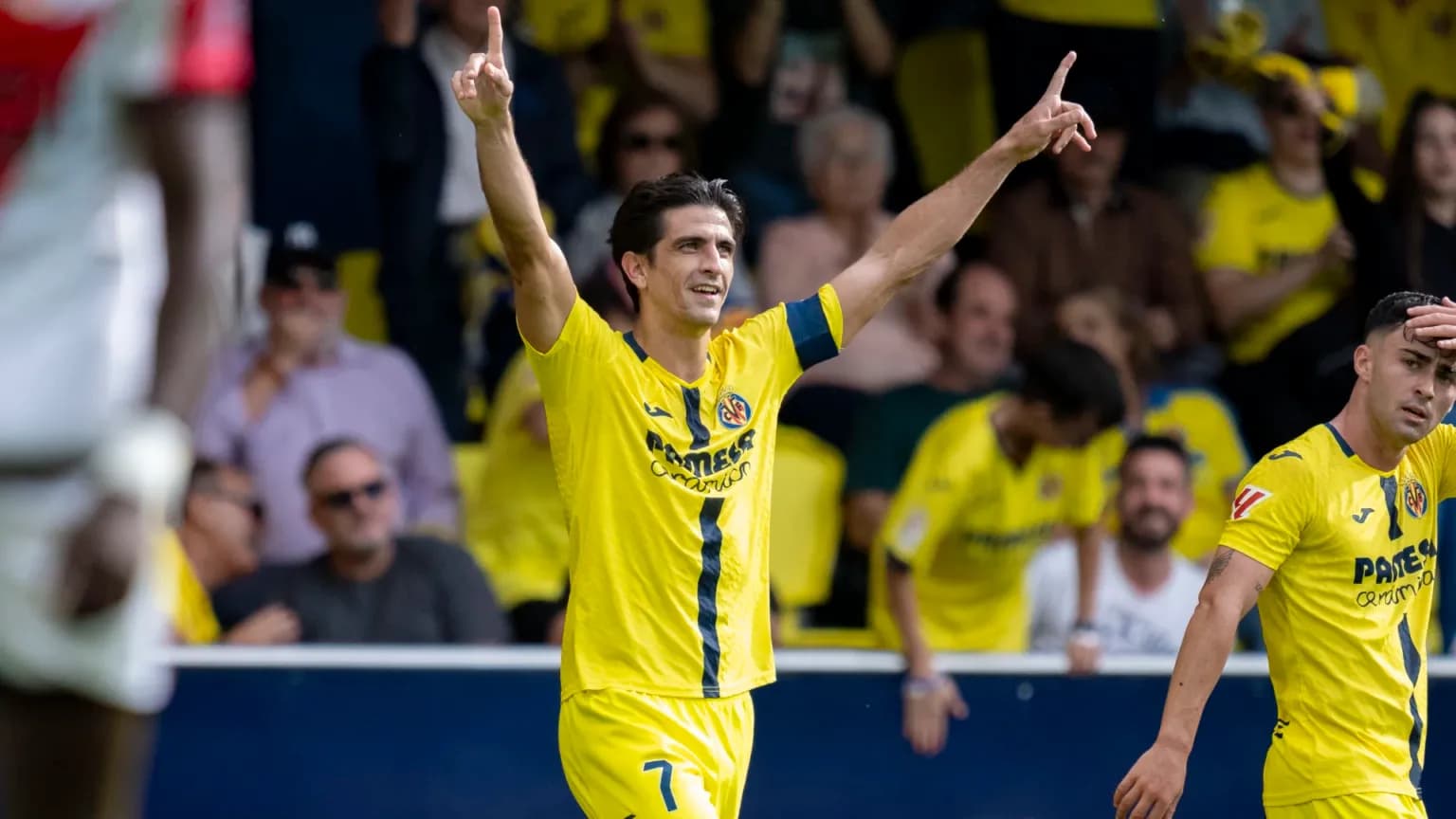
Mallorca and Villarreal shared a 1-1 draw at Estadi Mallorca Son Moix in La Liga’s Regular Season - 35, a match defined less by chaos than by clear structural ideas from both benches. Mallorca, under Martin Demichelis, leaned into a possession-based 4-3-1-2 that tried to compress Villarreal in their own half, while Marcelino’s 4-4-2 aimed to be compact, selective in pressing, and ruthless in transition. The final score reflected a balance of approaches: Mallorca’s territorial and shot volume dominance against Villarreal’s efficiency and set-piece clarity, all under the supervision of referee Victor Garcia Verdura.
The scoring sequence was framed by a key VAR intervention. On 29', a VAR check confirmed a Villarreal penalty after an incident involving Sergi Cardona, recorded as “Penalty confirmed”. Two minutes later, Ayoze Pérez converted from the spot at 31', giving Villarreal a 0-1 away lead and validating their strategy of drawing Mallorca into risky zones. Mallorca’s response built gradually, and on 45' Vedat Muriqi struck a “Normal Goal” to restore parity at 1-1 just before halftime, perfectly aligned with the half-time scoreline of 1-1.
Discipline and Cards
Discipline was relatively controlled, with all cards falling on the home side. The card log, in strict chronological order, reads:
- 71' Samú Costa (Mallorca) — Argument
- 73' Vedat Muriqi (Mallorca) — Foul
This yields locked totals: Mallorca: 2, Villarreal: 0, Total: 2. No Villarreal player was booked, and there were no red cards. The second half was instead shaped by a steady wave of substitutions as both coaches adjusted to game-state and fatigue. For Mallorca: Johan Mojica (OUT) with Toni Lato (IN) at 62'; Manu Morlanes (OUT) with Jan Virgili (IN) at 70'; Mateu Morey (OUT) with Miguel Calatayud (IN) also at 70'; and Pablo Torre (OUT) with David López (IN) at 76'. For Villarreal: Tani Oluwaseyi (OUT) with Nicolas Pépé (IN) at 63'; Alfon González (OUT) with Alberto Moleiro (IN) also at 63'; Ayoze Pérez (OUT) with Georges Mikautadze (IN) at 70'; Tajon Buchanan (OUT) with Gerard Moreno (IN) at 71'; and Santi Comesaña (OUT) with Dani Parejo (IN) at 75'.
Tactical Analysis
Tactically, Mallorca’s 4-3-1-2 was built to dominate central spaces and pin Villarreal’s back four. Leo Román acted as a relatively untroubled sweeper-keeper, registering just 1 save, which underlines how effectively Mallorca restricted Villarreal’s shot volume (only 7 total shots, 2 on target). The centre-back pairing of Martin Valjent and Omar Mascarell, flanked by Mateu Morey and Johan Mojica, stayed compact, allowing Villarreal few clean entries into the box despite conceding a penalty. The double-digit shots inside the box (10) for Mallorca reflect how their positional play succeeded in repeatedly accessing high-value zones.
In midfield, Samú Costa, Sergi Darder, and Manu Morlanes formed a three-man platform to control tempo and second balls. Pablo Torre, operating ahead of them, linked midfield to the front two and helped overload half-spaces. Zito Luvumbo’s mobility complemented Vedat Muriqi’s penalty-box presence. Mallorca’s 18 total shots (8 on goal) were the product of sustained possession (56%) and structured circulation rather than chaotic crossing. Their 454 passes, 391 accurate (86%), show a side comfortable progressing through short combinations. The late introduction of Jan Virgili and David López suggested Demichelis wanted fresh legs to maintain pressing intensity and aerial stability as the game stretched.
Villarreal’s 4-4-2, with Arnau Tenas in goal, was clearly designed for resilience and transition. Tenas was far busier than Román, making 7 saves and effectively keeping Villarreal in the game as Mallorca’s pressure mounted. The back four of Santiago Mouriño, Rafa Marín, Renato Veiga, and Sergi Cardona was often locked in a low to mid-block, allowing Mallorca possession but aiming to protect the central lane. The midfield line of Tajon Buchanan, Santi Comesaña, Thomas Partey, and Alfon González had to shuttle laterally to close gaps against Mallorca’s narrow diamond. Up front, Ayoze Pérez and Tani Oluwaseyi (later replaced by Nicolas Pépé and then supported by other forwards) focused on exploiting turnovers and set-piece opportunities, one of which produced the VAR-confirmed penalty.
Marcelino’s substitution pattern was aggressive and attack-focused. Introducing Nicolas Pépé, Alberto Moleiro, Georges Mikautadze, Gerard Moreno, and Dani Parejo added technical quality and fresh running, hinting at a plan to steal the game late through superior decision-making in transition and on the ball. However, Villarreal’s total of just 7 shots (2 on target) indicates Mallorca’s structure largely held, even as the away side diversified their attacking profiles.
Statistical Summary
Statistically, the match underlined contrasting identities. Mallorca’s expected goals stood at 1.74, slightly above Villarreal’s 1.13, consistent with their higher shot volume and more frequent entries into the box. Both goalkeepers are credited with 2.46 goals prevented, an unusual symmetry that points to the models valuing the quality of chances faced rather than sheer volume: Román had fewer but relatively dangerous actions to manage, while Tenas had to deal with more attempts but from a range of shot qualities.
In possession, Mallorca’s 56% share and 454 passes, 391 accurate (86%), reflect an Overall Form of a side comfortable controlling home matches, with a solid Defensive Index evidenced by limiting Villarreal to 2 shots on target and 13 fouls conceded. Villarreal, with 44% possession and 381 passes, 304 accurate (80%), played a more pragmatic game, accepting fewer sequences in exchange for compactness. The foul count (Mallorca 17, Villarreal 13) and card distribution (2 and 0) show Mallorca were more aggressive and occasionally overzealous in duels, particularly as they chased a winner. Ultimately, the 1-1 draw feels like a fair synthesis: Mallorca’s territorial dominance and structure offset by Villarreal’s set-piece precision and goalkeeping resilience.