.svg&w=384&q=75 "Pitchgist logo")
Lionel Messi's World Cup Journey: A Fading Legend
Lionel Messi’s last World Cup? It felt like it. It also felt like his stage, right up until the moment it wasn’t.
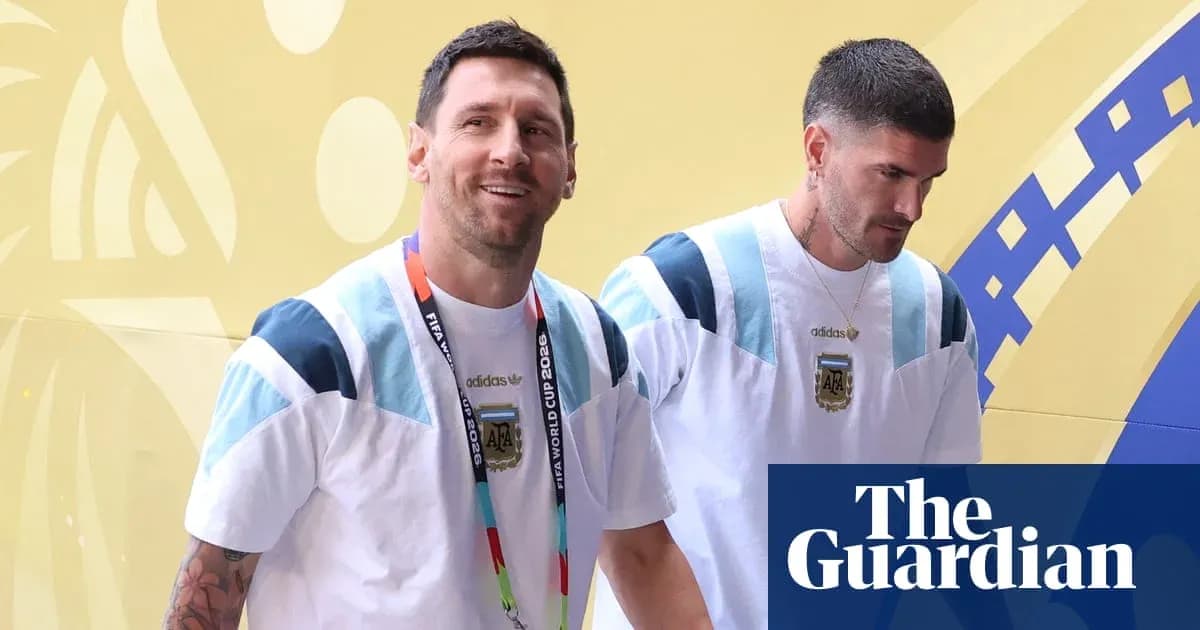
For most of the tournament, Argentina’s No 10 played as if the clock didn’t apply to him. Eight goals, four assists, more progressive passes than anyone else, according to Futi. No defensive shackles, no tactical handbrake. Just Messi, 39 years old, roaming where he pleased and dragging a nation along with him.
He bent Cape Verde to his will in a 3-2 win. He assisted and then equalised against Egypt when the game seemed to be slipping away. Against England, he conjured both of Argentina’s late goals, scripting another escape act. Each time the World Cup threatened to move on without him, he pulled it back.
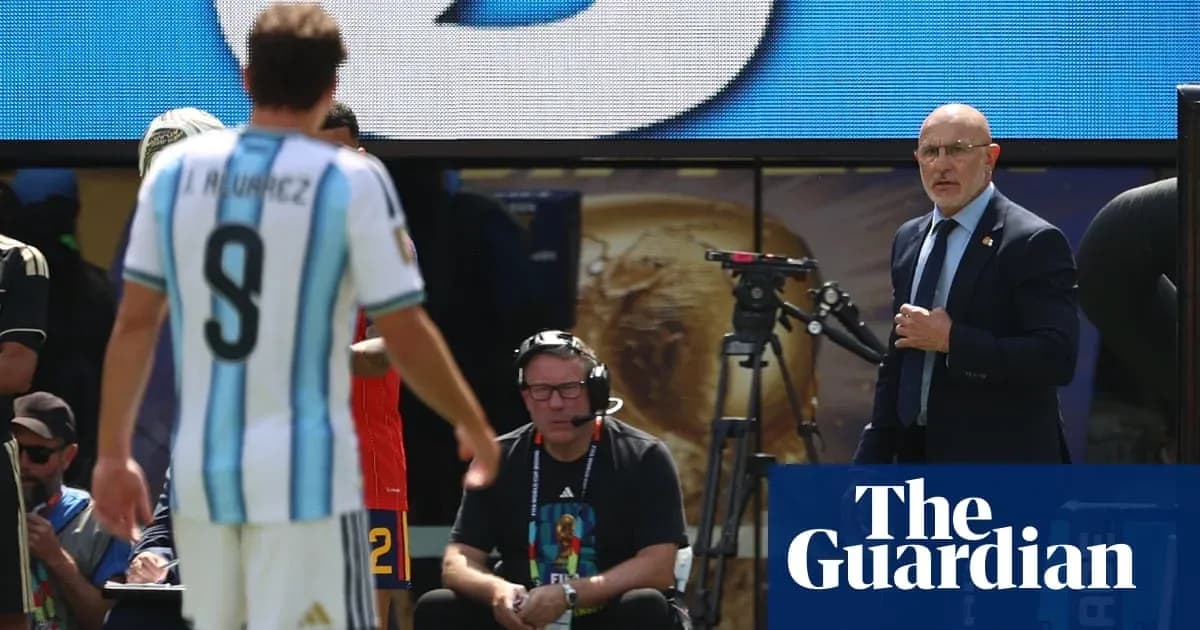
Then came the final, and the lights dimmed. Across 139 minutes including stoppage time, Messi completed just 28 of 39 passes, took only one shot and barely left a fingerprint on the match. No Golden Ball, no Golden Boot, no trophy. Just the strange sight of the greatest of his generation fading quietly on the grandest stage. Even so, his World Cup story now stretches into a realm that almost no one else has reached.
The lieutenants and the grinders
Around him, others played their parts. Rodrigo De Paul, tireless and tidy, started all but two of Argentina’s games and logged 70 minutes against Spain. He was never going to headline the tournament, but his aggression and security on the ball helped push Argentina to a second straight final. Every star needs someone to sweep up behind them; De Paul did just that.
Across the continent, Stephen Eustáquio emerged as the heartbeat of Canada’s midfield. Cross after cross, chance after chance: 2.76 chances created and 0.36 expected assists per 90 minutes, plus 46 progressive passes – sixth-most in the entire competition. His defining moment came late against South Africa in the last 32. One loose clearance, one chest down, one half-volley arrowed into the bottom corner. Canada’s first-ever World Cup knockout win, sealed by a midfielder who had just returned to Porto after a loan spell at Los Angeles FC.
South Africa had their own breakout story. Mbekezeli Mbokazi, only 20 and the youngest in the squad, played like he’d been in Bafana Bafana colours for a decade. The Chicago Fire defender, formerly of Orlando Pirates, impressed so much that his Transfermarkt valuation more than doubled, from $4m to over $9m by the time the tournament was done. On the biggest stage, he looked entirely at home.
Paraguay, starved of the ball and forced to live off scraps – their average possession sat at 29%, last among all teams – leaned heavily on Matías Galarza. After sitting out the opener, he started every other game, scoring the only goal against Turkey and setting up Julio Enciso against Germany in the knockouts. Limited possession, limited chances, but he found a way to matter. His loan at Atlanta United ended, and he returned to River Plate with his stock quietly higher.
Behind him, Andrés Cubas did the dirty work. The Vancouver Whitecaps midfielder played every minute of Paraguay’s five matches, their destroyer in the centre of the pitch. He anchored a defence that took Germany to penalties and kept France to a single goal. In the quarter-final, he won seven of 12 duels, made seven tackles and three interceptions, and even clashed with Kylian Mbappé. Paraguay went out, but they did not go out soft.
New faces, harsh lessons
For New Zealand, Finn Surman’s first two games felt like the start of something. The 22-year-old Portland Timbers centre-back threw himself into last-ditch tackles and emergency clearances, looking every bit a cornerstone of the All Whites’ future. He even chipped in with a goal – their only strike – in a 3-1 defeat to Egypt.
The United States saw Sebastian Berhalter become one of Mauricio Pochettino’s go-to substitutes, featuring in every match. His lone start, as a No 6, exposed a structural problem more than an individual flaw. The squad simply lacked true defensive midfielders. Even so, the Vancouver Whitecaps man, reportedly on his way to Middlesbrough, still found a way onto the scoresheet with a goal and an assist.
Cape Verde’s run owed plenty to their full-backs. While Sidny Lopes Cabral grabbed more headlines, Steven Moreira of Columbus quietly held the back line together. He helped push a nation to the brink of something extraordinary against Spain, Uruguay and Argentina, a supporting pillar in a campaign that came agonisingly close to shock glory.
Australia’s Aiden O’Neill did what he always does. For New York City FC, he is a quiet, possession-obsessed metronome in midfield; for his country, he played the same role. It worked. He took home the Superior Player of the Match award against Paraguay and followed it with another assured display against Egypt.
Behind them, Matt Freese’s World Cup boiled down to one bad day. The New York City FC goalkeeper impressed across four games, passing cleanly and making nine saves. But one poor performance – one poor moment – defined his narrative. The margins are cruel for goalkeepers; his were no different.
Legends fading, futures forming
Twelve years after he lit up Brazil, James Rodríguez arrived in the United States looking like time had finally caught him. On loan at Minnesota United, the Colombian playmaker still showed flashes of the old vision and touch. What he didn’t show was an end product. No goals, no decisive assists, and a last-16 exit to Switzerland. Two years removed from a sparkling Copa América – one goal, six assists, a run to the final – his World Cup career ended like his club one has drifted: slowly, and a little empty.
Others used the stage to prove they belonged. Uruguay’s Juan Manuel Sanabria, of Real Salt Lake, drew the job no one wants: contain Lamine Yamal. In their final group game against Spain, he did just that. Yamal finished with just 0.03 xG, 0.10 xA and five successful dribbles from 12 attempts. For a young defender, it was a quietly outstanding night.
Not everyone seized their moment. Richie Laryea, long a fixture for Canada, helped progress the ball down the left and posted 0.26 xA per 90 minutes, but his defending wobbled. Against Bosnia and Herzegovina, his man scored from an in-swinging corner. Against Switzerland, he drifted out of position and failed to track back. For a player used to being a spark, the tournament felt flat.
Tim Ream’s World Cup echoed that theme in harsher tones. For a while, the 38-year-old Charlotte centre-back looked as if he had rolled back the years since Qatar. Then Belgium arrived. In a brutal 4-1 defeat, Ream suffered more than anyone. On the opener, Charles De Ketelaere ghosted away from him to score. Moments after the US equalised, De Ketelaere climbed above Ream at the back post and buried another. One game, two blows, and the image of a veteran suddenly looking his age.
Australia found a glimpse of the future in Lucas Herrington. Just 18 and the youngest in their squad, the Colorado Rapids defender forced his way into the XI and started each of Australia’s last two matches. Those minutes will matter more than any statistic.
Frustration, anonymity and the fine print
Not all stories were dramatic. Some were simply disappointing. Maxime Crépeau, Orlando City’s goalkeeper, left with six goals conceded and only six saves across five games. Son Heung-min, now 34 and playing for LAFC, failed to score in either of his two starts and watched South Korea’s must-win final group game from the bench. Petar Musa, the FC Dallas striker, mustered just one shot for Croatia in 110 minutes over two starts – he scored it, but never threatened again.
Others barely had the chance to leave a mark. Danley Jean Jacques, in Philadelphia’s colours, fought in Haiti’s double pivot alongside Jean-Ricner Bellegarde, but as the lowest-ranked side in the tournament, they were always climbing a mountain. Panama’s Carlos Harvey started all three group games and flickered into life only on a couple of set-piece headers. Marco Pasalic, Orlando City’s winger, produced a bright start in Croatia’s third group game but squandered his one clear chance.
Miguel Almirón endured a World Cup to forget. Just four shots and 0.11 xG in four starts for Paraguay, and then the moment that will define his tournament: a red card against Turkey for covering his mouth during an altercation, the first time IFAB’s new mouth-covering ban was enforced. It was a strange, modern dismissal – and an unwanted place in history.
For some veterans, the tournament underlined the end. Michael Boxall, one of the oldest players at the World Cup, looked half a step off the pace on nearly every goal New Zealand conceded. Jacob Shaffelburg came off the bench in all five of Canada’s games for LAFC but never really shifted a match. Ahmed Qasem played in every match for Iraq and went the distance against France, only to be sacrificed early in the final group game after Rebin Sulaka’s 13th-minute red card forced a tactical rethink.
There were cameos that barely registered in the wider story. Louicius Deedson, FC Dallas winger, logged 112 minutes and 13 completed passes across Haiti’s three group defeats. Mathieu Choinière started once, in Canada’s 2-1 loss to Switzerland, and that was that. Matt Turner, back in goal for the US and now New England Revolution’s No 1, started against Turkey, conceded three and didn’t make a single save.
Miles Robinson, of FC Cincinnati, discovered how little trust Pochettino had in his defensive depth, with his only minutes coming in a dead rubber to close the group. NYC FC’s Kai Trewin replaced the injured Jordan Bos at half-time of Australia’s knockout tie with Egypt and helped drag it to penalties. Braian Ojeda’s only taste of the World Cup was a 21-minute cameo for Paraguay against Germany in the last 32, nine touches and little else.
Derrick Etienne Jr played nine minutes for Haiti against Brazil, completing four passes. Jayden Nelson came on in the 87th minute of Canada’s 3-0 defeat to Morocco. Aníbal Godoy completed eight passes in just over a minute for Panama against Ghana, only to watch his side concede a last-gasp winner seconds later. Jonathan Osorio, Toronto’s captain, entered twice in the 87th minute or later and never had time to influence anything. Columbus winger Max Arfsten arrived in the 90th minute of the US’s 4-1 loss to Belgium and did not touch the ball.
World Cups are remembered for trophies, for goals, for the nights when legends refuse to age. But they are also built on tournaments like these: the breakout of Mbokazi, the late winner from Eustáquio, the quiet excellence of Cubas, the harsh reality facing Son and James, and the final, subdued bow of Messi.
The next cycle will bring new names, new heartbreaks, new miracles. The question now is simple: who from this cast will still be standing when the lights come up again?