.svg&w=384&q=75 "Pitchgist logo")
Leicester City: Russell Martin's Challenge to Build a New Identity
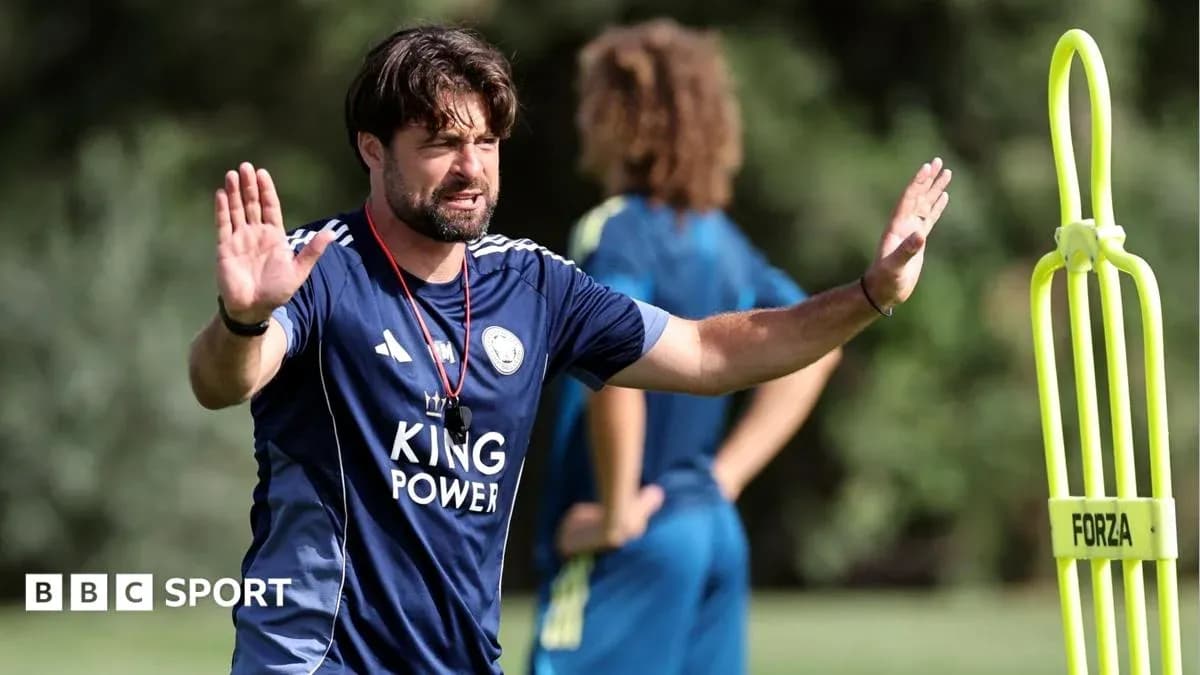
Leicester City know all about history. It is painted on the walls at King Power Stadium, stitched into scarves, replayed in endless loops of that 5,000-1 miracle. But Russell Martin has walked into a club where the weight of the past no longer feels like a fairy tale. It feels like a burden.
The new manager wants none of it on his shoulders.
“We have to find our own way and then be judged on that,” he told BBC Radio Leicester, drawing a clear line between what Leicester were and what they are now. “Hopefully I’ll be judged on the job I do here and not on my previous job and all that stuff. It’s the same for me.”
A decade on from lifting the Premier League and just three years after winning the FA Cup, Leicester are in League One, nursing back-to-back relegations and a damaged reputation. Martin, who took Southampton up to the top flight a little over two years ago, arrives in the third tier not as a rising star, but as a coach with something to repair after a bruising 123-day spell at Rangers.
He is not the only one in need of a reset.
A club under scrutiny
Martin’s appointment was the first big call under sporting director James McCarron, who stepped into the role last season. McCarron works beneath chief football officer Jon Rudkin, a long-standing figure at the club and, alongside owner and chairman Khun Aiyawatt “Top” Srivaddhanaprabha, one of the main targets for supporter anger during Leicester’s slide.
This is the hierarchy Martin walked into: a club still smarting from decline, still dealing with the fallout of financial breaches, still being picked apart in the transfer market.
When asked about his dealings upstairs, Martin did not reach for excuses. He reached for honesty.
“There was real honesty about what’s gone on, but now there’s real honesty and openness and willingness to move forward,” he said. “I can’t judge anything that has gone on before because I’ve not been here. You watch it from the outside, and people will make assumptions, but I’ve been really open to being surprised since I got here and people have been great.”
The message is clear: he is not here to relitigate the past. He is here to build something that can stand on its own.
Promotion or bust
Leicester have spent only one previous season in the third tier in their 142-year history. The expectations write themselves.
“It’s to get promoted, first and foremost,” Martin said, without dressing it up. That is the job. No caveats, no gentle talk of “transition seasons”.
But he wants more than a climb back up the ladder. “[And] to play in a way that everyone understands and believes in, feels connected to and makes the fans proud.”
That is the other part of the brief: not just winning, but winning with an identity supporters can recognise after years of drift.
The challenge? Right now, the squad looks like a work in progress that has barely started.
A clear-out and a cash-in
Leicester’s summer has been defined by exits. The club have been forced to cut some of their biggest earners and most recognisable names from the double-relegation squads.
- Denmark international Jannik Vestergaard has gone, his contract terminated by mutual consent.
- Harry Winks, once an England midfielder and one of the more high-profile survivors of the Premier League days, has been sold to Cagliari.
- Abdul Fatawu’s move to Ipswich Town brought in around £20m.
Those deals were not just about footballing decisions. Leicester are still wrestling with the consequences of past spending. Historical breaches of financial rules led to a points deduction last season; the aftershocks are still being felt. That has meant painful choices, including the sale of 17-year-old prospect Jeremy Monga to Manchester City.
The club that once plucked N’Golo Kanté and Riyad Mahrez from relative obscurity is now losing its own bright talents to richer rivals before they have even had a chance to establish themselves in the first team.
And the cull has been deep. Ten out-of-contract players were released in an end-of-season clear-out that stripped the squad back so far that, at one point, Leicester did not have a single senior striker on their books. Patson Daka and Jordan Ayew were among those to go, leaving a glaring hole at the top of the pitch.
Building from the front – with almost nothing
Into that vacuum has stepped Conor Chaplin, one of only two signings since relegation. The former Ipswich Town forward knows this division and what it takes to escape it; he was top scorer when the Tractor Boys went up from League One four seasons ago.
For now, though, he is a symbol of how far Leicester still have to go in rebuilding a squad that can carry the weight of expectation.
Martin wants more. A lot more.
“Ideally, we’d have two or three strikers,” he said. “We don’t just want one of the same, and it’s the same with wingers. Whatever we are looking at, whatever profile it is, it has to be right for us. They need to be desperate to come here and play, they need to be desperate to help us to be successful.”
That word – desperate – is telling. This is not a club that can sell itself on Premier League status or European nights anymore. It has to sell itself on the chance to be part of a revival, to drag a fallen champion off the canvas.
Martin knows that story well. His own reputation took a hit in Glasgow. He has chosen to rebuild it in a place where history looms large and patience may be short.
Leicester City have been judged by their past for a long time. The question now is whether Martin can convince them – and everyone watching – to start judging them by what comes next.