.svg&w=384&q=75 "Pitchgist logo")
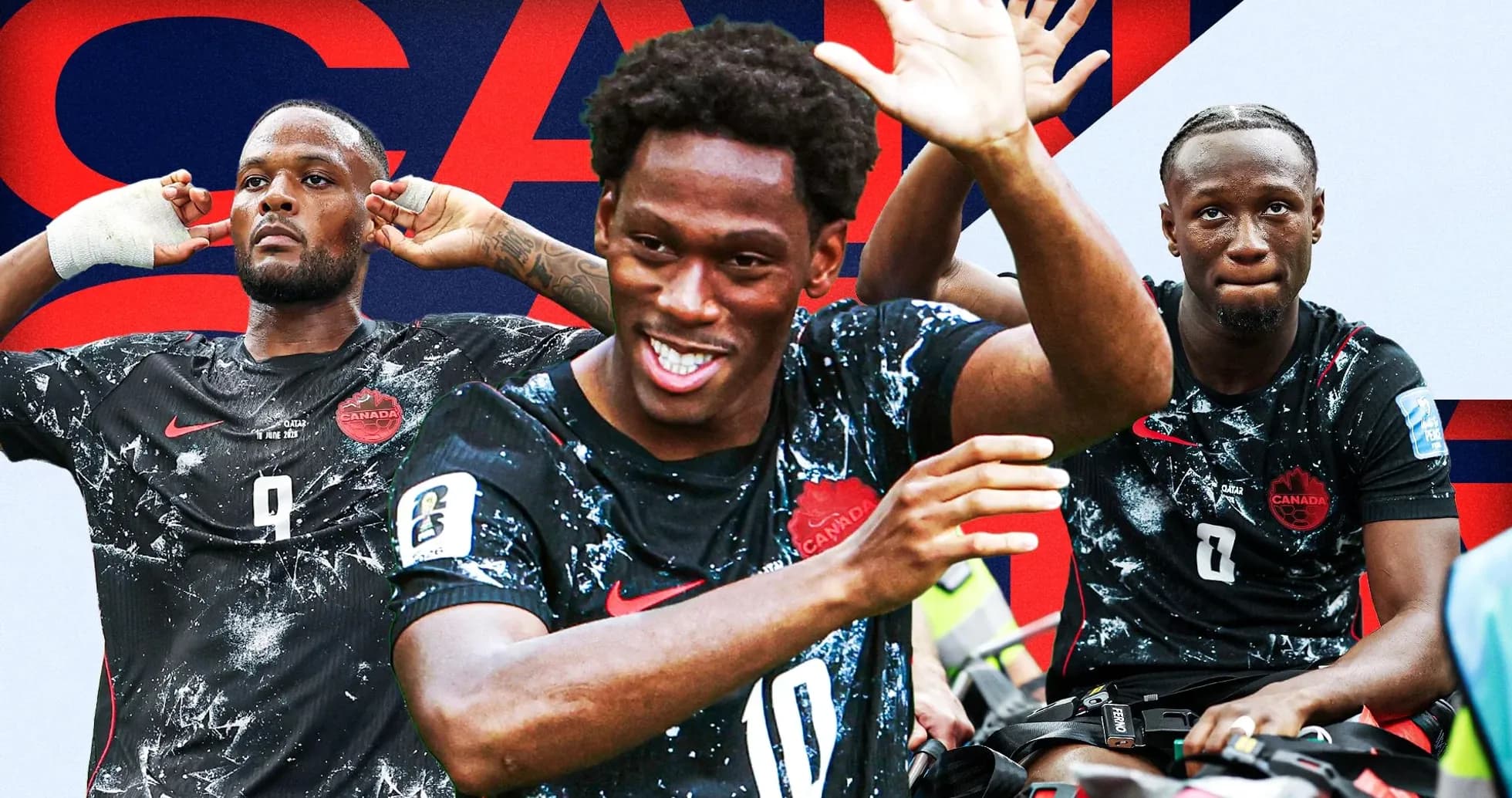
Jonathan David Shines with Hat-Trick in World Cup Win
Jonathan David walked into this World Cup under a cloud. Hooked before the hour in the opening draw with Bosnia and Herzegovina, picked apart across a long week of talk shows and timelines, the Juventus striker heard it all – even if he refused to answer back.
He answered in the only language he trusts.
Goals.
By the time he was done with Qatar, the noise had been drowned out by a hat-trick, a statement performance, and a reminder that when Canada really needs a finisher on the biggest stage, their all‑time leading scorer can still tear a game apart.
David’s response
From the opening whistle, David played like a man on trial who already knew the verdict. He hounded Qatar’s back line, chased lost causes, snapped into duels, and kept winning second balls. The tone of the night was set before the scoreboard caught up.
In the 16th minute, the pressure broke. David unloaded a thunderous right‑footed volley, and when the ball spilled loose, Cyle Larin pounced to score his second of the tournament. One goal to settle the nerves. One reminder that Canada’s forwards were not about to shrink from this World Cup.
Then came the move that will live far longer than the scoreline.
Tajon Buchanan, Alistair Johnston, and David carved open Qatar with a sharp triangular exchange down the right. One touch, then another, then space. David arrived on cue and passed a perfectly measured finish into the net for his first World Cup goal. The release was instant: the doubts, the questions, the Bosnia game – all shoved into the background by a striker who had finally stamped his authority on the tournament.
Later, the roles flipped again. Larin took aim, Qatar’s goalkeeper could only parry, and David came roaring through to bury the rebound. The night that had started as a referendum on his big‑game credentials was turning into a personal demolition job.
In stoppage time, he completed it. One more break, one more ruthless finish, one more roar from the stands. Canada’s sixth. His third. The first Canadian hat‑trick at a World Cup.
“It was amazing. After every goal, it got louder and louder,” David said of the crowd. “It gave us motivation to get the next goal and the next goal.”
By the final whistle, the record books had been updated again. David now sits on 42 goals for his country, the figurehead of a generation that is not just appearing at World Cups, but imposing itself on them.
“That’s a player, that's a striker, that's a goal scorer,” head coach Jesse Marsch said. “I never had any doubts in Jonny, and the one thing I said is, for us to really be successful as a team, we need Jonny driving what we do in the attacking part of the pitch. He set up the first goal with the shot, then he obviously scored the hat trick, but I thought he was fantastic in general.”
Canada left with three points and a statement win. They also left with a hole in the heart of their midfield.
Koné’s cruel blow
The mood shifted the moment Ismaël Koné went down.
The elegant midfielder, whose ability to glide away from pressure and punch passes through defensive lines has been central to Canada’s transitional threat, crumpled in a challenge and stayed there. Players waved frantically for help. The stadium noise dipped to a nervous murmur.
“You could hear the bone snap,” Marsch said afterward, confirming that Koné had gone to hospital for surgery. “Your heart goes out to him. Everybody’s shaken for him.”
There has been no official timeline, but the fear is stark: Canada may have to navigate the rest of this World Cup – and perhaps much longer – without the one midfielder in the squad who can consistently thread the eye of the needle and carry the ball through traffic with genuine authority.
They simply do not have another profile like his.
The “next man up” mantra is already worn from overuse. Injuries battered Canada’s build‑up to this tournament, and the group has learned to adapt on the fly. Alphonso Davies is on his way back. Saliba stepped in for Koné and curled in a free kick to add his own touch to the night. Those are significant boosts.
They are not Koné.
“For us to be at our best, he's a big part of it. But, look, it's given us now something else to play for,” said Alistair Johnston. “That's what this team is all about, it really is a brotherhood. So it's really difficult to see one of your brothers go down. But, look, if we needed any extra motivation for this tournament, we got it now.”
That brotherhood was on display in the moments after the injury. Johnston, one of the most vocal figures in the dressing room, moved quickly to console shaken teammates while stealing glances toward the stricken midfielder. The scoreline said Canada were cruising. The players’ faces told a more complicated story.
Johnston on the edge, and in control
Johnston himself played on a tightrope all night.
One yellow card would have ruled the Celtic fullback out of the Group B finale against Switzerland. Many players, in that position, retreat into themselves. Johnston did the opposite. He drove the game.
On the right flank, he formed a constant overload with Buchanan, Koné, and David, pinning Qatar back and forcing their star Akram Afif into areas he did not want to occupy.
“We knew that the idea was kind of to build up against the Akram Afif. He's a maverick; you could see some of the quality he had on the ball,” Johnston explained. “Defensively, though, the idea was to play against him, make him defend, because we didn't think he was going to. We're trying to find that balance of me being in the defensive three in a build-up, but then also give me the license, as I have with my club, to really join in and help Tajon.”
The plan worked. Johnston picked up the assist on Canada’s second goal, delivered four accurate crosses, and racked up six big chances created. He managed all of that without crossing the disciplinary line, keeping himself available for the decisive clash with Switzerland, when yellow cards will be wiped before the Round of 16.
Canada needed his aggression. They also needed his calm.
Qatar unravel, again
For Qatar, this was a night that reopened old wounds.
Four years after finishing bottom of their home World Cup, they walked into this tournament talking about progress and redemption. They had shown some of it against Switzerland, digging in defensively and snatching a late equaliser for a 1-1 draw and a rare World Cup point.
Against Canada, the step up in tempo and intensity exposed them.
They struggled with Canada’s press, lost their structure in transition, and looked overwhelmed by the speed of the movement down the flanks. The co-hosts played with purpose and clarity; Qatar looked like a side still trying to process the scale of the occasion.
Head coach Julen Lopetegui, a veteran of some of the sport’s fiercest arenas, could not steady the ship from the touchline. The composure he demanded simply never arrived.
Now, elimination from Group B looms. Their final match will likely come without two starters, and on this evidence, the road back to another World Cup stage feels long and uncertain.
Doubters silenced up front, questions in midfield
This World Cup began with a debate about Cyle Larin. His form, his sharpness, his place in the XI. Marsch responded by dropping him for Tani Oluwaseyi in the opener against Bosnia and Herzegovina.
Larin has answered with a goal in each match since.
Once that argument cooled, the spotlight swung to David. Could he deliver when it mattered most? Was Canada’s record scorer going to carry his club‑level form into the World Cup or shrink under the weight of expectation?
Qatar got the answer.
David’s hat‑trick, his relentless movement, and his influence in almost every dangerous Canadian attack wiped away a week of doubt in 90 minutes. The Juventus forward did exactly what he said he prefers: he let his goals do the talking.
The wider message was just as loud. With a resounding win, Canada showed they are not content simply to appear at this tournament. They can dominate games, overwhelm opponents, and play with a swagger that belongs on this stage.
They did it without Alphonso Davies, too. That buys their captain and superstar another crucial week to recover before a top‑of‑the‑group showdown with Switzerland.
The price was Koné.
Now the task is clear: keep riding the wave created by David and Larin, fold Davies back into a front line that suddenly looks ruthless, and rebuild a midfield structure that has just lost its most gifted connector.
Canada have their statement win. The question, as the tournament tightens and the stakes rise, is whether they can carry Koné’s absence as fuel rather than weight.