.svg&w=384&q=75 "Pitchgist logo")
Japan's Determined Path to World Cup Knockouts
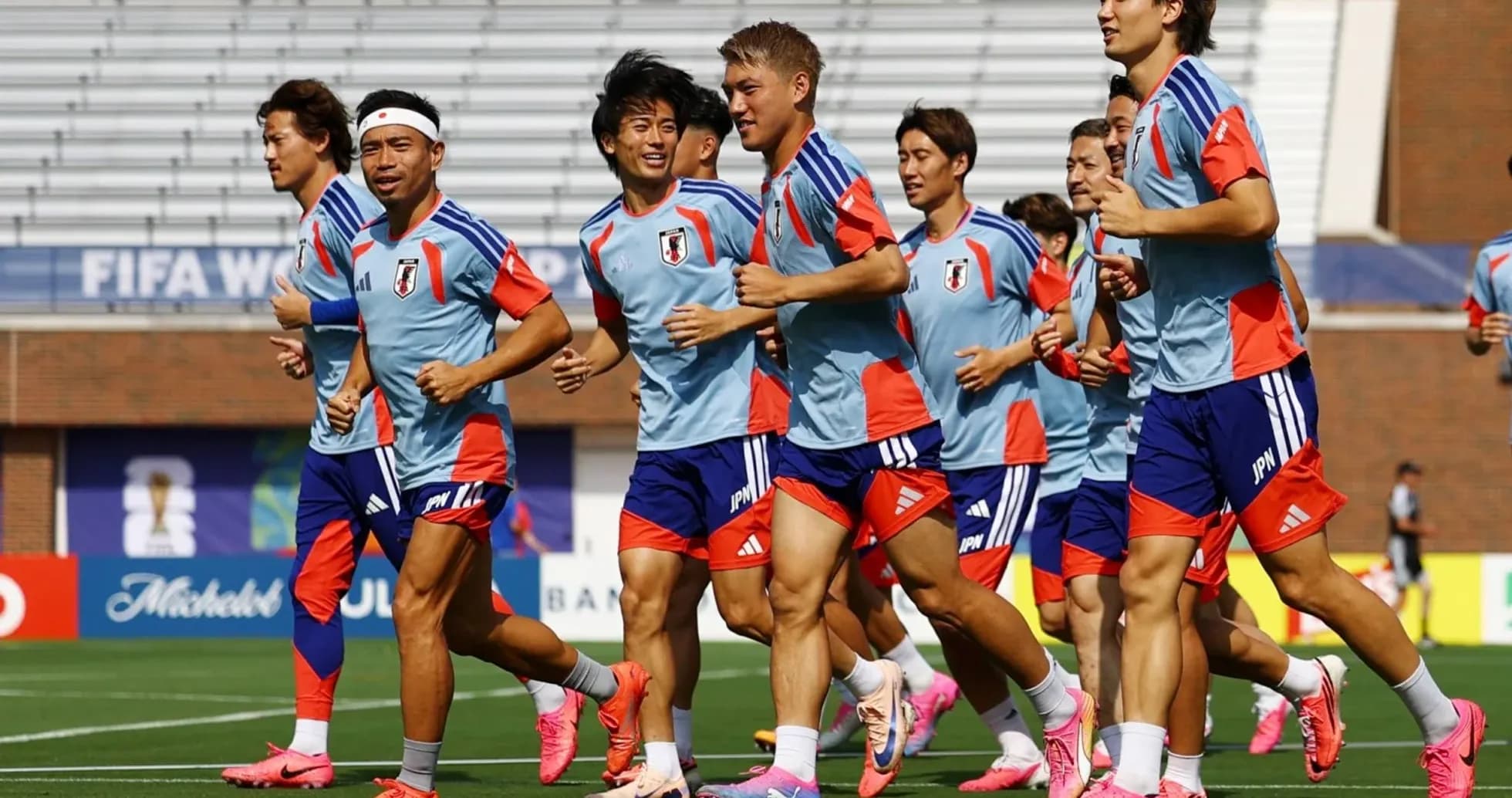
Hajime Moriyasu will walk into Japan’s final Group F game knowing his squad is patched together, but playing like a complete unit.
Key names are missing, the margins are thin, and yet Japan stand on the brink of the World Cup knockout rounds.
A patched-up side, a ruthless response
The injury list reads like the spine of a team. Former captain Wataru Endo is out. Kaoru Mitoma, the winger who can tilt a pitch on his own, is out. Takumi Minamino, the creative link between lines, is out.
Now Takefusa Kubo, the brightest of the current generation, is expected to miss the decisive clash against Sweden after a knee issue picked up in the 2-2 draw with the Netherlands.
On paper, that should have derailed Japan’s campaign. On the pitch, it has done the opposite.
They fought back twice against the Dutch to claim a point, then tore Tunisia apart 4-0, a scoreline that spoke of a side not merely coping with adversity but feeding off it.
With four points from two games, Japan are well placed to reach the last 32 even if they lose on Thursday. Moriyasu is not interested in that kind of calculation.
“We are basically thinking of winning, that’s what’s in our mind,” he said. The target is not survival. It is first place.
“Anyone can play with anyone else”
Moriyasu has built this campaign on one central idea: interchangeability. Roles over reputations. Structure over stars.
“Anyone can play with anyone else, that’s the readiness we wanted to ensure,” he said. It sounds simple. He knows it is not.
“When there’s a change over in the team, it’s not that simple or easy to play with different players and achieve good results or be successful.”
Japan have made it look almost seamless. The coach pointed to the work done long before this tournament kicked off.
“I’m very grateful that the other coaches and the players have been developing themselves towards such a great achievement,” he said.
The evidence is on the pitch. Across two games, Japan have moved as a unit, adjusted within matches, and shown the kind of tactical cohesion that survives the loss of individuals.
“In the last two matches the team has functioned tactically and with the teamwork they are developing and increasing their readiness.”
That readiness now faces its sternest test.
Chasing top spot, guarding the balance
Japan’s position in the group offers a cushion. The mindset does not.
“If possible we would like to advance on top of the group by scoring as many goals,” Moriyasu admitted. Then came the caveat that reveals how he views tournament football.
“But distorting the balance of the team is more of a risk. We will see.”
He wants ambition without recklessness, front-foot football without losing the structure that has carried them this far. The priority is clear: stay solid, stay themselves.
“First we want to think about ourselves and how we play tomorrow,” he said. The opponent in the last 16 can wait.
“We don’t know what kind of team we will come up against in the next round but what’s important is that we are solid and that we play against a team that we are able to deal with no matter what appears.”
The message to his players is simple: control what you can. Win the group if you can. But never rip up the blueprint.
Sweden’s chaos and two strikers to relish
Sweden have lurched from one extreme to the other. A 5-1 demolition of Tunisia announced them as one of the most explosive sides in the group. A 5-1 defeat to the Netherlands then exposed their soft underbelly.
They are dangerous, unpredictable, and armed with a front line that would trouble any defence in the tournament.
Alexander Isak and Viktor Gyokeres bring power, movement, and a constant threat in behind. For many coaches, they would be a problem to fear. Moriyasu chose a different angle.
“They’re world class, wonderful strikers so I would like us to enjoy facing these players,” he said. “It’s going to be a good opportunity for our players to develop themselves further.”
Enjoy facing them. Not contain. Not survive. Enjoy.
It is a small choice of words, but it tells you where Japan are mentally. This is not a team clinging on. This is a group that sees a high-stakes duel with elite forwards as another step in its own evolution.
Injuries have stripped away some of Japan’s star power. What remains is a team that knows exactly what it is, what it wants, and how it intends to get there.
Sweden, Isak, Gyokeres, and the chaos of a decisive group game now stand in the way of top spot. The question is no longer whether Japan can cope without their missing names.
It is how far this hardened, adaptable version of Japan can go once the knockouts begin.