.svg&w=384&q=75 "Pitchgist logo")
Inside Football's Mental-Health Crisis: Players Are Not Superheroes
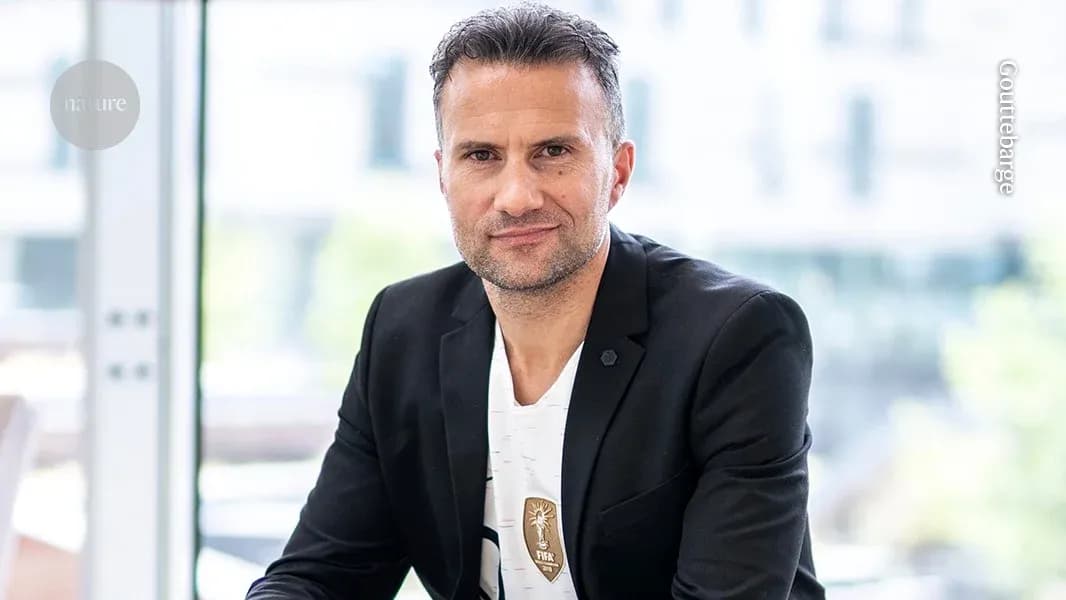
Vincent Gouttebarge knows what it feels like when the body breaks down and the mind starts to follow. For more than a decade he played professional football in France and the Netherlands, living the life so many dream of. He retired in 2007, worn down by injuries, and walked straight into a different kind of dressing room: the world of medical research.
Today, he sits at the crossroads of football and science. Gouttebarge is medical director at FIFPRO, the global players’ union, chair of the International Olympic Committee’s Mental Health Working Group, and a researcher at the University of Pretoria and Amsterdam University Medical Centre. When he talks about what the modern game does to those who play it, he speaks as someone who has lived it — and now measures it.
As the 2026 men’s World Cup kicks off across the United States, Canada and Mexico, the spectacle is obvious. What’s less visible is what it costs.
The Hidden Toll Behind the World Cup Glamour
From the outside, a World Cup call-up looks like the pinnacle: national anthem, full stadiums, global audience. Inside, the picture is more complicated.
“Being selected for a national team and competing at a World Cup is obviously positive,” Gouttebarge notes. The caveat arrives quickly. Everything hinges on context: are you starting or stuck on the bench, is your team winning or crashing out, are you fit or playing through pain?
The strain doesn’t stop when the final whistle blows on the tournament. Players are back on planes almost immediately, returning to clubs that expect them to restart the machine. A week off is a luxury. Two weeks, for many, is fantasy. There is effectively no recovery window between seasons.
That isn’t just a performance issue. It’s a health issue.
A Calendar That Squeezes Players Dry
The modern match calendar has turned into a relentless conveyor belt. Domestic leagues, cups, continental competitions, national-team duty, commercial tours. At the elite level, Gouttebarge points out, players can be exposed to two or even three matches a week, stacked back-to-back with barely a day to breathe.
The load is not only physical. It’s physiological, emotional, cognitive. Bodies ache; minds fray.
In 2024, FIFPRO joined forces with the World Leagues to publicly urge FIFA to rethink the schedule and create proper recovery time between major tournaments. The concern was not about sharper pressing or fresher legs. It was about basic player welfare.
And that’s before you even touch the omnipresent layer of social media. Criticism, abuse, constant comparison — and it doesn’t switch off in the off-season. It follows players into holidays, family time, supposed rest.
Mental-Health Symptoms: A Pattern Too Clear to Ignore
Gouttebarge’s work doesn’t rely on guesswork. Since 2012, he has led epidemiological studies across professional football and elite sport, tracking self-reported adverse thoughts, feelings and behaviours. Full clinical diagnoses are rarely possible in that environment — too time-consuming, too intrusive for active athletes — but the data paints a stark picture.
Professional footballers live with the same life stressors as anyone else: relationships, family problems, financial worries, personal loss. Those generic pressures collide with sport-specific triggers.
Injury sits at the top of that list. Research now supports a bidirectional relationship between injury and mental health. Poor mental health can increase the risk of musculoskeletal injury. A serious injury, in turn, often becomes the most traumatic event in an athlete’s career, cutting them off from training, competition and identity for months.
Unexpected poor performance can bite just as hard. A dip in form, a high-profile mistake, a run of bad games — all under the floodlights, all judged in real time.
Strip away the fame and the salaries, and the conclusion is blunt: footballers are not superheroes. They are vulnerable to the same mental-health conditions as everyone else, and in some cases, more so.
Stigma in a Conservative Sport
Despite the evidence, the culture of the game still lags behind.
Football, Gouttebarge says, remains by tradition a conservative sport. In parts of Europe, the taboo around mental health is finally beginning to crack, helped by education and a handful of high-profile voices. But across South America, Africa and large parts of Asia, speaking openly about depression or anxiety is still widely seen as weakness.
The contrast is stark. A player with an ankle injury or a hamstring tear talks about it freely in press conferences. Medical reports are issued, recovery timelines discussed. When the problem is depression, or anxiety, or overwhelming stress, the silence returns.
Players worry about what a coach will think. They fear that admitting to mental-health struggles will cost them their place in the starting XI, or even their career. So they keep quiet.
Gouttebarge argues that tackling this demands both directions of change. From the bottom up: mental-health literacy programmes for players, coaches and staff, building understanding and normalising conversations. From the top down: structural reform.
At national-federation level, medical committees are still dominated by sports physicians, orthopaedic surgeons and cardiologists. Mental-health professionals are usually missing. For a sport that talks constantly about marginal gains, the omission is glaring.
Education That Actually Moves the Needle
In 2018, FIFPRO rolled out a dedicated education programme aimed at players, built around mental-health literacy. The goal was simple: put mental health on the same level of importance as physical injury.
The results, while not from a randomized controlled trial, were telling. After the programme, players’ attitudes and behaviours towards mental health improved. They were more open, more informed, more willing to treat psychological issues as legitimate health concerns rather than personal failings.
For Gouttebarge, it was a small but concrete proof that even modest investment in education can shift a culture. Not overnight. But enough to show that the old excuses no longer hold.
Isolation as Punishment: A Quiet Scandal
One practice, in particular, angers him.
It is familiar across professional football: a new coach arrives, decides the squad is too big, and a group of unwanted players are told to train separately or shunted off to work with the youth team. They are still under contract. They are still employees. They are simply no longer wanted.
From a trade-union perspective, Gouttebarge calls it bad behaviour. From a mental-health perspective, he sees something more serious.
Social support is one of the strongest protective factors against mental-health problems. Deliberately isolating a player from the main group strips that away. It increases risk. It turns training into a form of punishment.
In almost any other industry, this kind of exclusion would be unacceptable. In football, it remains common practice — a symptom, he argues, of poor leadership at club level and a lingering disregard for psychological welfare.
The World Cup will roll on, a month of colour, drama and storylines. The players will run, tackle, celebrate, break down in tears. Once the trophy is lifted, they will scatter back to their clubs and the cycle will start again.
The question is whether the game’s powerbrokers are finally ready to treat their labour force not as indestructible assets, but as human beings whose minds need as much protection as their knees.