.svg&w=384&q=75 "Pitchgist logo")
Gianni Infantino Faces Congressional Scrutiny Over Trump Relationship
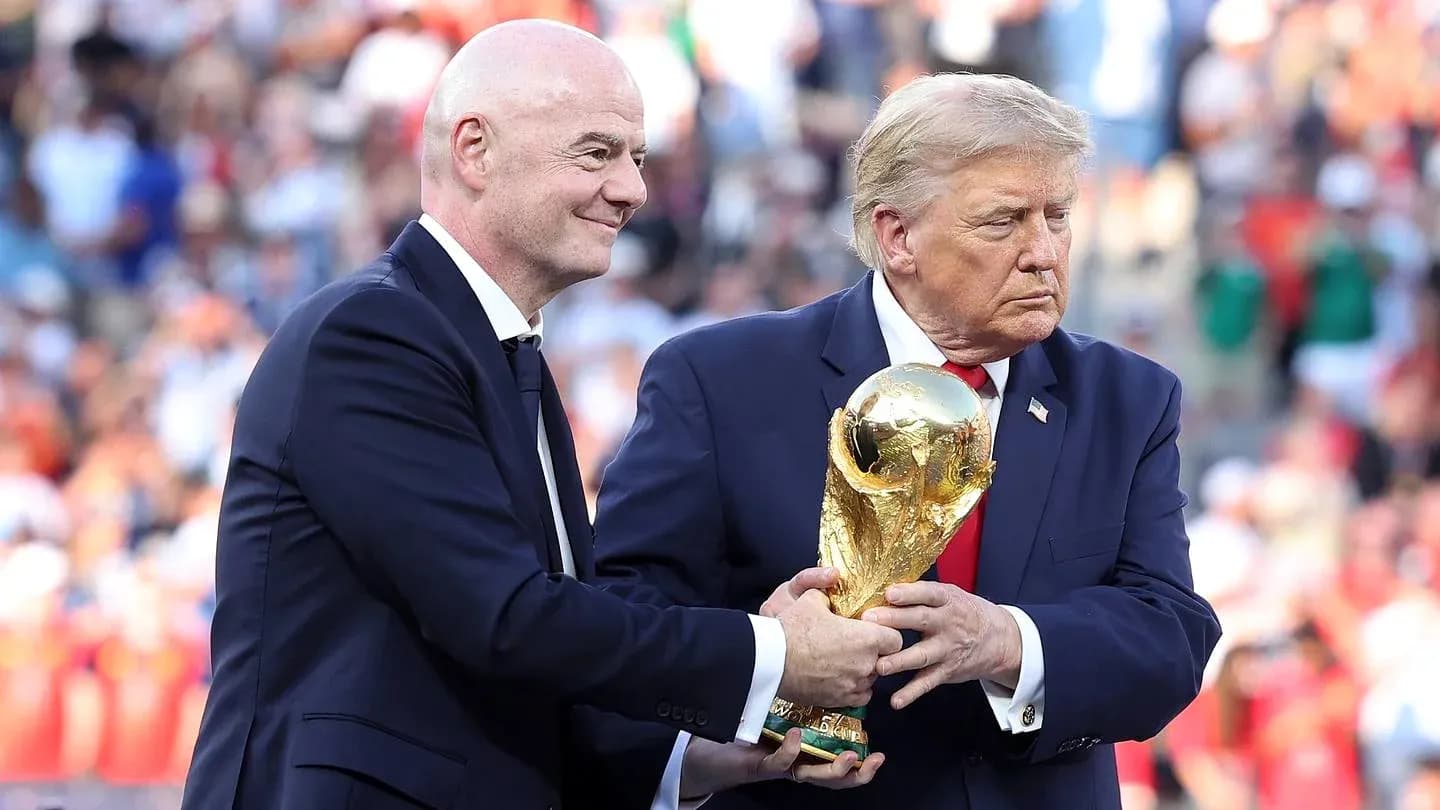
Gianni Infantino has been dragged from the touchline into the heart of Washington’s political theatre.
The FIFA president has been asked to appear before the House Judiciary Committee to explain, in detail, the depth of his relationship with U.S. President Donald Trump and the influence the White House has wielded over world football’s governing body.
At the center of it all: power, access and a World Cup-sized trail of money.
A Relationship Under the Microscope
Infantino and Trump have never hidden their mutual admiration. Their bond has played out in public ceremonies and high-profile gestures.
Infantino awarded Trump the first-ever FIFA Peace Prize. He claimed office space in Trump Tower in New York City. The World Cup draw was shifted to Washington’s John F. Kennedy Center, a venue that, at the time, had been effectively taken over by Trump’s team.
Those optics alone were enough to raise eyebrows. Then came this summer’s World Cup.
During the tournament, Trump contacted Infantino in an effort to overturn a ban on USMNT striker Folarin Balogun. The suspension was lifted. The decision triggered a formal complaint from the Norwegian Football Federation, which has been one of the most vocal critics of Infantino’s conduct and his proximity to political power.
What might once have been dismissed as ceremonial back-slapping now looks, in the eyes of some U.S. lawmakers, like a pattern.
Raskin Turns Up the Heat
Rep. Jamie Raskin, a senior Democrat on the House Judiciary Committee, has fired the sharpest shot yet.
In a letter to Infantino, Raskin requested a formal, transcribed interview before the committee to dig into the nature of the FIFA president’s relationship with Trump, including dealings “away from the pitch.”
He did not soften his language.
“The most recent quid pro quo that FIFA and President Trump orchestrated is not a victimless crime,” Raskin wrote. “It hurts Americans.
“FIFA has taken its newfound favored status in the Trump Administration as a sign that it may rip off its consumers, most notably, by employing illegal price gouging and fraudulent sales tactics for the World Cup.”
The accusations go beyond political coziness. Raskin’s letter explicitly compares Infantino’s dealings with Trump to the corruption saga that toppled former FIFA president Sepp Blatter.
The phrase that jumps off the page: “outright bribery.”
Raskin claims Americans have been “defrauded and manipulated” over the soaring costs tied to the World Cup, finances that remain under investigation by New Jersey attorney general Jennifer Davenport.
The letter also acts as a formal preservation notice. Raskin demands that all communication “between FIFA personnel and individuals affiliated with the Trump Administration or its inaugural committee” be retained. Infantino is requested to present evidence and sit for questioning.
Limited Power, High Stakes
For now, the Democrats sit in the House minority. That reality blunts Raskin’s immediate leverage.
He cannot, on his own, compel Infantino, FIFA, or Trump to comply. Any legal action or formal subpoena power would require a majority vote on the committee, and that hinges on November’s midterm elections.
So the request lands in a strange space: not toothless, but not yet armed.
Even so, the timing matters. FIFA is gearing up to award hosting rights for the 2031 Women’s World Cup, a tournament expected to be co-hosted by the U.S., Mexico, Costa Rica and Jamaica. Every step of that process will now be watched through a harsher lens, especially in the U.S., where political scrutiny of FIFA has never fully disappeared since the Blatter era.
If Democrats gain ground in November, the tone of Raskin’s letter could shift from warning shot to opening statement.
White House Strikes Back
The White House did not let the accusations sit unanswered.
Asked by The Athletic to respond, spokesperson Davis Ingle launched a blistering counterattack, aimed squarely at Raskin.
“Lightweight Jamie Raskin [is] a stupid person’s idea of a smart person,” Ingle said in a statement. “No other president in history could have pulled off the historic feat that President Trump delivered for the American people and the world.
“Thanks to his bold vision and decisive leadership, the 2026 FIFA World Cup generated billions of dollars in revenue, created a massive economic boost across host cities, and delivered a safe, secure and seamless experience for millions of fans and athletes from around the globe.
“It will undoubtedly go down as one of the greatest and most successful sporting events in history.”
That response framed the relationship with FIFA not as a problem, but as a triumph: a president who leveraged his influence to bring in money, prestige and a marquee sporting event.
The clash is now clear. On one side, a senior lawmaker alleging “outright bribery,” fraudulent tactics and a pattern of quid pro quo. On the other, a White House boasting of record revenues, packed stadiums and a legacy-defining World Cup.
Infantino sits in the middle, the head of a global governing body that has already lived through one corruption reckoning and now finds itself pulled back toward the same shadows.
The next move, politically and legally, may not belong to FIFA at all. It may rest with American voters in November—and with them, the question of just how far U.S. power should reach into the heart of the world’s game.