.svg&w=384&q=75 "Pitchgist logo")
France's Golden Era: Key Players and Challenges Ahead
France do not just arrive in North America; they loom over it. World champions in 2018, runners-up in 2022, they carry the weight of an era. This is a team that has turned major tournaments into a recurring appointment, a side whose very presence bends the bracket.
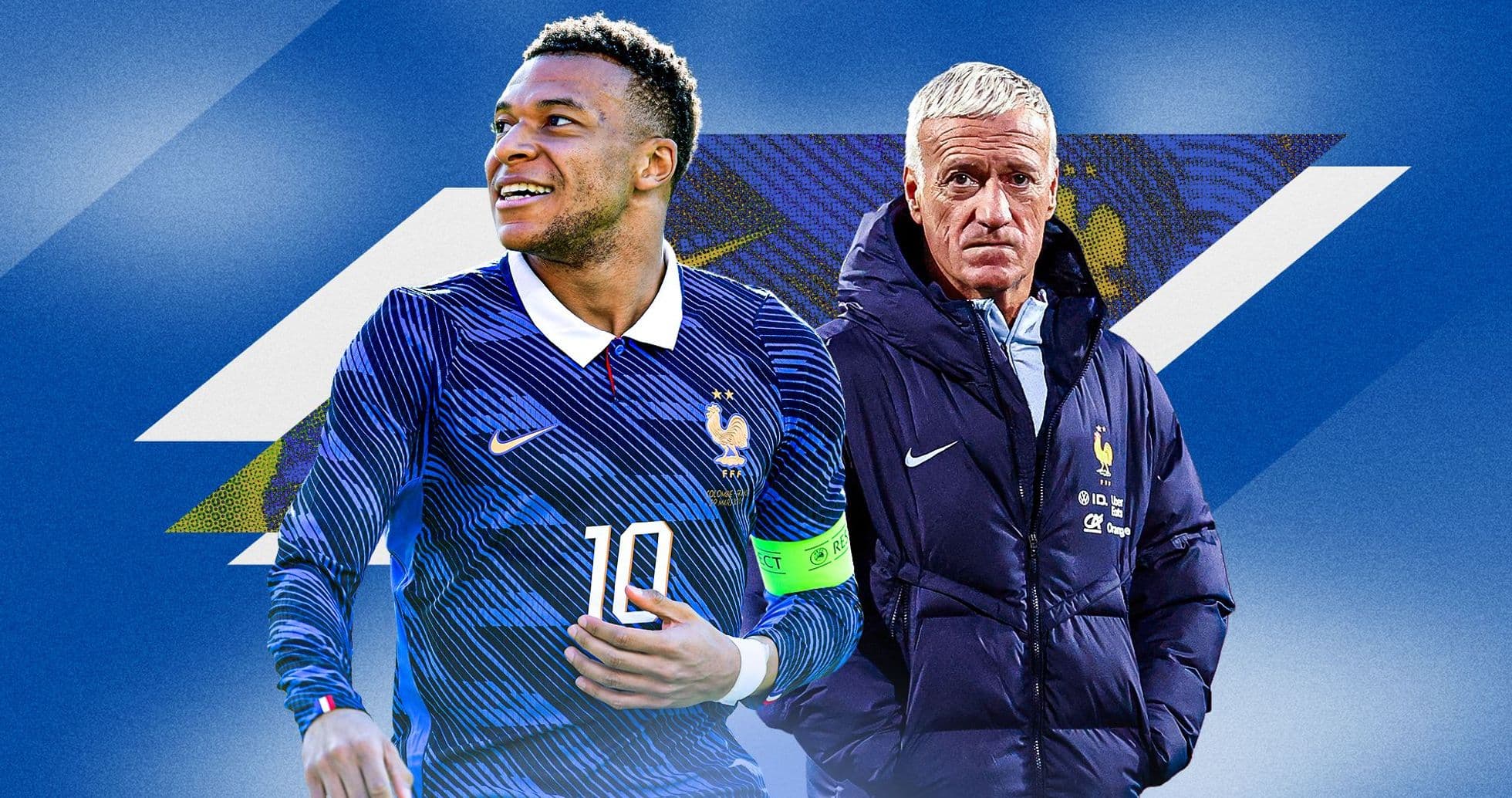
Look at the names and the picture sharpens. Kylian Mbappe, still a one-man storm, still a guarantee of chaos and goals. Michael Olise, fresh from a breakout year at Bayern Munich. Desire Doue and Ousmane Dembele, twin sparks in Luis Enrique’s thrilling Paris Saint-Germain attack. Four players, all in form, all capable of deciding a game on their own. Most nations would build a project around one of them. France bring all four.
The attacking depth is absurd. On paper, they can match or surpass any frontline in the world game. They have pace, flair, goals, and a frightening variety of profiles. If the game opens up, if it turns into a shootout, there is no country better equipped to turn the screw.
The questions lie behind them.
France’s defence has shown too many cracks, too many moments of uncertainty for a team with such lofty ambitions. The back line has looked vulnerable, the structure occasionally stretched, and now there is the added concern over William Saliba’s fitness. His calm, his reading of the game, his presence in duels – all of that has become central to how France want to defend. If he is not fully fit, Deschamps has a genuine problem to solve.
There is another challenge, one that has followed this generation for years: the dressing room. This is not always the easiest group to manage. Egos, expectations, personalities – the mix can be volatile. When it works, when the mood is right, France look unstoppable. When it doesn’t, the whole project can wobble. Holding that balance, keeping the group aligned for one more month, might be as important as any tactical tweak.
Didier Deschamps knows this better than anyone.
He has been the constant presence through the turbulence and the triumphs, the man who took over a fractured national team in 2012 and turned it into a machine built for the biggest stages. His methods have been criticised at home and abroad – the style of play, the conservatism, his leadership. The noise never really goes away. Yet the record is undeniable.
Under Deschamps, France have won the 2018 World Cup, beating Croatia in Moscow. They lifted the UEFA Nations League in 2021, overcoming Spain in Milan. They reached the Euro 2016 final on home soil, only to be stunned by Eder’s extra-time winner for Portugal. They went toe-to-toe with Argentina in the 2022 World Cup final, lost only on penalties after one of the greatest matches the tournament has ever seen.
Four major finals. Two trophies. A decade of relevance at the very top.
This summer is the end of that road. Deschamps’ contract runs out in July and will not be renewed. After almost 15 years in charge, this is his last campaign with Les Bleus. There is no safety net, no “we’ll go again” under the same man. It is his final act, his last chance to shape the legacy of this golden era.
Naturally, the spotlight falls on Mbappe. He is the captain, the number 10, the symbol of the team and the face of the nation’s footballing identity. Every camera finds him, every storyline bends back in his direction. Yet there is a growing sense that another figure could redefine the hierarchy of this side over the next few weeks.
Michael Olise is arriving at this tournament in full flight. At Bayern, he has stitched together a season that demands attention: double figures for both goals and assists in the Bundesliga for the second straight year, and high-end output in the Champions League. His performance in Bergamo against Atalanta – two goals, one assist in a 6-1 demolition – felt like a statement. Not just a good night, but a declaration that he belongs among the elite.
Olise is not merely productive; he is devastating. He creates, he finishes, he sustains his level over long stretches. His hat-trick against Northern Ireland in France’s final warm-up game only underlined the point. At 24, he is stepping into that dangerous age for opponents: old enough to understand the game, young enough to play it at full throttle. If this tournament tilts his way, he could emerge not just as France’s most valuable player, but as one of its defining stars overall.
Behind the headline names, the talent keeps coming.
Maghnes Akliouche is the latest to step out of Monaco’s academy and onto the international stage. Deschamps brought him into the senior squad during qualifying, and the response was immediate. A goal against Azerbaijan. An assist against Iceland. No nerves, just impact.
His club season confirmed the impression. Seven goals and twelve assists across Ligue 1 and the Champions League marked him out as more than a prospect. Akliouche operates primarily as a right-sided attacking midfielder, perfectly suited to a 4-2-3-1, but he can slide inside and dictate as a central playmaker. He is not the archetypal slight winger who lives only on trickery and tight spaces. He brings physical presence as well as technique, a combination that feels tailor-made for the modern game’s intensity.
He will not start every match. He might not start many at all. Yet he carries the profile of a tournament weapon – the kind of substitute who can tilt a tight knockout tie with one run, one pass, one moment of invention when the game has gone flat and legs are heavy.
That is the reality of this France squad. Stars at the top, depth in reserve, game-changers waiting for their cue.
The attack is ready. The coach is on his farewell tour. The supporting cast is restless and gifted. If Deschamps can keep the defence steady and the dressing room quiet, who is going to stop Les Bleus from marching all the way to New Jersey for one more shot at history?