.svg&w=384&q=75 "Pitchgist logo")
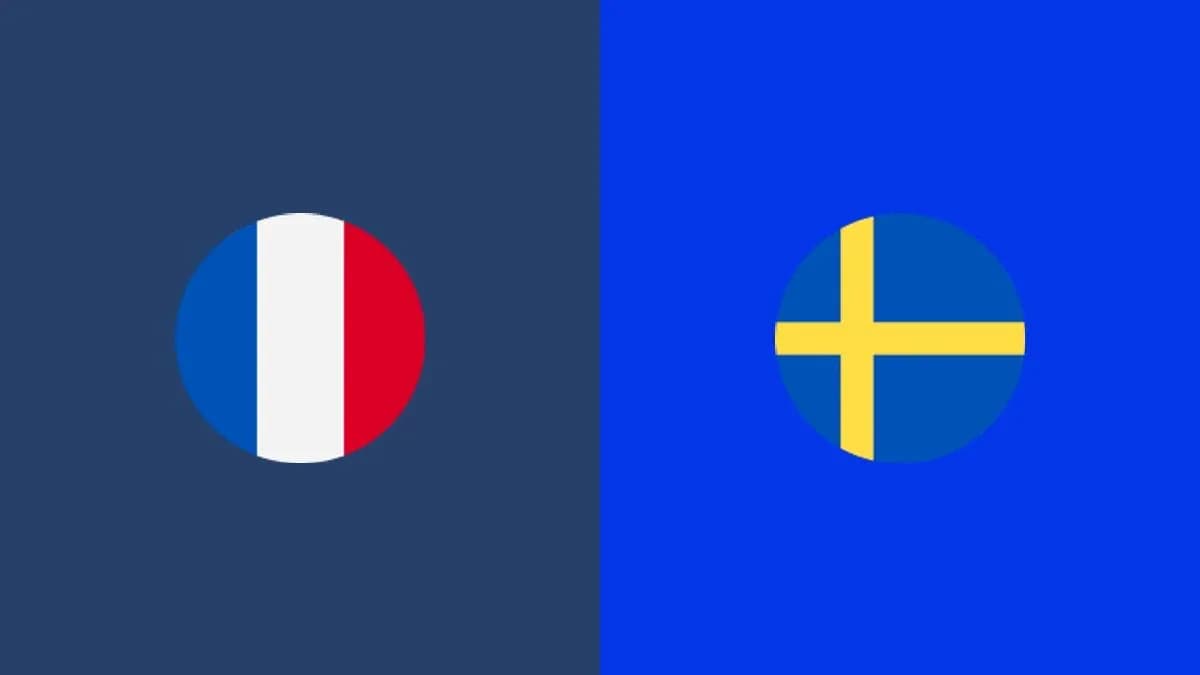
France v Sweden: Deschamps’ Last Dance Meets Potter’s Wild Card
On 30 June 2026, under the lights of the New York New Jersey Stadium, a familiar heavyweight steps into a familiar arena. France, two-time world champions and serial deep runners in this competition, open their knockout campaign against a Sweden side that has lurched, stumbled and somehow survived its way into the Round of 32.
It is not just another French knockout tie. It is the beginning of the end for Didier Deschamps.
The man who has defined an era of French football has already confirmed he will step down after this tournament. Every game from here is potentially the last chapter of a 12-year story. His team arrive flawless from the group phase. The stakes for them are obvious. For Sweden, they are different: disrupt the script, or be written out of it quickly.
France in full stride
France did not so much navigate Group I as clear it. Senegal beaten 3-1. Iraq brushed aside 3-0. Norway dismantled 4-1. Nine points, ten goals scored, two conceded, barely a scare.
If the world needed reminding that this is not a one-man Mbappé show, Ousmane Dembélé obliged. His hat-trick against Norway turned a straightforward qualification into a statement. It underlined the depth Deschamps has at his disposal: when the spotlight drifts towards Kylian Mbappé, another star steps into it.
Behind them, the structure is familiar and ruthless. Aurélien Tchouaméni and Adrien Rabiot lock down midfield, dictate tempo, and give licence to the more expressive talents. Michael Olise and Désiré Doué drift into pockets between the lines, overloading half-spaces and pulling defences apart. The plan is simple in theory, brutal in practice: suffocate you with control, then kill you with isolation and speed on the flanks.
France arrive in knockout mode with four wins from their last five, the only blemish a pre-tournament friendly defeat to Ivory Coast. Since then, they have been in gear. This is not a side playing its way into form. It is already there.
Sweden’s chaotic route
Sweden’s road could hardly have been more different. Graham Potter’s team have veered between extremes.
They were hammered 5-1 by the Netherlands, then responded with a 5-1 demolition of Tunisia. They then dug out a 1-1 draw against Japan that was just enough to squeeze them through as one of the best third-placed sides. Over their last five games, they have scored ten and conceded ten. Every match feels like a coin toss.
That volatility is both threat and warning. Sweden can hurt teams. They can also unravel.
Potter’s side carries genuine firepower. Alexander Isak, Viktor Gyökeres and Anthony Elanga give Sweden a front line that can run, press, and finish. Elanga arrives with a long-range strike against Japan still fresh in the memory, a reminder of what can happen if he is given grass to attack and time to set his sights.
Yet the numbers do not lie. Seven scored, seven conceded in the group. A defence that bent, then snapped, then recovered, but never convinced. Against a French attack that has already found its rhythm, that fragility becomes the central question of the tie.
Fault lines at the back
Both coaches walk into this match with defensive concerns, but the scale differs.
For France, the issue is about fitness management, not system surgery. William Saliba, rested against Norway with a back problem, is expected to play through discomfort to anchor the defence. If he starts alongside Dayot Upamecano, with Jules Koundé and Lucas Hernández flanking them, Deschamps will feel his back four is as close to settled as it has been.
That matters. France have occasionally looked passive without the ball when their structure has been tweaked. With Mike Maignan behind them, a restored first-choice backline should tighten the spaces that opponents sometimes find when Les Bleus lose possession high.
Sweden’s puzzle is more drastic. Isak Hien’s injury strips Potter of a key centre-back and forces a reshuffle through the spine of the team. Victor Lindelöf, used in midfield, is expected to drop back into central defence, with Gabriel Gudmundsson and Gustaf Lagerbielke likely forming part of a back three.
That move opens a door for Lucas Bergvall. The teenage Tottenham prospect is tipped to step into the midfield engine room, a bold call in a knockout tie against one of the tournament favourites. It gives Sweden energy and forward thrust, but also inexperience in the most punishing area of the pitch.
Behind them, Oliver Zetterström faces the biggest night of his career. Sweden’s altered defence will need him to be flawless: commanding crosses, reading through balls, and staying alive to the constant movement of Dembélé and Olise cutting in from wide.
Styles on a collision course
The game’s shape feels clear before a ball is kicked.
France will look to dominate territory and possession, using that double pivot to pin Sweden back and create overloads between the lines. Olise drifting inside from the right, Doué stepping into pockets, Dembélé driving at full-backs, Mbappé waiting for his moment to isolate and explode. It is a suffocation strategy: push Sweden deeper, then pick at the seams until something gives.
Sweden will not try to match that control. Their threat lies in what happens when they break free.
Potter’s plan leans on direct, vertical transitions. Win the ball, turn quickly, and hit space before France can reset. Elanga and Gyökeres can stretch any back line. Isak, dropping off the front, links play and drags centre-backs into uncomfortable zones. If Sweden can drag France into a game of open-field sprints, the contest changes.
The risk is obvious. To counter, Sweden must leave some space. Against Mbappé, that is a dangerous bargain.
Likely line-ups and key battles
France’s probable XI reads like a statement of intent:
Maignan; Koundé, Upamecano, Saliba, Hernández; Tchouaméni, Rabiot, Olise, Dembélé, Doué; Mbappé.
Sweden’s likely response:
Zetterström; Lagerbielke, Lindelöf, Gudmundsson; Bernhardsson, Bergvall, Ayari, Stroud; Elanga, Gyökeres, Isak.
The duels are stark.
Can Tchouaméni and Rabiot smother Bergvall and Yasin Ayari before they can feed the front three? Can Lindelöf, repositioned at the back, read Mbappé’s runs and Dembélé’s angles while organising a reshaped defence? Will Sweden’s wing-backs, Alexander Bernhardsson and Elliot Stroud, hold their nerve when Dembélé and Olise drive at them one-on-one?
At the other end, Saliba and Upamecano must track Isak’s movement between the lines and handle Gyökeres’ physicality. One mistimed step, one missed duel, and Elanga will be gone into the space behind.
History and weight
Recent history leans France’s way. The last time these sides met, in November 2020, Les Bleus won 4-2 in the UEFA Nations League. Sweden had taken the reverse fixture that year 1-0 in Stockholm, but across the last five meetings, France hold three wins to Sweden’s one.
They also shared a World Cup qualifying storyline in 2016 and 2017, each winning at home. Those nights feel distant now, but they underline a theme: Sweden do not always fold. They have, on occasion, found a way to bloody France’s nose.
This time, though, the gap in form is stark. France swept Group I. Sweden slipped out of Group F in third. One side looks like a machine built for late July. The other is still trying to stop leaking goals.
Deschamps’ legacy, Potter’s gamble
Beneath the tactics and team sheets, the narrative is unavoidable.
For Deschamps, every knockout tie is another step towards either a crowning farewell or an abrupt full stop. He has Maignan, Koundé, Hernández, Konaté, Saliba, Upamecano, Tchouaméni, Kanté, Rabiot, Mbappé, Dembélé, Olise, Doué and more at his disposal. The talent is there to leave with another deep run, perhaps more.
For Potter, this is something else: a chance to throw a spanner into the tournament’s carefully drawn brackets. He has already shown he will trust youth and accept chaos. Sweden’s path to this point proves they can live in games that swing wildly. The question is whether that volatility can survive 90 minutes, or more, against a side as ruthless as France.
Kick-off comes at 21:00 GMT, 17:00 EST. One team walks out as a clear favourite, the other as an unstable underdog with nothing to lose.
In a World Cup knockout, that is sometimes exactly when the script tears.