.svg&w=384&q=75 "Pitchgist logo")
Fenerbahçe Dominates Gornik Zabrze in Tactical Showdown
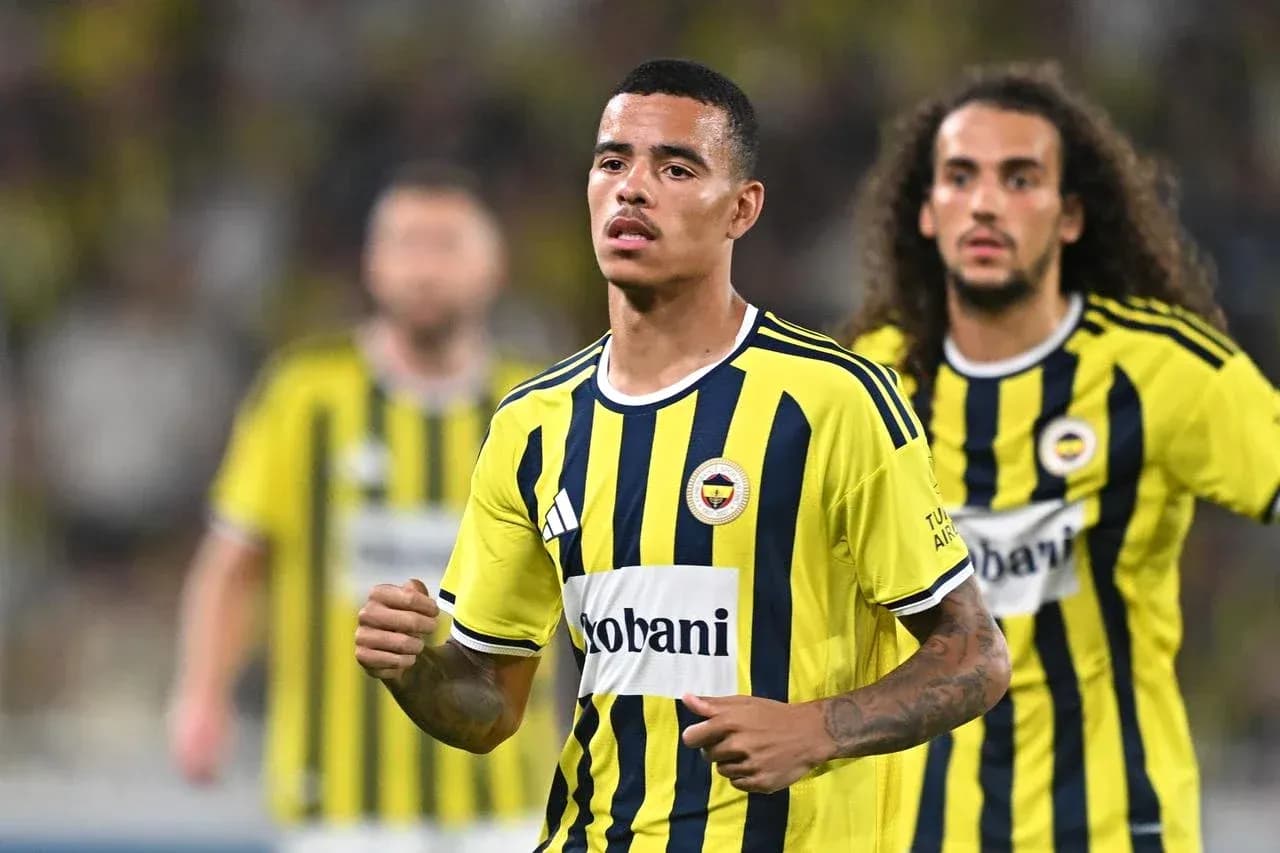
Fenerbahçe’s 1-0 win over Gornik Zabrze at Chobani Stadium was a tactical strangling more than a spectacle. Ismail Kartal’s 4-2-3-1 established near-total control of territory and tempo, translating into 79% possession, 15 total shots and 9 corners, but only a single goal. Michal Gasparik’s 4-3-3, by contrast, morphed into a deep 4-5-1 for long stretches, focused almost exclusively on survival, reflected in just 2 total shots and 203 passes.
Structurally, Fenerbahçe’s build-up was textbook for a dominant 4-2-3-1. With M. Günok in goal, the back four of N. Semedo, M. Škriniar, N. Aké and J. Oosterwolde had the platform to push high, supported by the double pivot of M. Guendouzi and B. Elmaz. The passing volume – 765 total passes, 703 accurate at 92% – underlines a patient, circulation-heavy approach, using lateral switches and third-man runs rather than constant vertical risk. The full-backs held advanced positions to pin Gornik’s wingers, while Fred, I. Kahveci and K. Aktürkoğlu operated between the lines behind Talisca.
The decisive 37th-minute goal from Talisca came as the logical product of that territorial squeeze. By then, Gornik’s midfield three had been forced so deep that their first line of pressure was often 10–15 metres inside their own half. Fenerbahçe’s ability to keep the ball in the final third – 6 shots inside the box out of 15 total – reflected sustained occupation of dangerous zones rather than sporadic counters. Even without an assist on the goal, the structure around Talisca consistently created isolation or mismatches against a retreating back line.
Out of possession, Fenerbahçe’s control was just as clear. They allowed only 2 total shots (1 on goal, 1 off), with 1 blocked, which speaks to both effective counter-pressing and a compact rest-defence. Guendouzi and Elmaz were key in collapsing on Gornik’s first pass after regains, preventing transitions before they could stretch the centre-backs. The foul count – 15 for Fenerbahçe versus 11 for Gornik – shows that Kartal’s side were willing to break rhythm with tactical fouls when their structure was briefly compromised.
Gornik Zabrze’s 4-3-3 was nominal rather than functional. In practice, it resembled a low 4-5-1, with wingers Y. Ikia Dimi and M. Khlan (before his late substitution) often dropping alongside L. Sadílek, M. Dietz and K. Urbanski to form a flat midfield line. Their 203 passes, 148 accurate (73%), illustrate how rarely they could string phases together under Fenerbahçe’s pressure. When they did escape, it was usually via direct balls toward E. Prekop or into the channels, but the lack of support runners meant these moments rarely turned into sustained attacks.
The goalkeepers’ roles underline the tactical story. M. Günok (Fenerbahçe) was largely protected, required to make only 1 save. His main contribution was as an extra outfield player in the first phase, helping maintain numerical superiority against Gornik’s first line. At the other end, P. Schulze (Gornik Zabrze) had to make 5 saves, a clear indicator of the volume and quality of Fenerbahçe’s final-third presence despite the modest scoreline. Gornik’s defensive block, while often numerically dense, still allowed 6 shots on goal and 4 blocked shots, meaning Fenerbahçe were consistently able to work shooting positions around the box.
The substitution pattern from Kartal in the second half was about maintaining intensity and refreshing the attacking structure rather than changing shape. At 46', L. Mercan (IN) came on for N. Aké (OUT), a like-for-like defensive change that preserved the back-four framework while adding fresh legs on the left. The double change on 69' – M. Asensio (IN) for B. Elmaz (OUT) and O. Aydın (IN) for K. Aktürkoğlu (OUT) – subtly shifted the attacking dynamics. Asensio’s arrival tilted the creative load more towards half-spaces and combination play, while O. Aydın added directness and depth running. Yet the basic 4-2-3-1 remained intact, with Guendouzi anchoring more of the midfield on his own.
On 83', M. Greenwood (IN) replaced I. Kahveci (OUT), injecting a different threat between the lines and in wide channels, again without altering the shape. Finally, at 87', S. Cherif (IN) came on for Talisca (OUT), a logical move to protect the goalscorer and add fresh pressing energy up front for the closing minutes. Each change was conservative in structural terms: Kartal clearly valued stability over experimentation with a slender 1-0 lead.
Gasparik’s substitutions were more reactive and aimed at chasing a game his side rarely looked like drawing level. At 72', S. Liseth (IN) came on for K. Urbanski (OUT) and O. Zmrzly (IN) for Y. Ikia Dimi (OUT), moves that suggested a desire for more verticality and physical presence higher up, possibly shifting towards a more direct front line. At 76', B. Donio (IN) replaced M. Dietz (OUT), adding fresh legs in midfield to support what transitions they could muster. The final change at 90+2', P. Warczak (IN) for M. Khlan (OUT), came too late to influence the tactical narrative.
Statistically, the verdict is clear: Fenerbahçe’s dominance in possession (79% to 21%), shots (15 to 2), corners (9 to 2) and passing (765 to 203) reflects a game where they controlled every major phase. The absence of recorded xG values prevents a granular quality assessment of chances, but 6 shots on goal versus 1, combined with 6 attempts inside the box, strongly implies Fenerbahçe generated the better opportunities. The lack of yellow or red cards in the data points to a match managed through positional discipline rather than reckless challenges.
From a broader tactical perspective, this was a demonstration of how a well-drilled 4-2-3-1 can suffocate a more modest 4-3-3 when there is a clear technical and organisational gap. Fenerbahçe’s only regret will be that the scoreboard did not more fully reflect their territorial and statistical superiority; for Gornik Zabrze, the narrow 1-0 margin flatters them relative to the tactical reality.