.svg&w=384&q=75 "Pitchgist logo")
England's World Cup Preparation: From Florida to Kansas City
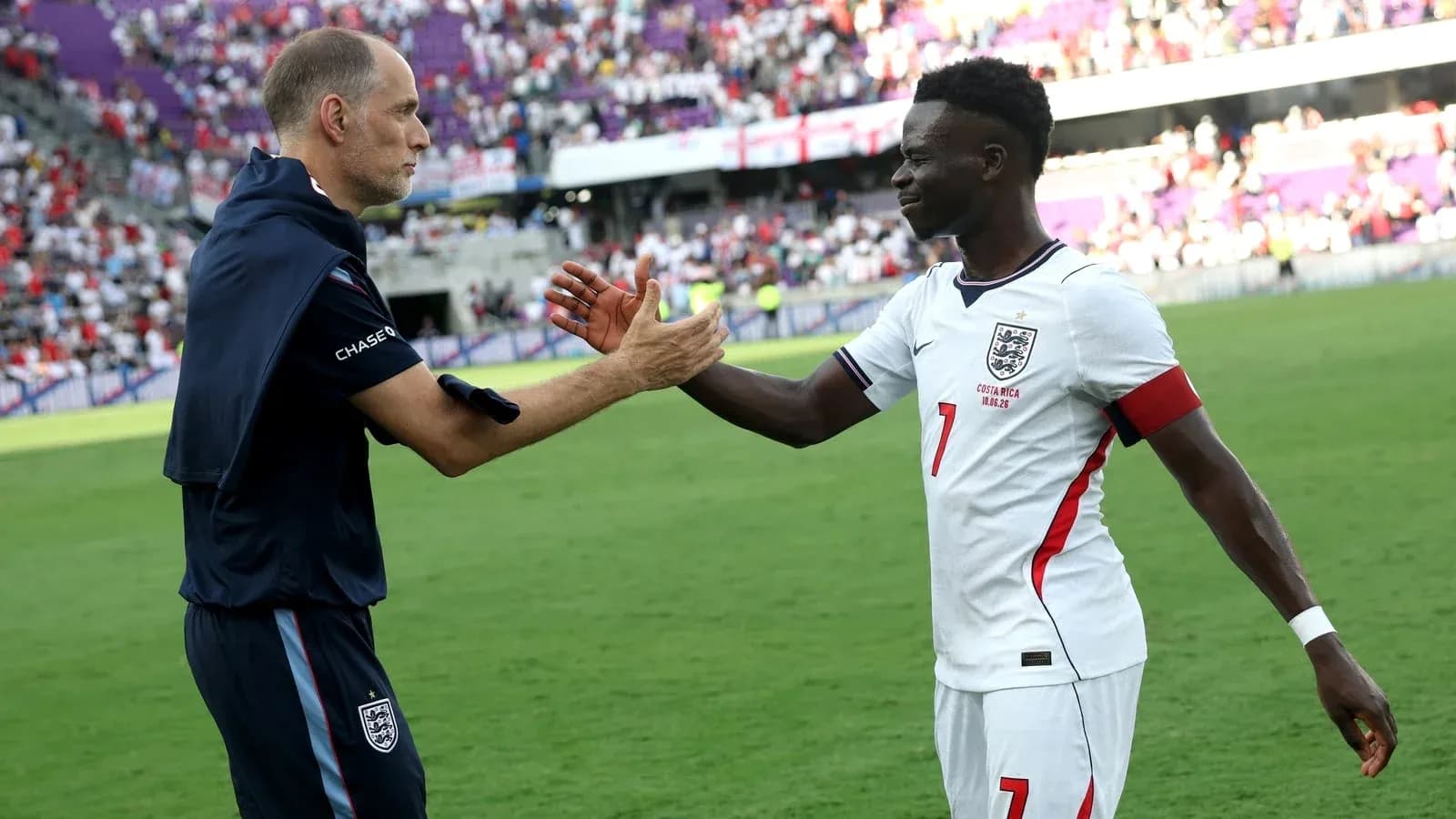
Thomas Tuchel is done with Florida. Done with the humidity, the afternoon storms, the empty stands of a behind-closed-doors friendly. England’s head coach is already looking north, to Kansas City, to the real start of a World Cup campaign that suddenly feels like it has teeth.
The Euro 2024 runners-up wrapped up their West Palm Beach camp on Thursday, signing off with a private game that capped a demanding 11-day spell in the furnace of a North American summer. They did not come for comfort. They came to suffer, to adapt, to harden.
And the signs, for now, are exactly what Tuchel wanted.
England turn up the heat
England’s stay in Florida has been built on sweat and small steps. They arrived last Monday, straight into the wall of heat and humidity, then plunged into a schedule designed to test lungs and legs as much as tactics.
First came Tampa. A 1-0 win over New Zealand in brutal conditions, the kind of match where the scoreline mattered less than the minutes in the legs and the way players coped with the airless evening.
Then Orlando turned it up another notch. In oppressive heat and with a weather delay thrown in, England produced something far more convincing: a 3-0 victory over Costa Rica that felt like a statement to themselves as much as to anyone watching.
Tuchel had demanded a shift. Not a tweak. A step up.
“I wished for that, I demanded that,” he said after the Costa Rica win. He had challenged his squad to raise everything – intensity, commitment, cohesion – and watched them respond. England pressed higher, combined sharper, and sustained their tempo in conditions that would have broken them a fortnight ago.
He pointed to the impact of the Arsenal contingent joining the camp, the extra edge in training, the way sessions in the Florida heat had begun to translate into cleaner patterns on the pitch. The adaptation, as he saw it, was no longer theoretical. It was visible.
“We see the adaptation to the heat, we see the adaptation to the climate and we see things clicking,” Tuchel said. The performance, he felt, justified the pain of the past week and a half. “We demanded from the players to take a next step, and they did.”
The message was clear: the result is a by-product. The way they play is the point. On Wednesday, in that delayed, draining friendly, England hit the level he wanted “for this moment” of the journey. Not the destination, but a convincing waypoint.
On Saturday, they fly to Kansas City. That is where the camp turns into a campaign.
Kansas City and Croatia on the horizon
England will set up in the Midwest with the intention of staying there until mid-July. That is the scale of their ambition. Among the favourites heading into this World Cup, they now move from conditioning to consequence.
Their opener comes quickly. Next Wednesday, Croatia await in Group L, a familiar and awkward hurdle on the biggest stages. The Floridian heat gives way to the intensity of tournament football, but Tuchel wants the same traits: energy, cohesion, a side that looks like it has lived together under pressure.
The American leg of their preparation has been about stripping away excuses. Climate? Dealt with. Travel? Already in the system. Now it becomes about decisions, details, and whether this group can finally convert promise into a trophy.
Morocco rocked by double injury blow
While England build, Morocco adjust. Their World Cup plans have been jolted by the loss of two key figures, both of them central to the country’s recent golden run.
Nayef Aguerd and Abde Ezzalzouli are out of the tournament. Their replacements – Marwane Saadane and Amine Sbai – have been drafted in, the Moroccan federation and FIFA confirming the changes as Mohamed Ouahabi reshapes his squad on the eve of another major campaign.
Aguerd’s story is a grim one. The 30-year-old defender has not played since early March, when a groin injury led to surgery. His recovery seemed straightforward until April, when tests revealed a fracture of his pubic bone. Ouahabi held on as long as he could, hoping his defensive pillar might yet recover in time, but on Thursday the decision finally came: Aguerd would not make it to Canada, Mexico and the United States.
It is a brutal repeat of a familiar theme. At the last World Cup in Qatar, Aguerd was injured in the last-16 tie against Spain and missed Morocco’s final three matches, including their historic semi-final run.
If that was bad, Ezzalzouli’s misfortune was freakish. The 24-year-old forward was injured in the weekend friendly against Norway in Harrison, New Jersey, as Morocco defended a corner. Teammate Chadi Riad landed awkwardly on his right knee. Ezzalzouli tried to play on. He couldn’t. He was forced off, and with him went one of Morocco’s most direct attacking threats.
Both men were part of the squad that stormed to the semi-finals in Qatar and reached the Africa Cup of Nations final on home soil in January. Losing that experience and that chemistry, this close to another World Cup, cuts deep.
Ouahabi now turns to his understudies.
Saadane, 34, made his debut for Morocco back in 2015 but has drifted in and out of squads since. A Saudi-based defender, he has been in the United States as cover and featured as a second-half substitute in Sunday’s 1-1 draw with Norway. He knows the environment, if not yet the role that now awaits him.
Sbai, 25, offers a different profile. Primarily a left winger, he only won his first cap earlier this month in a World Cup warm-up friendly against Burundi. Like Saadane, he has been training with the group, listed among the substitutes in recent games, waiting for a chance that has now arrived far sooner than anyone expected.
There is no easing-in period. Morocco open their Group C campaign against Brazil at the New York/New Jersey Stadium on Saturday. A heavyweight opponent, in a heavyweight venue, with a reshaped spine and a new face on the flank.
England move on to Kansas City with momentum and a clear plan. Morocco head to New York reshuffled, tested before a ball has even been kicked in anger. In a World Cup that already feels unforgiving, who adapts fastest?