.svg&w=384&q=75 "Pitchgist logo")
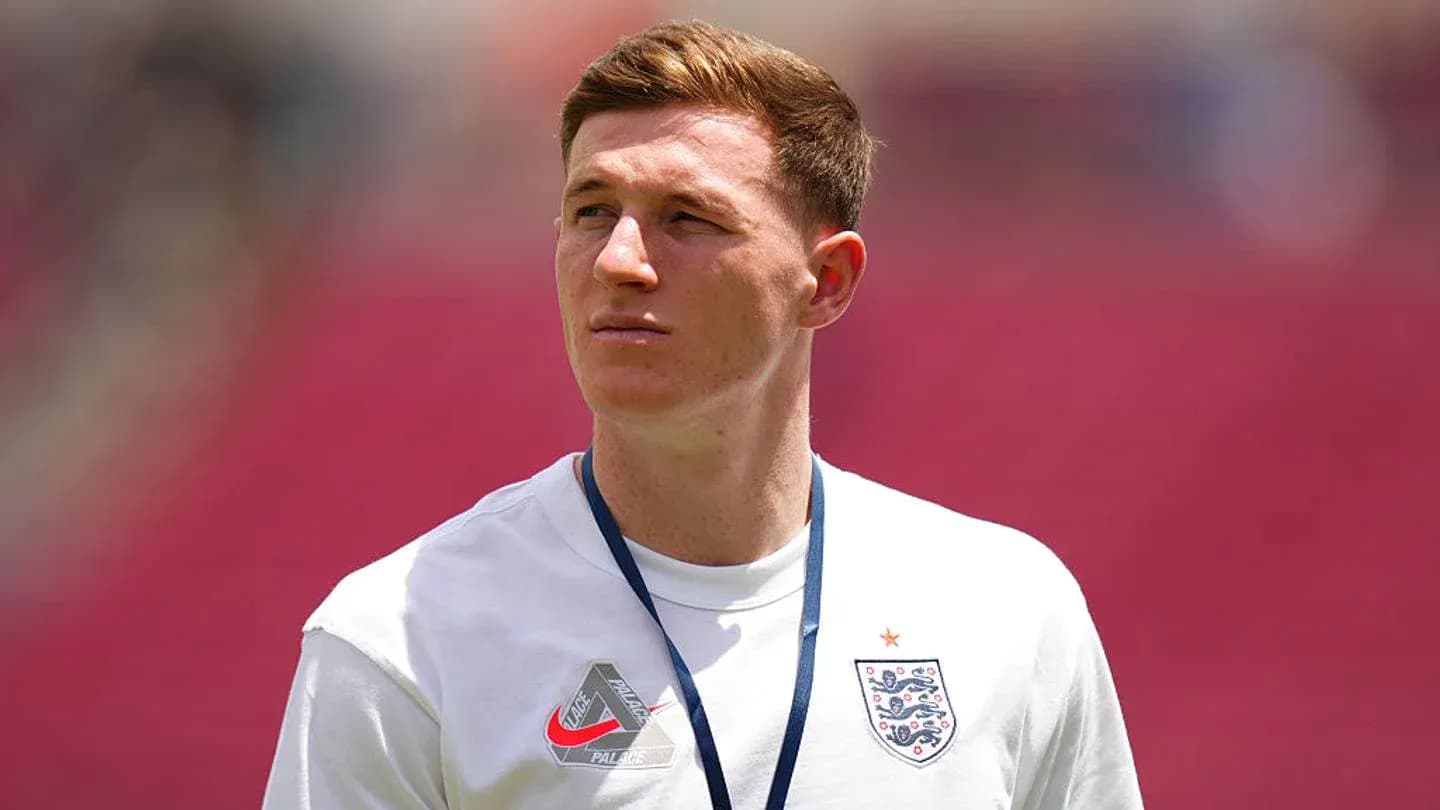
Elliot Anderson Transfer Stalemate: Forest Sets High Price
Manchester City are ready to blow the English transfer record to pieces for Elliot Anderson. Nottingham Forest know it – and they’re in no mood to blink first.
The Premier League champions have put a proposal on the table that starts at $141.7 million (£106 million) guaranteed, with add-ons that could push the final figure beyond $160.4 million (£120 million). That alone would nudge past Arsenal’s 2023 deal for Declan Rice, the current benchmark for an English player.
Forest’s response? Not enough.
Forest Name Their Price
This is not a selling club backed into a corner. Anderson is 23, under contract for another three years and coming off a breakout 2025–26 campaign that turned him from promising prospect into one of the division’s standout midfielders. He forced his way into the England squad in time for the 2026 World Cup and delivered statement performances against both Manchester clubs along the way.
So Forest are pushing the ceiling. Their internal yardstick is Alexander Isak’s 2025 move from Newcastle United to Liverpool: $167.1 million guaranteed, with only minor add-ons. That deal reset the Premier League market. Forest believe Anderson belongs at least in that bracket.
Surpass Isak and you’re in new territory. A Premier League record fee. Globally, only Neymar and Kylian Mbappé have commanded more before add-ons. Forest are effectively saying: if you want our midfielder, you pay in that stratosphere.
They can afford to be stubborn. There’s no expiring contract, no release clause, no pressure from looming free agency. Either a club meets their valuation and Forest walk away with a staggering sum to reshape their squad, or Anderson stays for another season as the heartbeat of their midfield. From their side of the table, that’s a powerful position.
A Market Shaped by Midfield Gold
Forest’s stance doesn’t exist in a vacuum. Recent years have dragged midfield prices into a new financial reality.
- Rice to Arsenal.
- Enzo Fernández to Chelsea.
- Moisés Caicedo, again to Chelsea, after Liverpool had an offer of similar magnitude accepted.
All three deals landed in 2023. All three stretched what used to be considered the upper limit for central midfielders.
Those transfers didn’t just move the goalposts. They lifted the entire pitch.
Against that backdrop, an Anderson valuation nudging towards $170 million no longer looks like wild fantasy. Clubs now pay for age, versatility, and the promise of a decade at the top as much as they pay for what a player has already done.
There is a historical echo at Forest too. In 1993, they sold Roy Keane to Manchester United for a British record £3.75 million, with Blackburn Rovers actually offering more. That number looks quaint now, but the principle hasn’t changed: if you own an elite midfielder in a seller’s market, you set the bar high and wait.
Why City Are Willing to Go This Far
From City’s perspective, this isn’t just about winning another bidding war. It’s about shaping the post-Pep Guardiola era.
Anderson’s all‑round profile fits the model that has underpinned City’s dominance: technically sharp, tactically flexible, able to operate in multiple roles across midfield. He turns 24 in November. Sign him now and, in theory, you lock in a core starter for eight, nine, maybe ten years.
Viewed over that kind of timeline, a fee approaching $170 million starts to look like a long-term asset rather than a short-term splurge.
City have done this before. David Silva, Yaya Touré, Sergio Agüero, Kevin De Bruyne, John Stones, Bernardo Silva – players bought for big money who then anchored an era. The club will move on quickly from those who don’t hit the required level, but when they get it right, the investment pays itself back in trophies and stability.
They also very rarely miss in the market. That track record emboldens them. If their recruitment team is convinced Anderson can be the next midfield cornerstone, the numbers become easier to justify.
There is another layer of urgency: competition. Manchester United are also keen, and City know that letting a player of this calibre slip across town would sting. Dominance in Manchester has been blue for a decade. Deals like this help keep it that way.
The Stalemate
Right now, the gap is not about total package, but structure. City are prepared to climb past $160 million with add-ons. Forest want more of that money guaranteed, closer to the Isak template of a huge fixed fee and minimal extras.
Both sides can point to precedent. Both can argue they’re being reasonable in an unreasonable market.
For Forest, there is little incentive to soften. Anderson’s performances have already inflated his value, and another strong season could push it higher still. The club can sell the project to him for at least one more year: stay, lead the team, and if someone meets the number, you go.
For City, the question is simple and brutal: how badly do they want him? They have the resources to turn this into the most expensive English transfer of all time and the most expensive in Premier League history. They are already within touching distance of that line.
The next move decides whether Elliot Anderson becomes the latest record-breaking symbol of football’s financial boom – or whether he spends another season dictating games in Forest green, waiting for the market to come to him.