.svg&w=384&q=75 "Pitchgist logo")
Durham's Drink-Drive Checks After England's World Cup Win
In the grey half-light of a Durham rush hour, with commuters inching towards the city centre and the country still buzzing from England’s 4-2 win over Croatia in Dallas, police pulled cars out of the traffic and lined them up at the roadside.
Engines idled. Windows dropped. Drivers blew into plastic tubes.
This was the morning after the night before, and Durham Constabulary wanted to know how many fans had celebrated Harry Kane’s latest World Cup heroics a little too hard – and were still over the limit on their way to work.
Morning-after reality check
Officers stopped motorists at random, asking them to take roadside breath tests as part of a targeted drink-drive campaign triggered by England’s opening Group L victory. The timing was no accident.
Durham Police pointed to figures showing around 20% more collisions on England match days. With this World Cup staged in North America, kick-off times fall later in the evening for UK viewers, pushing drinking sessions deeper into the night and raising the risk that alcohol lingers in the bloodstream long after the final whistle.
None of the drivers tested while the Press Association watched failed the breathalyser. One, though, discovered they were close to the legal limit – a jolt that underlined exactly why the operation was there.
Sergeant Sarah Manser, overseeing the checks, did not sugar-coat the message.
“We come out this morning to give that message that alcohol still might be in your system the next morning,” she said. “We’ve had a couple this morning already who haven’t blown over the limit, but they have had alcohol in the system. Please just don’t and drink-and-drive, it’s just as simple as that.”
The campaign is built on that simplicity: you might feel fine, but your body may still be processing last night’s pints while you’re changing lanes on a dual carriageway.
Driver Louis Renwick, who recorded no alcohol at all, backed the clampdown.
“There’s too many deaths on the roads through drink-driving,” he said, welcoming the sight of blue lights and breathalysers before 9am.
Dallas, beer and the “Palace” atmosphere
The contrast with the scenes 4,600 miles away could hardly be sharper.
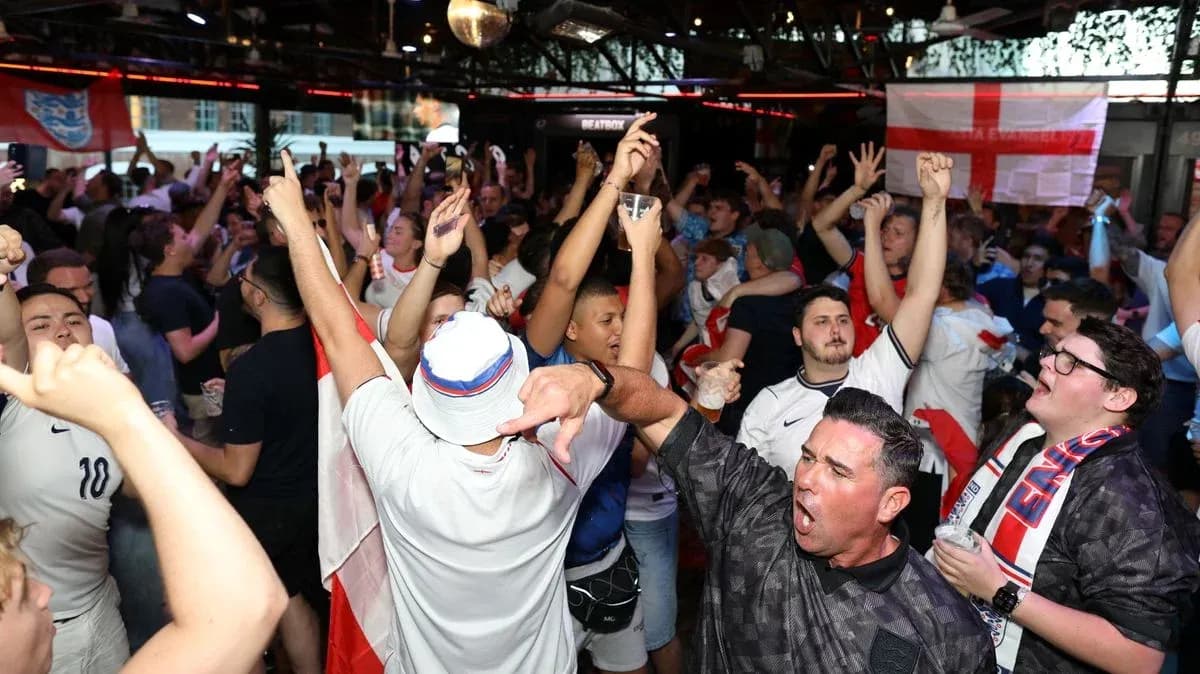
In Dallas, Texas, England’s opener against Croatia had turned The Londoner Pub into a little slice of home. Fans poured through the doors after the venue advertised a later closing time than its rivals. They came for beer, for football, for the shared belief that this might be another special summer.
They got all three – and then some.
By the end of the night, the pub had sold 2,352 bottles of beer and more than 5,000 drinks in total, racking up takings of over £30,000. The numbers were staggering for a single evening, but so was the demand. The place hit capacity so quickly that police stepped in, videos showing officers ordering fans out even as they belted out the national anthem.
With only two security guards on duty, the crush became unmanageable. The “Palace in Dallas” atmosphere – part FA Cup tie, part Super Bowl spectacle – tipped into what the pub would later call “mayhem”.
Inside the stadium, the tone was very different, though no less intense. England’s 4-2 win felt wild, untidy and thrilling, a game that veered from chaos to control. At times it resembled a frantic third-round cup tie. At others it had the sweep of a global event, a World Cup opener dressed up in American showbusiness.
By the time Marcus Rashford slid in the fourth goal in the 85th minute, England fans were in full voice. “Hey Jude”, “Wonderwall”, “Sweet Caroline” – and then, inevitably, “Football’s Coming Home” rolling around the stands as Croatia finally buckled.
Among the crowd, American fan Jessica Long grabbed the hand of a visiting reporter, eager to talk about the tournament arriving in her home city. A former London Marathon runner, she had once pounded past his flat in the capital; now she stood in Dallas, watching England, and grinning at the sheer scale of it all.
“This is brilliant what an amazing day,” she said. “The World Cup is fantastic – look at everyone coming together.”
The cost of mayhem
Back at The Londoner, the morning brought a harsher reckoning.
The pub confirmed it had been ordered to close early by the fire marshal after the scenes during the watch party. In a statement, it stressed that the eye-catching sales figures did not reflect the full story of the night.
“The sales are overinflated in reports and do not account for the destruction of our property and landscaping,” it said.
“We are incredibly grateful for the business and have done our absolute best to manage it.
“Reminder to our guests: We are in a complex of other businesses, but there are also residences in Mockingbird Station.”
The message was clear: the World Cup might bring a surge of trade and a carnival feel, but there is a limit – in crowd numbers, in safety, in respect for neighbours.
One night, two sides of the same story
From Durham’s damp roadside to Dallas’s overflowing bar, the same thread runs through it all: England play, the country drinks, and someone has to deal with the consequences.
For the police on a chilly morning in the North East, that means breathalysers, warnings and the hope that a few awkward conversations at the roadside will stop a tragedy further up the road.
For a pub in Texas, it means closing early under orders, counting the takings, then counting the cost in damage and strained relations with those living nearby.
The football will keep rolling on – England’s odds have already shortened to 13/2 to win the tournament – and the nights will keep stretching later as the World Cup unfolds across North American time zones.
The real question, as the next round of games looms and another wave of fans heads for the bar, is who will remember the limits when the final whistle blows and the party spills into the street, or onto the morning commute.