.svg&w=384&q=75 "Pitchgist logo")
Cagliari vs Torino: Late-Season Serie A Clash
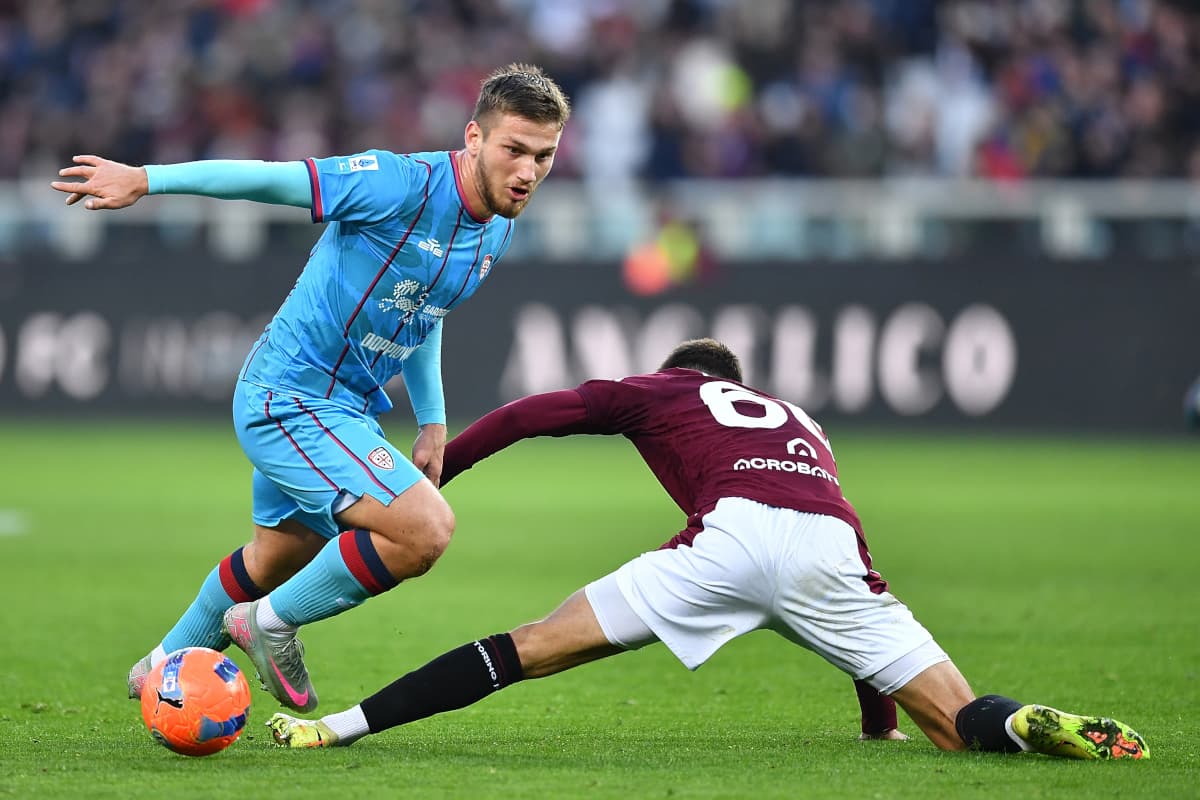
Unipol Domus stages a tense late-season Serie A meeting on 17 May 2026 as Cagliari host Torino with both sides still shaping their final positions in the table. The stakes are different but clear: Cagliari, 16th with 37 points, are trying to lock in safety and avoid being dragged into any last‑day drama, while 12th‑placed Torino (44 points) are chasing a top‑half push and a more respectable finish after an erratic campaign.
Context and form
In the league, Cagliari’s season has been defined by struggle but also resilience. They have 9 wins, 10 draws and 17 defeats from 36 games, with a goal difference of -15 (36 scored, 51 conceded). At home they have been noticeably stronger: 6 wins, 4 draws and 8 losses from 18, scoring 20 and conceding 22. That profile – more solid in Sardinia, still vulnerable but competitive – makes Unipol Domus an important factor.
Torino sit four places higher but with only a seven‑point cushion. Their overall record of 12 wins, 8 draws and 16 defeats (goal difference -18, 41 for and 59 against) underlines a team that scores slightly more than Cagliari but concedes even more. Away from Turin, they have 4 wins, 5 draws and 9 losses, with 16 goals scored and 32 conceded – less productive and more fragile on the road.
Recent form hints at a contrast in momentum. Cagliari’s last five in the league read “LDWLW”, a pattern of inconsistency but with two wins in that stretch. Torino’s “WLDDW” suggests a more stable run, with just one defeat in five and points taken regularly. Across all phases of the season, though, both sides have long, streaky form lines: Cagliari’s season form string shows several clusters of losses punctuated by brief winning bursts, while Torino’s includes repeated sequences of defeats offset by short winning runs. Neither side has been able to sustain high performance over long periods.
Tactical tendencies and shapes
Across all phases, Cagliari have been tactically flexible but with a clear preference. Their most-used formation is 3‑5‑2 (17 matches), backed up by occasional switches to 3‑5‑1‑1 and various back‑four systems (4‑5‑1, 4‑3‑1‑2, 4‑3‑2‑1, 4‑3‑3, 4‑4‑2, 5‑3‑2, 3‑4‑2‑1, 5‑4‑1, 4‑2‑3‑1). That suggests a coach who has searched for balance between protection and attacking support.
In 3‑5‑2 at home, Cagliari typically look to use the wing‑backs to provide width and to compensate for relatively modest scoring output (1.1 goals per home game). With 20 home goals and 22 conceded, they are rarely involved in wild scorelines; they rely on structure, compactness and set‑pieces rather than open, expansive football. Their 8 clean sheets (6 at home) show that when the defensive block is right, they can keep games tight. However, 14 matches without scoring across all phases (7 home, 7 away) underline their attacking limitations.
Torino, by contrast, are also heavily wedded to a back three: 3‑5‑2 is their primary setup (16 matches), with 3‑4‑1‑2 and 3‑4‑2‑1 the next most frequent. They, too, have flirted with a back four (4‑3‑3) and some hybrid systems, but the pattern is clear: a three‑centre‑back base with wing‑backs and at least one support player behind the striker. Despite that, their defensive record is poor – 59 conceded in 36 – which points to issues in defensive transitions and individual errors rather than purely structural flaws.
Going forward, Torino average 1.1 goals per game across all phases, very similar to Cagliari, but they are more reliant on moments of individual quality. Their biggest away win this season is 0‑3, showing they can be ruthless when they click, yet their heaviest away defeat is 6‑0, illustrating how badly things can unravel.
Discipline could also shape the rhythm. Cagliari pick up a lot of yellow cards late in games (26.92% of their cautions between minutes 76‑90) and both of their red cards have come in that same period. Torino also accumulate cards as matches wear on, with the bulk of their yellows from 61 minutes onwards and a red between 46‑60. In a tight, nervy late‑season fixture, that late‑game aggression could be decisive.
Key absences and selection headaches
Cagliari arrive with a significant absentee list. Confirmed out are M. Felici, R. Idrissi and L. Pavoletti (all knee injuries), J. Liteta (thigh injury) and the suspended J. Pedro (yellow cards). That removes both depth and experience, especially in attack: Pavoletti and Pedro are traditional reference points in the final third and in set‑piece situations.
On top of that, G. Borrelli (thigh), L. Mazzitelli (calf) and Y. Mina (calf) are all listed as questionable. Any or all of those doubts turning into absences would force Cagliari to lean even more heavily on their remaining core and may limit their ability to rotate or change games from the bench.
Torino’s situation is slightly less severe but still notable. G. Gineitis is suspended (yellow cards), while Z. Aboukhlal (muscle), F. Anjorin (hip) and A. Ismajli (muscle) are all questionable. Gineitis’ ban affects central midfield depth and could influence the balance in their 3‑5‑2 or 3‑4‑1‑2, potentially forcing a more conservative or makeshift solution in the middle.
Star power: Simeone’s influence
The standout attacking figure in this fixture, based on the data provided, is Torino forward G. Simeone. Across all phases this Serie A season he has 11 goals in 30 appearances (25 starts, 2065 minutes), with a solid 6.8 average rating. He averages nearly two shots on target per 90 (28 on target from 56 total shots) and contributes 19 key passes, indicating he is more than just a penalty‑box finisher.
His duel numbers (271 contested, 106 won) and dribbles (46 attempted, 22 successful) show a striker willing to battle physically and work the channels, which fits Torino’s three‑at‑the‑back, wing‑back‑driven system. Importantly, his penalty line shows 0 scored and 0 missed, so there is no record of him converting from the spot this season; any narrative about his penalty prowess would be unfounded.
For Cagliari, no individual top‑scorer data is provided, which reinforces the picture of a side sharing goals around rather than leaning on a single prolific forward. That makes collective structure and set‑piece execution even more critical, especially with Pedro and Pavoletti unavailable.
Head‑to‑head: recent competitive history
Looking at the last five competitive meetings (all in Serie A, friendlies excluded), the record is finely balanced:
- 27 December 2025, Stadio Olimpico di Torino: Torino 1‑2 Cagliari – Cagliari away win.
- 24 January 2025, Stadio Olimpico Grande Torino: Torino 2‑0 Cagliari – Torino home win.
- 20 October 2024, Unipol Domus: Cagliari 3‑2 Torino – Cagliari home win.
- 26 January 2024, Unipol Domus: Cagliari 1‑2 Torino – Torino away win.
- 21 August 2023, Stadio Olimpico Grande Torino: Torino 0‑0 Cagliari – draw.
Over these five games, Cagliari have 2 wins, Torino have 2 wins, and there has been 1 draw. At Unipol Domus specifically, the last three league meetings have produced two Cagliari wins (3‑2 and 3‑2) and one Torino win (1‑2), with goals regularly flowing.
Set‑pieces and penalties
Both sides have spotless team‑level penalty records this season: Cagliari have scored 2 of 2, Torino 5 of 5. With neither side missing from the spot across all phases, any penalty awarded on Sunday could carry extra weight in what may be a tight contest. However, no individual Cagliari penalty taker data is provided, and Simeone has not scored a penalty, so the identity and reliability of the takers beyond the raw conversion numbers remains an open tactical detail.
The verdict
This fixture sets up as a clash between Cagliari’s need for security and Torino’s push for a stronger final position, framed by similar tactical shapes but different risk profiles.
Cagliari’s home record, their 6 clean sheets at Unipol Domus, and a recent head‑to‑head history that has seen them score freely at this venue all point towards a side capable of rising to the occasion despite injuries. Their main concern is whether they can generate enough attacking threat without Pedro and Pavoletti and with several others doubtful; another game where they “fail to score” – something that has happened 14 times this season – would be dangerous.
Torino bring slightly better recent form and the individual quality of G. Simeone, but their away numbers (4‑5‑9, 16 scored, 32 conceded) and a season‑long tendency to concede heavily when things go wrong make them far from a safe bet. Their back three will be tested by Cagliari’s wing‑backs and set‑pieces, and any lapses in concentration could be punished.
On balance, the data leans towards a tight, competitive match with a marginal edge to the hosts due to venue, Cagliari’s stronger home defensive record and the recent goal‑rich meetings in Sardinia. A draw is a strong possibility, but if one side is to shade it, Cagliari’s urgency and home advantage might just tilt this late‑season encounter in their favour.