.svg&w=384&q=75 "Pitchgist logo")
Brooklyn Dominates Portland in 5–1 Victory
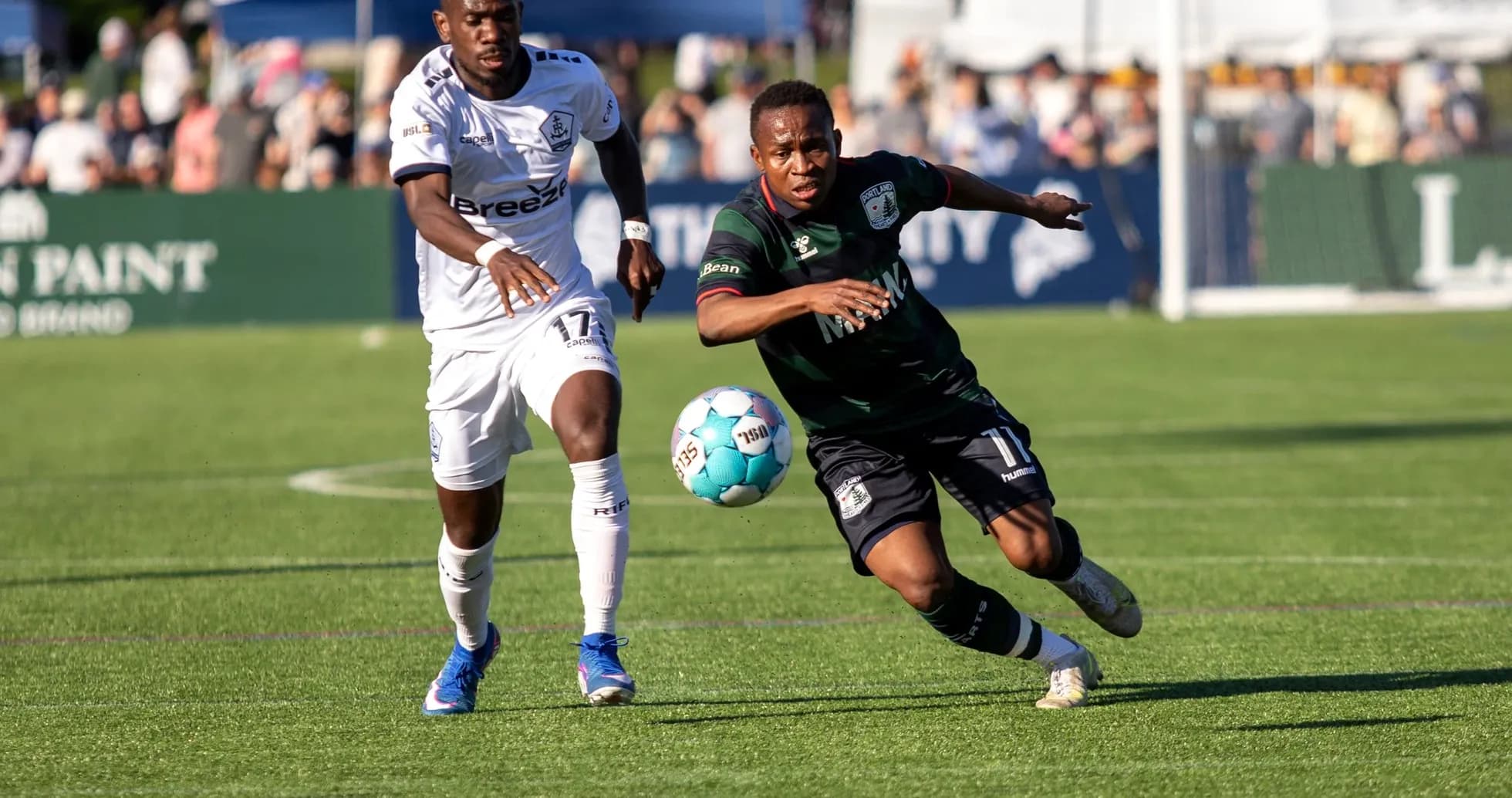
Maimonides Park under the lights, a 5–1 scoreline on the board, and a Group 5 table reshaped by ninety ruthless minutes. Following this result, Brooklyn’s USL League One Cup campaign looks like a statement of intent: 8 goals scored and only 3 conceded overall, a goal difference of +5 that now underpins their push from 2nd place in the group. Portland Hearts of Pine, by contrast, are left with a stark statistical portrait: 9 goals for but 13 against overall, a goal difference of -4 that tells of attacking promise undermined by structural fragility.
I. The Big Picture – Brooklyn’s emerging identity vs Portland’s imbalance
Brooklyn’s season to date has been defined by efficiency and clarity. Overall they have 2 wins and 1 defeat from 3 matches, with an attacking profile that is both sharp and economical: 8 goals from those 3 fixtures, an overall average of 2.7 goals per game. At home they are slightly more measured but still potent, with 5 goals across 2 matches at an average of 2.5, while conceding 3 at an average of 1.5. This 5–1 home win now stands as their biggest home victory of the campaign.
Portland’s story is more chaotic. Overall they have 1 win and 2 defeats from 3, scoring 5 but conceding 9, for an overall average of 1.7 goals scored and 3.0 conceded per match. On their travels they have been brutally exposed: 3 away goals across 2 matches at an average of 1.5, but 8 conceded at an average of 4.0. The 5–1 defeat in Brooklyn now sits alongside their previous 5–1 away loss as a recurring pattern rather than an anomaly.
In group terms, Brooklyn’s 6 points from 3 matches and form line of WLW suggest a side learning quickly from setbacks. Portland, 4 points from 3 with an LWL form line, have oscillated between promise and collapse. This fixture crystallised those trajectories.
II. Tactical Voids – Discipline, control, and what was missing
With no explicit injury or suspension list available, the tactical voids here are less about absentees and more about structural and disciplinary gaps.
Brooklyn’s card profile this campaign reveals a team that walks the line of controlled aggression. Overall, their yellow cards cluster heavily between 31–75 minutes: 20.00% in the 31–45 range, 20.00% between 46–60, and a pronounced 40.00% between 61–75. Another 20.00% arrive from 76–90. That late spike speaks to a side that presses and competes intensely as matches open up, risking bookings to protect leads or kill transitions. Yet crucially, they have avoided reds entirely so far, suggesting emotional control even when the tempo rises.
Portland’s discipline, by contrast, unravels in the very phase where Brooklyn ramp up. Overall, 50.00% of their yellow cards arrive between 61–75 minutes, with another 25.00% between 46–60 and 12.50% between 76–90. More tellingly, their only red card of the campaign comes in the 46–60 window, a period where tactical plans are often recalibrated. This pattern hints at a squad that struggles to manage frustration once the second half begins to tilt against them.
In a match that ended 5–1, that psychological divergence mattered. Brooklyn’s ability to stay within yellow-card boundaries while maintaining intensity contrasted sharply with Portland’s tendency to lose composure just as they most needed clarity.
III. Key Matchups – Hunter vs Shield, Engine Room battles
Without individual scoring charts for the competition, the “Hunter vs Shield” duel here is best read at team level: Brooklyn’s collective attack versus Portland’s porous away defence.
Heading into this game, Brooklyn’s home attack was already formidable, averaging 2.5 goals per match at Maimonides Park. Portland’s away defence, meanwhile, was conceding 4.0 goals per game on their travels. That clash of profiles was always likely to be decisive. The 5–1 final score simply confirmed the structural mismatch: Brooklyn’s front unit, led by the likes of M. Anderson and C. Olney JR, found space and rhythm against a back line that has repeatedly crumbled once pressure mounts.
In the “Engine Room” zone, Brooklyn’s midfield trio of M. Pinto, T. McNamara and P. Mangione formed a balanced core. Pinto and McNamara provided the platform, while Mangione and S. Stojanovic linked play into the advanced line. Behind them, the defensive axis of V. Latinovich and Gabriel Alves, supported by T. Vancaeyezeele and C. Frogson, gave Brooklyn the stability to hold a higher line and compress the pitch.
For Portland, the central structure was less cohesive. M. Mohamed and K. Green were asked to shield a defence that has already conceded 8 goals away from home, while creative responsibility fell on O. Wright and W. Varela to feed A. Camara and J. Drack. There were flashes—Portland have still managed 5 goals overall, and 3 on their travels—but the balance between risk and protection was never right. Once Brooklyn’s midfield began to dictate tempo, Portland’s lines stretched, exposing K. Oladapo and B. Evans to repeated overloads.
IV. Statistical Prognosis – What this result tells us about both squads
Following this result, the numbers sketch a clear tactical prognosis.
Brooklyn look like a side whose identity is crystallising. Overall, they concede just 1.0 goal per game while scoring 2.7, with only 1 clean sheet but a defensive record that remains fundamentally sound. At home they have both their biggest win (5–1) and their only defeat (0–2), suggesting that when they manage game states and discipline, their ceiling is high. The late-game yellow-card surge (40.00% between 61–75 minutes) is a warning sign, but so far it has not tipped into red-card chaos.
Portland, conversely, are trapped in a structural contradiction: their attack is respectable, with 1.7 goals per game overall and no fixtures where they have failed to score, but their defensive concessions—3.0 per game overall, 4.0 away—are unsustainable. The combination of heavy away defeats, a red card in the early second-half window, and a yellow-card spike between 61–75 minutes points to a team that loses both shape and composure under sustained pressure.
From a notional xG and defensive solidity perspective, this match underlines a trend rather than an outlier. Brooklyn’s chance creation is being converted at a rate consistent with a high-functioning attack, while their back line, anchored by Latinovich and Gabriel Alves in front of L. Burns, is keeping opponents to manageable volumes of threat. Portland, on the other hand, would almost certainly show a skewed xG-against profile away from home: too many high-quality chances conceded, compounded by lapses in discipline that force them to defend deeper and more reactively.
As Group 5 moves towards its conclusion, Brooklyn emerge from this 5–1 with a defined blueprint: assertive at home, structurally solid, and emotionally controlled in the key phases. Portland leave Maimonides Park knowing that their attacking sparks from O. Wright, L. Kunga and A. Camara will continue to be drowned out unless the back line and midfield shield can be rebuilt into something more resilient and less combustible when the match clock ticks past 45+4' and into the decisive second-half storms.