.svg&w=384&q=75 "Pitchgist logo")
Barcelona Target Rodri Amid Real Madrid Pursuit
Barcelona have stepped straight into Real Madrid’s path and gone for the same prize: Rodri.
According to RMC Sport journalist Fabrice Hawkins, Barça have launched a bold late move to hijack Madrid’s pursuit of the Manchester City midfielder, despite the 30-year-old already reaching a full personal agreement with Los Blancos.
This is not a routine enquiry. It is an attempt to rip up a deal that many in Spain had started to treat as inevitable.
A rare market opening
From Barcelona’s side, the timing is everything. Rodri is entering the final year of his contract at the Etihad Stadium, a situation that instantly changes the balance of power in any negotiation with Manchester City.
City, usually iron-fisted in the market, suddenly have a problem. Let him run down the deal and they risk losing one of the world’s premier midfielders for nothing in 12 months. Cash in now and they open the door to a European giant they would rather not strengthen.
Barcelona see that crack and are trying to drive a wedge through it.
There is also the context at Camp Nou. Frenkie de Jong’s latest injury setback, which could sideline him for the rest of 2026, has thrown fresh doubt over his long-term role at the club and left Hansi Flick staring at a structural hole in midfield. The need is immediate, not theoretical.
Rodri fits that need almost too perfectly.
The Busquets heir they never signed
Since Sergio Busquets walked away, Barcelona have never truly replaced him. They have patched, improvised, adapted. They have not found the heir.
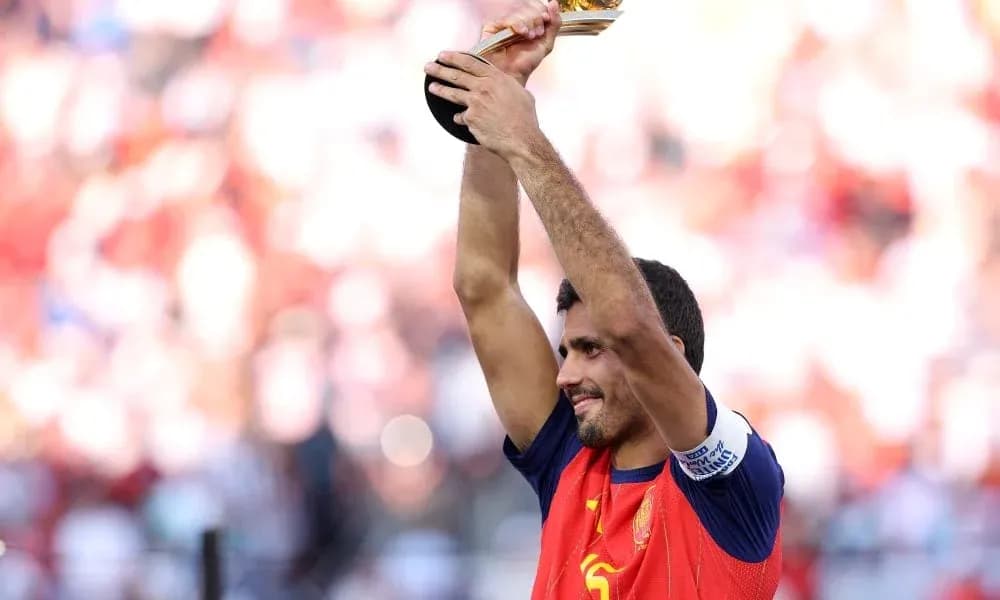
Rodri is widely seen as that profile, and then some. His performances at the FIFA World Cup, crowned by the Golden Ball as the tournament’s best player, only reinforced what coaches and analysts already knew: there is no more complete holding midfielder in the modern game.
Tactical discipline. Physical authority. An almost ruthless security in possession. He dictates rhythm, closes space, and still finds time to start attacks. Drop that into a midfield with Pedri and you do not just fix a problem, you redefine the team’s identity.
For Flick, chasing the Champions League that has eluded Barça in recent years, a player of Rodri’s calibre in the centre of the pitch is not a luxury. It is a potential turning point.
Madrid still in front – but not alone
Real Madrid, though, remain ahead. Their agreement on personal terms with Rodri gives them a clear lead, and they can offer something Barcelona cannot: a return to his birth city and the chance to walk straight into a squad that has just reloaded again at the top end of Europe.
Yet Barcelona are convinced the race is not over.
They believe City’s contractual vulnerability keeps the door open. With Rodri in the final 12 months of his deal, the Premier League champions are under pressure to resolve his future this summer. That pressure is exactly what Barça hope to exploit, forcing City to consider all serious offers rather than simply rubber-stamping Madrid’s plan.
The complication? It is not a two-horse race.
PSG have also made enquiries, testing the water with City over the midfield general. The French champions, rebuilding after key departures, see the same thing everyone else does: an elite pivot, available under conditions that rarely exist for players of this level.
Deco’s pitch: total control in Flick’s midfield
So what can Barcelona put on the table that Real Madrid and PSG cannot?
Sporting director Deco is leaning on a clear, simple promise: Rodri would walk into Camp Nou as the undisputed leader of Flick’s midfield. No sharing the stage, no rotation debate, no question over status. He would be the cornerstone, with Pedri alongside him and a project built around his strengths.
Barça can also point to the trajectory of their recent seasons. Despite their financial constraints, they have pieced together domestic success and laid the foundations of a young, competitive squad. For a player who has previously spoken of his desire to return to La Liga before his career ends, that combination of responsibility and long-term vision has its own appeal.
Real Madrid counter with history, trophies, and a familiar city. PSG counter with financial muscle and a central role in their own reshaped project.
Barcelona counter with something more personal: the chance to become the man who finally fills Busquets’ shadow and anchors a new era at Camp Nou.
Rodri’s decision will not just swing one transfer window. It will shape the balance of power in Spanish football’s midfield battleground for years to come.