.svg&w=384&q=75 "Pitchgist logo")
Barcelona's Decision Seals Rashford's Fate After Gordon Transfer
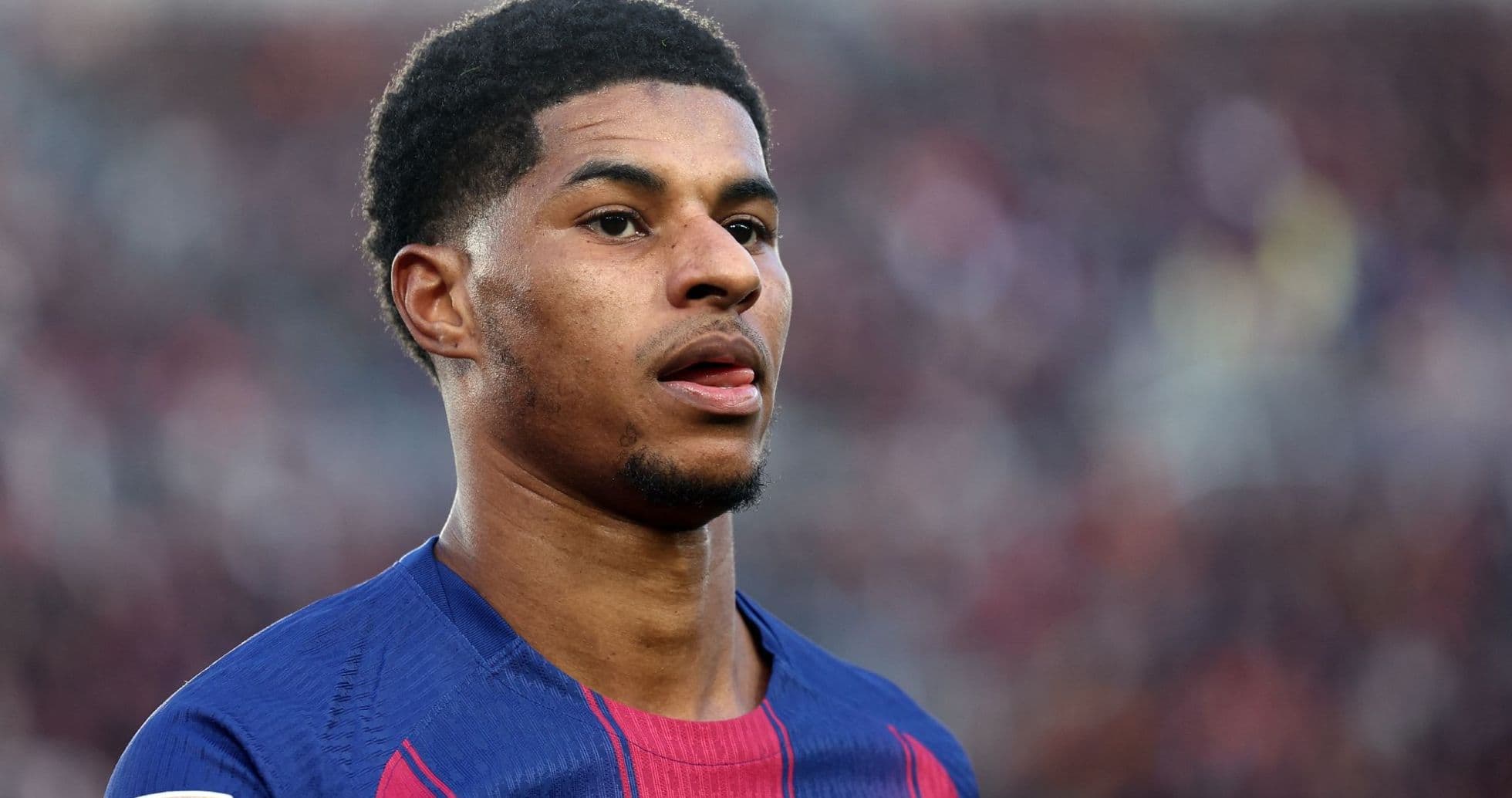
The moment Barcelona pushed Anthony Gordon’s transfer over the line, Marcus Rashford’s fate was effectively sealed.
Hansi Flick suddenly had more left-sided firepower than he could realistically use. Gordon, a €70 million signing from Newcastle, arrived to join a forward line in which Raphinha has already nailed down a starting role. In that crowded picture, Rashford shifted from potential pillar of the project to expendable luxury almost overnight.
Barcelona close the door
Barcelona have now decided they will not activate the €30 million clause to make Rashford’s loan permanent, as reported by Marca. The numbers looked tempting at first. Rashford had agreed to a 40% wage cut to prolong his stay in Spain, and the annual amortisation on his deal would have been around €10 million.
Set that against Gordon’s package and the contrast is not as stark as it seems. The England international arrives on a significantly lower weekly salary, but his €70 million fee drags his yearly amortisation up to about €14 million. Once wages and fees are combined, the overall annual cost of Rashford and Gordon to the club comes out almost level.
Barcelona still chose Gordon.
For the board and Flick, this was never just an accounting exercise. It was a football decision dressed in financial logic. The deadline to trigger Rashford’s clause expires on Monday, and the club has already signalled there will be no late twist, no dramatic U-turn.
Flick’s non‑negotiable
Two sporting factors tipped the scales. The first is Flick’s obsession with defending from the front. His teams are built on forwards who hunt in packs, press high and keep the back line pinned in. Inside the coaching offices, the consensus was clear: Gordon brings more intensity without the ball.
In that specific department, Rashford came up short. His improved form in Spain reminded everyone of his quality in transition and around the box, but Flick’s system leaves little room for passengers when the opposition build from the back. High-pressure defending is a non-negotiable in this setup. Gordon fits that demand more naturally and more consistently.
Age then sharpened the argument. Rashford turns 29 in October. Gordon is roughly three and a half years younger. For a club trying to construct a long-term core that can grow together, the younger profile carried extra weight. With such a heavy investment, Barcelona wanted an asset they could build around for years, not seasons.
From the outside, the financial comparison looked almost like a toss-up. Inside the club, the calculation felt far more straightforward: similar cost, younger player, better suited to the coach’s demands. Gordon won the toss.
Rashford’s crossroads
So Rashford heads back to Manchester United. On paper, at least.
In reality, his future at Old Trafford looks fragile. The expectation is that he will leave the club permanently this summer, cutting ties with the side he has represented since boyhood. His spell in Spain, though short, has changed the conversation around him. The sharpness returned. The confidence followed. Scouts took note.
Arsenal are among those monitoring the situation closely as they search for more flexibility across their front line. Rashford’s ability to operate off the left, drift inside, or lead the line when needed gives any manager tactical options, especially in a side that dominates the ball and plays high up the pitch.
He is not just drawing interest from England. Bayern Munich have also been linked with a move, with reports indicating they would explore a deal if the numbers fall into a manageable range. A pay cut would almost certainly be required to make a Bundesliga switch viable.
Barcelona have made their choice and moved on. For Rashford, the decision simply opens another door. The question now is not whether there will be offers, but which project he chooses as the next stage of a career suddenly back on an upward curve.