.svg&w=384&q=75 "Pitchgist logo")
Barça’s Influence in the World Cup: A Tournament in Blaugrana Colours
This World Cup, spread across the United States, Mexico and Canada, is officially the biggest in history. Unofficially, it might be the most Barça-soaked edition the competition has ever seen.
Wherever you look, there’s a trace of the Camp Nou. On the pitch. On the touchline. In the academies that shaped so many of the players now chasing the game’s ultimate prize.
Sixteen current Barça players on the biggest stage
The most obvious imprint is the one culers know best: the current squad. Sixteen Barcelona players, scattered across eight national teams, have packed their bags for the tournament. That is a sizeable bloc of talent, enough to leave a mark on almost every stage of the competition.
But the story does not stop with today’s Barça. The World Cup has become a reunion of sorts, a rolling showcase of familiar faces who once wore the shirt and now carry different colours, but still carry that same schooling.
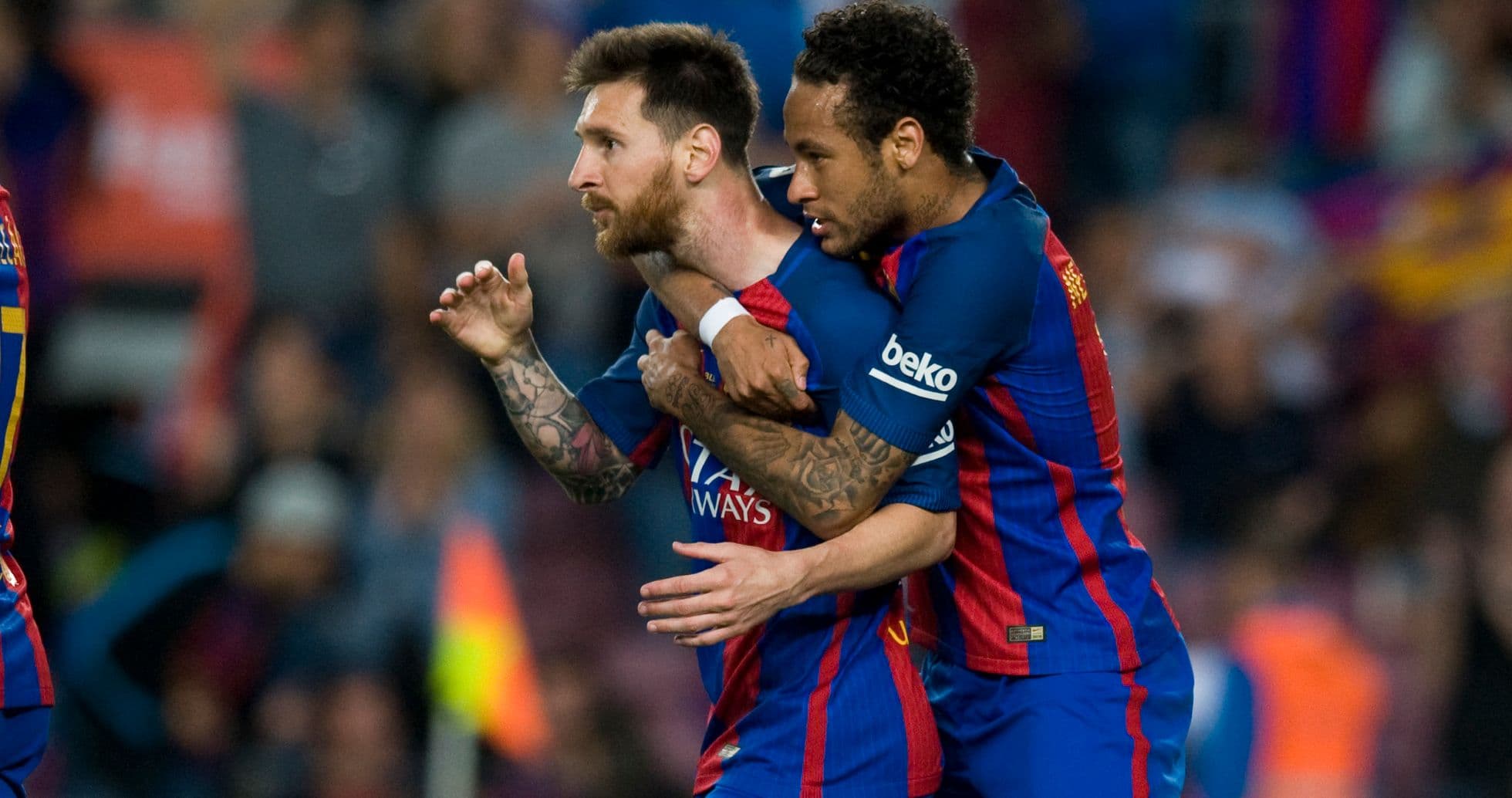
Messi, Neymar and a constellation of former stars
Front and centre, inevitably, stands Leo Messi. The man who defined an era at Barcelona now leads Argentina as defending champions, chasing another chapter in a career already weighed down by medals.
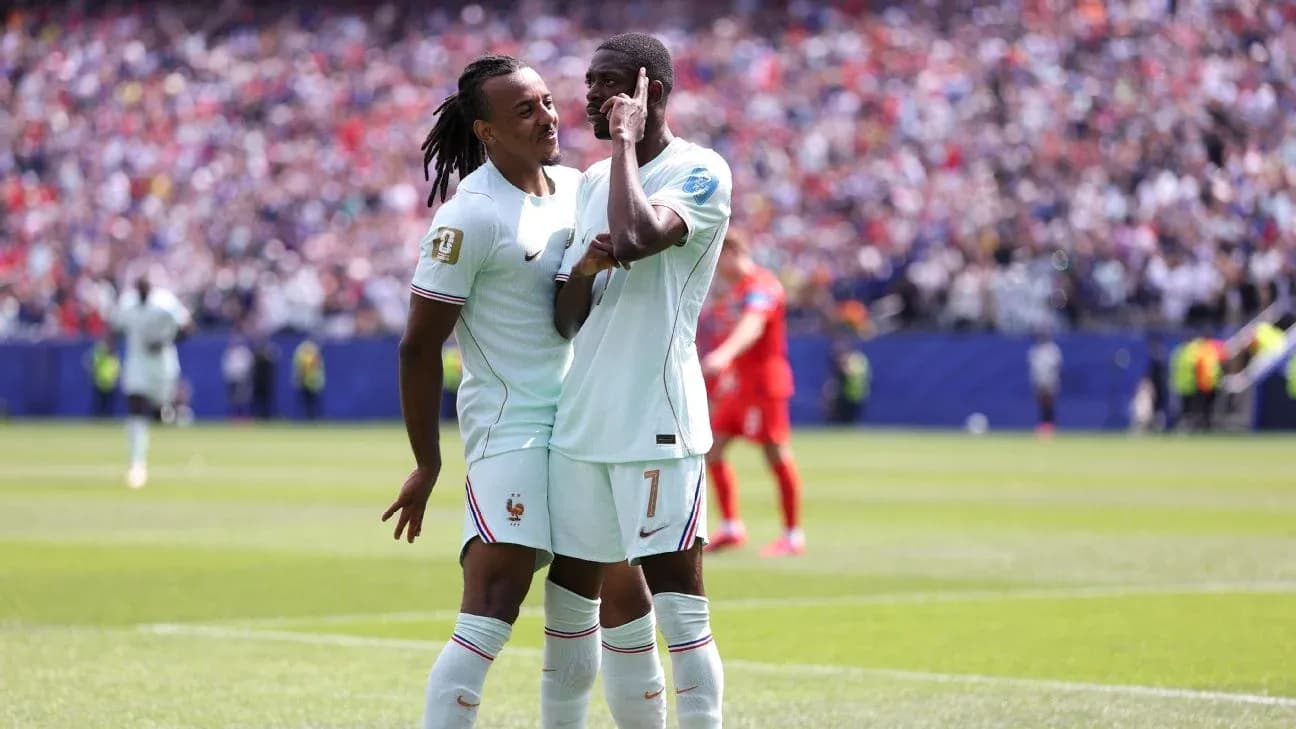
France, runners-up in 2022, arrive with their own Barça flavour. Ousmane Dembélé, the current Ballon d’Or holder, is one of Didier Deschamps’ main weapons out wide. Alongside him are Lucas Digne, another former Blaugrana, and Marcus Thuram, son of Lilian Thuram, who also passed through the Camp Nou. Marcus even spent time at the FCB Escola while his father played for the club, another thread tying this France squad back to Barcelona.
Portugal bring a strong Catalan echo of their own. João Félix, Francisco Trincão and Nélson Semedo all make the squad, three players whose careers have intersected with the Camp Nou at different moments. Across from them in Group K stands Colombia, where Yerry Mina, once a Barça centre-back, remains a towering presence.
Côte d’Ivoire lean on Franck Kessié, a key figure in their midfield. The United States, one of the host nations, are expected to start Sergiño Dest at right-back, another reminder that Barça’s reach extends far beyond Europe.
Then there is Neymar. One of the major storylines of this World Cup is his return to the Brazil squad, two and a half years after his last call-up. Injury rules him out of the opening match, but the Santos forward still looms as one of the tournament’s most iconic figures, a player who can bend the narrative in a single evening.
Memphis Depay, now also playing his club football in Brazil, offers another attacking spark. He remains one of the main threats in Ronald Koeman’s Netherlands side, a striker whose blend of power and technique can flip tight games in an instant.
Blaugrana on the bench
Koeman himself, the hero of Wembley ’92, brings the Barça touch to the dugout. He is one of three national team coaches at this World Cup with direct links to the club.
The others patrol less traditional footballing territories. Julen Lopetegui takes charge of Qatar, while Thomas Christiansen leads Panama. Different cultures, different expectations, but the same schooling in possession, structure and tactical detail that Barcelona has long demanded.
Injuries and opportunities
Not every Barça-tinted story starts at kick-off. Like Neymar, Ez Abde will miss his team’s opening match through injury. For Morocco, he is one of the most in-form players in the squad, a winger capable of shredding defensive lines when fit.
Morocco will also look to centre-back Chadi Riad, another product of Barça’s youth system, to anchor their back line. His rise from La Masia to the World Cup underlines how deep the club’s influence now runs.
From La Masia to the world
Riad is far from alone. This World Cup is littered with graduates of La Masia, the academy that has shaped the modern game as much as any single institution.
Spain’s two left-backs, Marc Cucurella and Alejandro Grimaldo, both came through Barça’s youth ranks. So did young winger Víctor Muñoz, currently recovering from injury but still part of the national picture. Each carries that familiar blend of technical precision and tactical intelligence that has become synonymous with Barcelona’s schooling.
Beyond Spain, the net widens. Uruguay defender Santi Bueno learned his trade at La Masia. So did Japan winger Take Kubo, whose creativity and fearlessness in one-on-one situations bear the hallmarks of his formative years in Catalonia.
Paraguay’s leading striker, Antonio Sanabria, is another former La Masia forward now carrying his country’s hopes. South Korea midfielder Seung-Ho Paik once stood out as one of the brightest prospects in Barça’s youth teams, and now steps onto the World Cup stage with a nation behind him.
Look around this tournament and the pattern is impossible to miss. Shirts change. Flags change. Styles evolve. But the Barça imprint remains.
At this World Cup, wherever the ball rolls, there is a good chance a piece of Barcelona rolls with it.