.svg&w=384&q=75 "Pitchgist logo")
Alisson Becker: Liverpool's Indispensable Guardian Faces Contract Dilemma
Liverpool have spent the past six years sleeping soundly because of one man. When Alisson Becker walked through the doors from Roma in 2018, he didn’t just solve a problem position; he rewired the club’s entire sense of security.
Trophies followed. So did a new identity.
The Brazilian has now played 333 times for Liverpool, the anchor behind two Premier League titles, a Champions League, an FA Cup and a League Cup. For a club that once fretted over every cross and every back-pass, he became the calm in the chaos, the final piece in a puzzle Jürgen Klopp had been building for years.
Now comes the jolt: Alisson is 33, and his contract has only 12 months left to run.
That simple detail changes everything. With no agreement yet in place, the conversation has shifted from how Liverpool build around him to whether they cash in while they still can. Leading Italian clubs are watching closely, sensing an opportunity that would have been unthinkable not long ago.
The prospect of losing him is not just a tactical headache. It cuts to the core of what this Liverpool side has been.
Harder to replace than Salah?
When a goalkeeper is mentioned in the same breath as Mohamed Salah, you understand the scale of his importance.
Former Liverpool keeper Brad Friedel, speaking to GOAL in association with MrQ, was asked directly whether losing Alisson would hurt more than saying goodbye to the 257-goal “Egyptian King”. His answer went straight to the heart of the new era under Arne Slot.
“From Arne Slot’s perspective, possibly, because I don’t think Arne Slot and Salah were seeing eye to eye. That was starting to become a little bit like oil and water,” Friedel said. “So maybe from that perspective. But what Salah’s done over the last decade has been truly remarkable, and he will be a huge loss.”
The nuance matters. Salah is a legend, a statistical phenomenon, a decade-defining forward. But in pure footballing architecture, the man in goal might be even more fundamental.
“Alisson would be one of the hardest goalkeepers to replace in global football if he were to go. I think it’d be very difficult for Liverpool to replace him,” Friedel added.
He’s not wrong. Alisson has combined old-school goalkeeping instincts with the modern demands of a high line and possession-based play. He has rescued Liverpool in one-on-ones so often that it almost became routine. It never was.
“I would hate to see him go, professionally speaking, and as a Liverpool supporter, I would be particularly devastated if he left because of how good he’s been for the club,” Friedel said. “He never brought the club into disrepute. Held his hand up if he made a mistake, which was not many mistakes. He is one of the best 1v1 goalkeepers that has ever played the game.”
That last line lands with weight. One of the best one-on-one goalkeepers ever. Not just in the Premier League. In the game.
Friedel went further, underlining why age alone should not tempt Liverpool into a quick sale.
“I think those types of goalkeepers, even as they decline in their age, even with maybe a couple of injuries, are still better than almost everyone in the world. I think that replacing him would be tough, really tough.”
Who on earth replaces Alisson?
If Liverpool do decide – or are forced – to move into a post-Alisson world, the obvious follow-up question is brutal: who can possibly fill that shirt?
Names will fly around the market. Some will be realistic, others pure fantasy. Friedel was asked about one such option: James Trafford, the 23-year-old England international currently stuck behind Gianluigi Donnarumma at Manchester City.
“Possibly,” Friedel said, before quickly outlining the scale of the task, “but you need someone with a skin of leather, you need someone who’s going to be able to play in all the big matches. You need someone who expects to win the Champions League, not just play in it. Expects to win the Champions League, win the Premier League, win the FA Cup, and win the League Cup.”
That word “expects” is doing a lot of work. At a club like Liverpool, the goalkeeper doesn’t just react to pressure. He lives in it, every three days, for years.
“It’s a different type of mentality that you need when you’re a goalkeeper at these top clubs,” Friedel said. “And it’s not easy to find, you know, and Trafford’s a really good goalkeeper. I like him a lot, but that’s also a lot to load onto him.”
The warning is clear. Talent is one thing. Stepping into a role vacated by a generational figure is another entirely.
So Friedel floated a different profile.
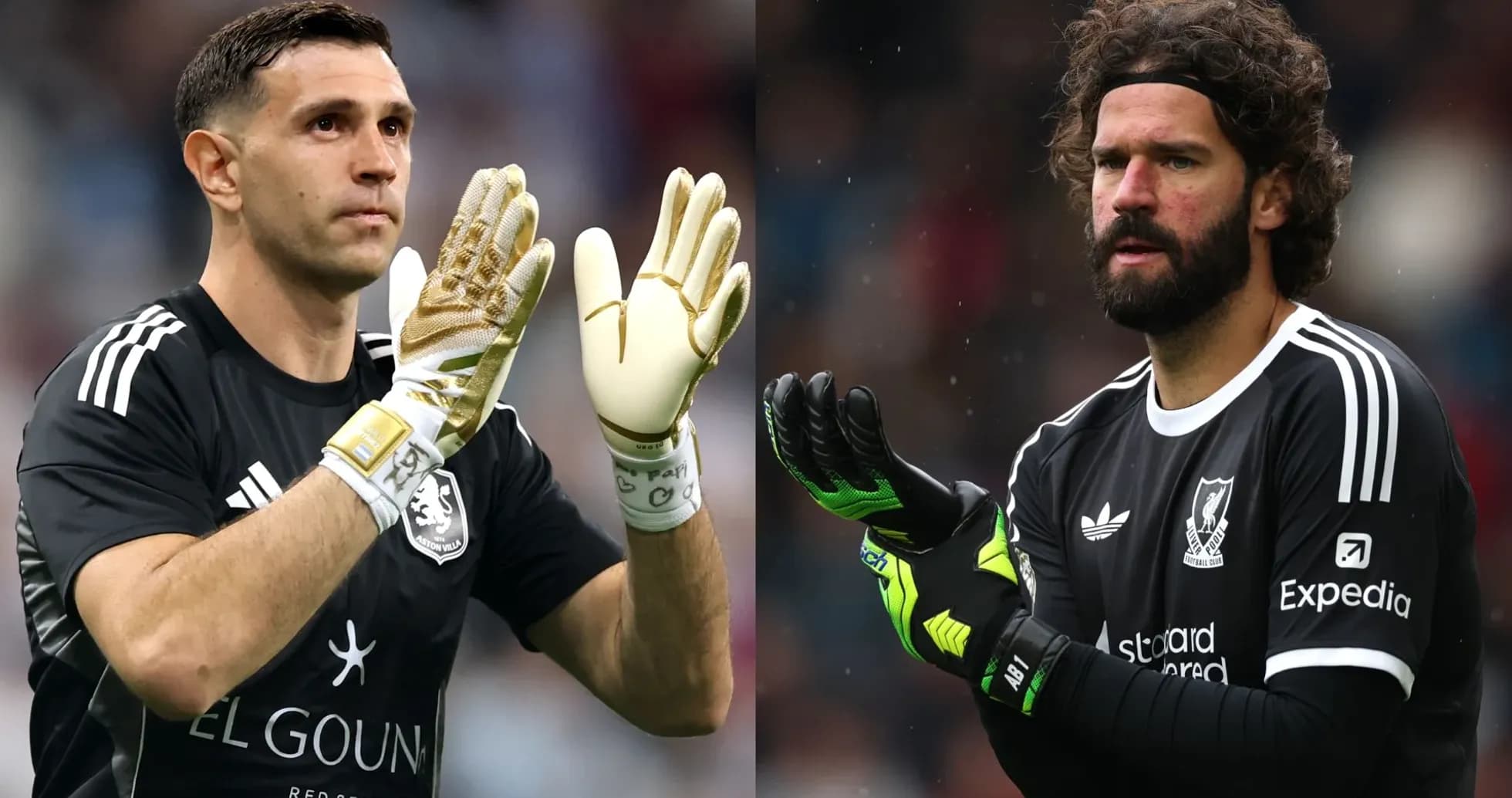
“Maybe the likes of an Emi Martínez, someone like that, that can take all the games all the time, any criticism, any plaudits, and they know how to deal with it,” he suggested.
That’s the template: battle-hardened, loud, unflinching. Someone who can handle the scrutiny, the expectation, the inevitable comparisons with the man who came before.
“There aren’t many out there that you can just pinpoint and say: ‘He’s our guy’. That’s a hard decision,” Friedel admitted.
And that’s the crux for Liverpool. Do they gamble on youth and potential, asking a 23-year-old to replace one of the finest goalkeepers of his generation? Or do they chase a proven, elite operator who can shoulder the weight from day one?
Alisson’s contract clock keeps ticking. The market is circling. Somewhere inside Anfield, the club must decide how much of their future they are willing to risk on changing the one position that has felt non-negotiable since 2018.