.svg&w=384&q=75 "Pitchgist logo")
2026 World Cup: A Tournament Built for Giants
The 2026 World Cup kicks off in less than 12 hours, and it already feels different. Bigger, longer, heavier. A tournament that might redefine what a World Cup is – or test how far you can stretch it before something snaps.
Mexico against South Africa opens the show at 8pm this evening, the first act in a marathon of 104 matches. It’s either a bold new frontier or an overstuffed epic. Maybe both.
A tournament built for giants
On the pitch, the storylines are irresistible.
Spain arrive as European champions and bookmakers’ favourites, armed with a midfield that looks like it’s been assembled in a lab. They want to add a second World Cup to the trophy cabinet and complete a historic double, and they have the depth to rotate without losing rhythm.
France lurk just behind them, snarling and loaded. Back-to-back finalists, stacked with attacking menace – Kylian Mbappé, Ousmane Dembélé, Michael Olise, Désiré Doué – and hardened by scars from falling just short last time. This is Didier Deschamps’ final tournament. He knows exactly what it takes to get to the last weekend, and what it feels like to leave it with regrets.
England turn up with something unusual: conviction. Euro 2024 ended in another near miss, a 2-1 defeat to Spain in the final, but it also marked the end of Gareth Southgate’s era. Thomas Tuchel has ripped up the caution, injected intensity, and made some brutally cold decisions. Phil Foden, Cole Palmer, Trent Alexander-Arnold – left at home in favour of players who fit his system, not his marketing reel. If it works, he’s a visionary. If it doesn’t, those omissions will haunt him.
Then there are the old kings.
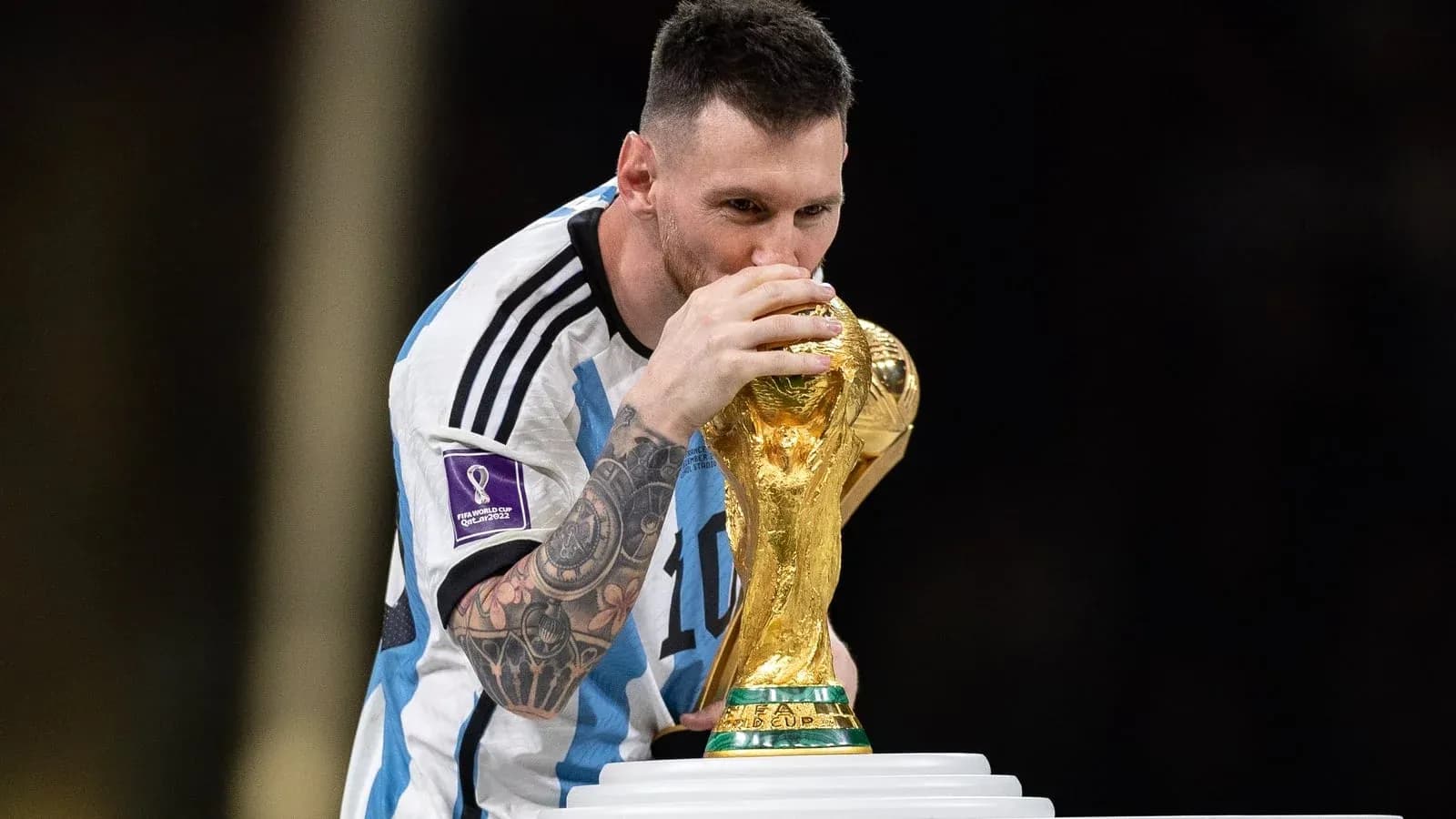
Argentina, champions in 2022, are chasing history. No team has retained the World Cup since Brazil in 1962. Lionel Messi, now 38, is trying to squeeze one last miracle out of his legs, one last month where time bends to his will. If he pulls it off and wins it twice, the comparisons with Diego Maradona will shift again, perhaps finally, decisively.
Brazil, under Carlo Ancelotti, feel oddly human. The Selecao still have glitter in Vinícius Júnior, Raphinha and Marquinhos, and quality at both ends of the pitch, but their qualifying campaign was patchy and the midfield looks uncertain. They’re dangerous, of course. They’re Brazil. They just no longer feel inevitable.
For Portugal, everything orbits one stark reality: this is Cristiano Ronaldo’s last shot at the one trophy that has always eluded him. His presence guarantees attention; whether it guarantees cohesion is another matter entirely.
Germany, under Julian Nagelsmann, remain the team you are warned never to write off. Colombia, Senegal, Morocco – all carry the look of sides capable of bloodying a heavyweight nose. The ingredients for drama are there.
But first, we have to wade through the sheer size of it.
A bloated group stage
Forty-eight teams. Twelve groups. A format that looks carefully engineered to protect the sport’s global superpowers from early embarrassment.
The top two in each group go through automatically. Then the eight best third-placed teams join them. Two-thirds of the field will reach the round of 32. You can lose twice and still sneak into the knockouts, provided the numbers fall kindly.
Jeopardy, the lifeblood of any group stage, feels diluted. Those final-round nights when three teams can go through or crash out in the space of 20 minutes may still happen, but the safety net is thick.
In the meantime, there’s a long road to the real tension. Sunday’s Germany–Curaçao fixture and Monday’s Spain–Cape Verde clash could turn into training exercises played in front of the world. Qatar v Switzerland and Uzbekistan v Colombia might matter deeply to those nations, but they will not exactly set neutral pulses racing.
There’s even a chance that Ireland’s famous Italia 90 quirk – reaching the knockouts without winning a single game – could be repeated under this format. The system allows for it.
For many, the tournament will only start to bite when the round of 32 arrives. That suits the big teams managing tired legs after a brutal club season. It’s less kind to fans being asked to invest in three weeks of what might feel like a slow burn.
Heat, fatigue and managed stars
The demands won’t be purely mental.
Matches will be played across cities where June and July can be punishing: Miami, Houston, Guadalajara, Mexico City. Extreme heat is not a risk; it’s a given.
FIFA has already stepped in. Hydration breaks at the 22nd and 67th minutes of every match are mandatory, regardless of the conditions. Daytime fixtures have been steered towards air-conditioned stadiums. Even so, players will be operating in temperatures that drain energy and cloud decision-making.
On paper, that should tilt the balance towards nations used to these conditions: Spain, Brazil, Argentina, Mexico. Teams that understand what it means to conserve energy in the first half and still explode in the last 20 minutes.
It also changes how the stars will be used. With potential finalists facing an eight-game slog, managers cannot simply flog their best players from day one.
Messi, Neymar, Lamine Yamal, Bukayo Saka, Nico Williams – all are likely to be carefully rationed in the opening fixtures, if not rested outright. Yamal’s hamstring issue already places a question mark over his involvement in the group stage, though Spain’s depth buys them time to ease him back.
Every decision becomes a balancing act: risk a key player in the heat to secure top spot, or trust the squad and accept a trickier draw later?
The cost for fans
If the players are being stretched, so are the people watching.
Kick-off times will be brutal in some parts of the world. For Irish fans, the alarm clocks are already the villains. Brazil’s opener against Morocco starts at 11pm on Saturday night. Argentina begin their title defence at 2am on a Wednesday. Coffee, naps and bleary-eyed mornings will become part of the ritual.
The tournament is asking a lot: time, sleep, patience. It’s the price of a World Cup spread across multiple time zones and swollen to unprecedented size.
The hope is simple. That somewhere inside these 104 matches, the sport cuts through the noise. That the knockout rounds deliver enough chaos, genius and late twists to justify the scale of the thing.
We’ll only know on 19 July whether football made the stretch worthwhile, or whether this was the moment the World Cup finally became too much of a good thing.