.svg&w=384&q=75 "Pitchgist logo")
2026 FIFA World Cup: A Month of Football in North America
The biggest World Cup ever has finally landed in North America, and the continent is bracing for a month-long roar.
From Mexico City’s high-altitude chaos to New York’s concrete canyons and Toronto’s lakeside skyline, 48 national teams are about to stretch the World Cup into new territory. The field has jumped from 32 to 48 for the first time since 1998, and so has the ambition. Three host nations. Sixteen stadiums. One sprawling, stitched‑together festival of football and everything that comes with it.
Three hosts, three opening acts
This World Cup doesn’t ease its way into the calendar. It explodes across three countries with three separate opening ceremonies, each trying to stamp its own identity on the tournament before a ball is even kicked.
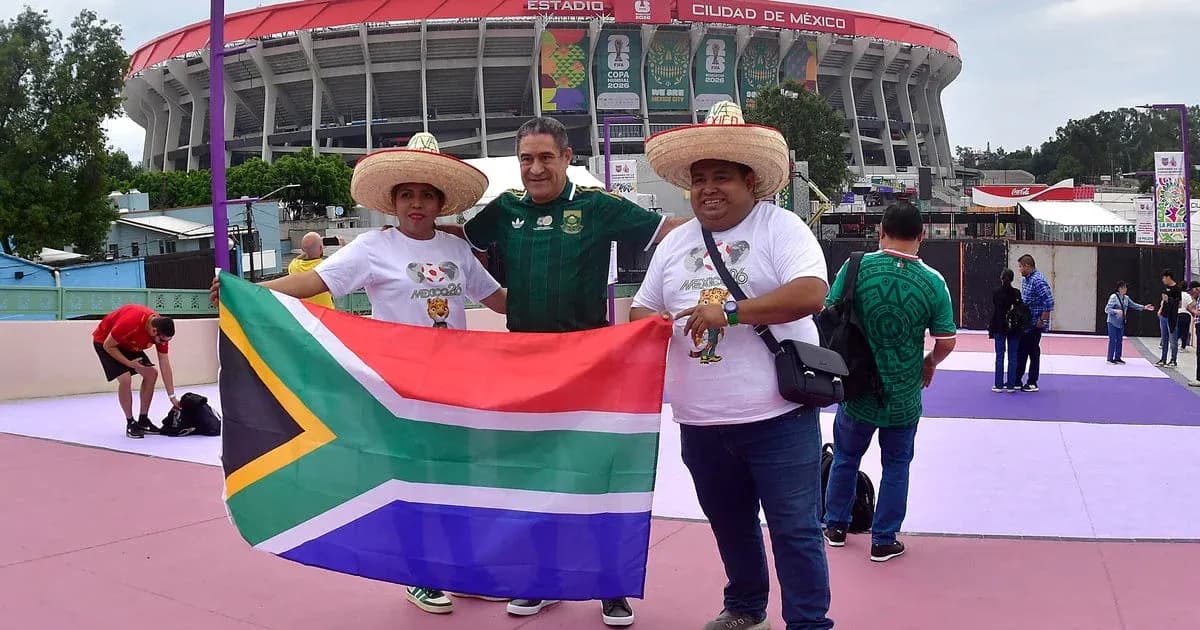
Mexico goes first, and fittingly, it starts at the sport’s cathedral in the region: Estadio Azteca. On Thursday, ahead of the Group A curtain-raiser between Mexico and South Africa, Shakira and Burna Boy will lead the show with “Dai Dai,” the official song of the 2026 FIFA World Cup. The performance begins at 11:30 a.m. local time (1:30 p.m. ET), with a full cast drawn from FIFA’s first-ever World Cup album: Alejandro Fernández, Belinda, Danny Ocean, J Balvin, Lila Downs, Los Ángeles Azules, Maná and Tyla among those called to set the tone.
North of the border, Toronto takes its turn on Friday. Canada, playing its first-ever World Cup match on home soil, faces Bosnia and Herzegovina at a revamped BMO Field that has ballooned from 28,000 to 45,000 seats. Ninety minutes before the 3 p.m. ET kickoff, Canadian stars will own the stage. Alanis Morissette, Alessia Cara, Jessie Reyez, Michael Bublé and others are scheduled to turn the Great White North’s opener into a statement of intent.
Then comes Hollywood.
In Los Angeles, the United States will host its own opening ceremony on Friday before the USMNT meets Paraguay at SoFi Stadium. At 4:30 p.m. local time (7:30 p.m. ET), Katy Perry, Future, Anitta, LISA, Rema and Tyla will headline a show built to match the scale of the building and the market. FIFA President Gianni Infantino has framed the lineup as a reflection of the country’s cultural diversity and its reach in global entertainment — a reminder that this World Cup is as much about spectacle as it is about sport.
A familiar date, a different stage
Once the fireworks and pyrotechnics fade in Mexico City, the football takes over.
On Thursday, June 11, Mexico and South Africa kick off Group A at 2 p.m. local time (3 p.m. ET) in a fixture that drags memory straight back to 2010. Same date. Same nations. Different continent. Sixteen years ago in Johannesburg, they opened the World Cup with a 1-1 draw. This time, Mexico walks out at its own fortress, with 80,000-plus behind El Tri at the Azteca.
Later that night, Group A gets its second act. South Korea face Czechia at Akron Stadium in Zapopan, near Guadalajara, with a 9 p.m. local time (11 p.m. ET) kickoff. One traditional Asian power, one European dark horse, both trying to seize an early foothold in a group that suddenly looks wide open.
On Friday, the focus shifts north. Canada’s meeting with Bosnia and Herzegovina at 3 p.m. ET marks more than just the first Group B game; it is a historic first World Cup match on Canadian soil. A football nation still emerging on the world stage now gets to do it in front of its own fans, in a stadium literally rebuilt for the occasion.
Later, the United States steps back into a role it hasn’t played in three decades: World Cup hosts on the pitch. At SoFi Stadium, the USMNT faces Paraguay at 6 p.m. local time (9 p.m. ET), their first World Cup home match since July 4, 1994, when Brazil ended the Americans’ run in the Round of 16 with a 1-0 win on their way to the title.
This time, the U.S. arrives in new kits that nod to the past. Nike says the design pulls from several eras, including the striped look from 32 years ago. The shirts have to carry more than nostalgia. With a balanced Group D that also includes Australia and Turkey, the margin for error is slim but the path to the knockouts is real.
Security on a World Cup scale
Off the pitch, the U.S. is treating this tournament like the security test of a generation.
The FBI has deployed tactical teams to Atlanta, Boston, Dallas, Houston, Kansas City, Los Angeles, Miami, New York, New Jersey, Philadelphia, the San Francisco Bay Area and Seattle. These crisis response units, FBI Director Kash Patel said, will support the massive effort to protect players, fans and visitors as the country absorbs an unprecedented influx of supporters.
In practical terms, that means fans at venues like Gillette Stadium in Foxborough, Massachusetts, may need to arrive more than an hour early just to clear security checks, CBS Boston reported. Marlo Graham, special agent in charge of the FBI’s Atlanta field office, described the World Cup operation as similar to other major events — with one crucial twist: this one lasts 39 days. Tactical teams have been training alongside other agencies for months to prepare.
Immigration and Customs Enforcement will also be involved. White House border czar Tom Homan told CBS News that ICE’s “primary focus” during the tournament will be national security rather than immigration enforcement, a notable distinction given the political climate.
That climate has already left a mark. The tournament follows more than a year of tightened U.S. entry rules under the Trump administration, raising concerns about potential disruption. Over the weekend, Customs and Border Protection barred Somali referee Omar Abdulkadir Artan from entering the country, citing “vetting concerns.” FIFA confirmed the official was denied entry but did not disclose further details.
What fans can — and can’t — bring
Inside the stadiums, the rules are just as strict.
FIFA’s stadium code of conduct bans nontransparent bags and a range of hazardous or bulky items: weapons, body protection gear, helmets, umbrellas, strollers and chairs are all off-limits. Initially, the organization went even further, prohibiting “bottles, cups, jars, cans or any other form of closed or capped receptacle that may be thrown or cause injury,” including branded water bottles.
In a summer World Cup stretched across some of the hottest cities in North America, that decision landed badly. Fan groups pushed back, warning about health risks and accusing organizers of squeezing supporters. “What next? Suncream banned and fans forced to buy it in stadiums?” the Free Lions, an English supporters’ group, wrote on X, calling it “the latest money-grab.”
The pressure told. FIFA World Cup 2026 Chief Operating Officer Heimo Schirgi later clarified that spectators in U.S. and Canadian venues will be allowed to bring in one soft, plastic, disposable, factory-sealed water bottle up to 20 ounces. Hard reusable bottles remain prohibited.
Inside the grounds, drinks are locked down by sponsorship. Beverages such as water, sodas and juices will be supplied exclusively by long-time FIFA partner Coca-Cola, The Associated Press reported.
The cost of being there
The expanded format means more stadiums, more seats, more chances to see a World Cup match in person. It does not mean those chances come cheap.
Ticket prices for group-stage games have surged into the hundreds and, for some fixtures, thousands of dollars. For many long-time supporters, the numbers feel like a slap.
“It’s an absolutely punishing number with regards to the ticket prices to get into a game,” said Phil Labas, captain of the Chicago chapter of the American Outlaws, a 30,000-strong U.S. supporter group. He has attended nearly every U.S. Soccer event over the last four years. This time, even a home World Cup has pushed his group into the upper reaches of the stadium.
“We’re in the 300 section. We are upper deck in a corner ... It’s an absolute travesty,” he said.
Still, the Outlaws will be there, flags and drums in tow. “You’ll hear us, you’ll see us if they pan up, but we will absolutely be there,” Labas promised. For many fans, that’s the trade-off: worse views, louder voices.
Who might own this World Cup?
On the pitch, the 2026 tournament is already shaping up as a dream for bettors and analysts. With 48 teams, new permutations and a longer path to the trophy, models are working overtime.
German economist Joachim Klement, who has correctly predicted the last three World Cup winners, has put his marker down early. Speaking to CBS News’ Ramy Inocencio, he picked the Netherlands as his 2026 champion — a choice that runs against the grain of sportsbooks favoring France, Spain, England and Brazil.
Klement’s reasoning is blunt. The Netherlands, he argues, sits in that small group of “constant outperformers.” The Dutch have reached three World Cup finals — 1974, 1978 and 2010 — without ever lifting the trophy. This version, he says, may not have a singular superstar like Lionel Messi, but it does have balance.
“I think they have a team that doesn’t have real stars, like Messi for Argentina, but they are a team that is very, very leveled in the performance of every one of the players in the team. So there’s no real weak spot,” he said. “The second thing is they have a really good defense, and in soccer more so than in most other sports, is the saying that offense wins matches, defense wins tournaments.”
For the United States, his view is more nuanced.
Drawn in Group D with Paraguay, Australia and Turkey, the USMNT faces opponents that, on paper, look manageable. Klement believes that balance gives the Americans a fair shot at escaping the group and potentially pushing on to at least the quarterfinals.
Then comes the caveat. “The U.S. has so many sports that compete for the talent pool that it isn’t really the dominating, most important sport in the U.S.,” he said. “While if you go anywhere in Europe or Latin America, it’s soccer and then there’s the rest.”
That is the backdrop to this World Cup: a region trying to prove it can host the planet’s biggest sporting event, a fan base wrestling with prices and restrictions, and a U.S. team still fighting for its place in its own sporting hierarchy.
The stage is built, the tickets are sold, the tactical teams are in place. Now the only question left is whether the football on the pitch can match the size of the show surrounding it.