.svg&w=384&q=75 "Pitchgist logo")
Vancouver Enters FIFA World Cup Mode with New Rules
Vancouver is about to feel different.
Not because a ball has been kicked yet, but because the city is officially entering World Cup mode — and that comes with new rules, new noise, and a sharper edge to who gets to use public space, and how.
World Cup switch gets flipped
On Wednesday, Vancouver moves into what officials call the FIFA World Cup "event period," a tightly managed window that runs from May 13 to July 20, 2026. It’s the legal framework behind the spectacle.
With the province projecting roughly 350,000 visitors to B.C. Place over the tournament, city hall has armed itself with the FIFA World Cup 2026 Bylaw, a sweeping set of temporary powers aimed, in its own words, at creating a "clean, safe, and organized" experience.
That phrase sounds innocuous. The implications are anything but.
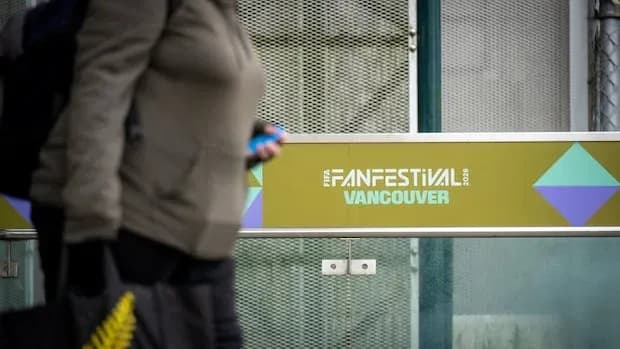
The bylaw hands the city expanded authority over advertising, vending, noise, graffiti removal and control of public space, especially in a two‑kilometre “controlled area” around B.C. Place and the FIFA Fan Festival site at Hastings Park. Inside that ring, life will not be quite the same.
Fan zones up, freedoms down
The changes cut both ways.
On one side, the city is loosening its own red tape to make the show bigger and slicker. Temporary event infrastructure — fan zones, towers of signage, branded installations — can go up more easily near key venues. Noise rules will stretch late into the night to fit international broadcast windows and event operations. Truck routes and deliveries through the downtown core may be re-routed to clear space for security and logistics.
On the other side, street life gets narrowed.
Street vending, busking and certain types of advertising face new restrictions in designated event areas. Unauthorized commercial signs will be ripped down quickly to protect FIFA’s branding monopoly. For the everyday rule-breaker, tickets will range from $250 to $1,000, enforced jointly by city bylaw officers and the Vancouver Police Department.
The city frames this as the necessary cost of staging one of the planet’s biggest sporting events. The bill is already enormous: Vancouver expects to spend between $532 million and $624 million to host seven matches, with the city on the hook for up to $281 million.
That’s the financial ledger. The social ledger looks far more contested.
Fears over who gets pushed aside
Housing advocates and legal scholars are sounding the alarm about what “cleanliness” and “beautification” actually mean on the ground, especially in a city already straining under a housing and homelessness crisis.
"This is basically the privatization of public space," said Penny Gurstein, professor emeritus at the University of British Columbia's School of Community and Regional Planning. She warns that people living on the streets should be worried.
The concern is simple: when a city promises spotless streets and polished plazas to a global audience and a powerful governing body like FIFA, those who don’t fit the picture often feel the force first.
City officials insist that isn’t the case here. They say the bylaw does not change existing protections for unhoused residents. People experiencing unsheltered homelessness, they stress, will still be allowed to erect temporary overnight shelter in parks where current bylaws allow it.
On “beautification,” the city points to bricks and mortar, not people. The term, it says, refers to physical infrastructure repairs — sidewalks, facades, decorating construction sites — and has "no assessed impact on human rights."
The gap between legal language and lived experience, though, is exactly what worries critics.
A divided celebration
Margot Young, a constitutional law professor at UBC's Allard School of Law, expects the World Cup’s impact to be sharply unequal.
"There will be disruption, but that disruption will be different for different groups in the city depending really upon their … social and economic status," she said.
For wealthier residents, the tournament can feel like a month-long festival: tickets to matches, packed fan zones, late-night parties, a city buzzing in multiple languages. For those at the bottom of the income and wealth ladder, the same event can mean something else entirely — being moved along, fenced out or watched more closely as city space is reordered around FIFA’s demands.
"For those with money, they maybe can go to games, they can take part in the parties," Young said. "But for individuals who are at the bottom of our ... income and wealth distribution … they will be moved around by the reordering of city space by FIFA."
The city has promised trauma‑informed enforcement, a softer approach meant to recognize the vulnerabilities of people living on the street. Young is not convinced that promise will hold once the tournament pressure hits.
"There's no system in place to sort of monitor what is happening with respect to the vulnerable populations," she said. Without real oversight, she argues, assurances risk becoming slogans.
Services stay on — but are they enough?
City hall insists core supports will not vanish under the weight of the World Cup.
Officials say homelessness services and outreach programs will continue throughout the event. Vancouver currently counts more than 1,500 shelter beds and about 8,100 supportive housing units, backed by outreach teams, hygiene services and storage programs.
On paper, that network remains intact while the city turns itself into a global football stage.
In a written statement, the city called the World Cup a "once-in-a-generation opportunity" to showcase Vancouver — its skyline, its stadium, its ability to pull off a mega-event.
The question now is whether, in chasing that moment in the global spotlight, Vancouver can resist the familiar pattern of major tournaments: a city dressed for the world, and the most vulnerable residents left searching for where they still belong.