.svg&w=384&q=75 "Pitchgist logo")
Michael O’Neill Stays with Northern Ireland: A Strategic Choice for the Future
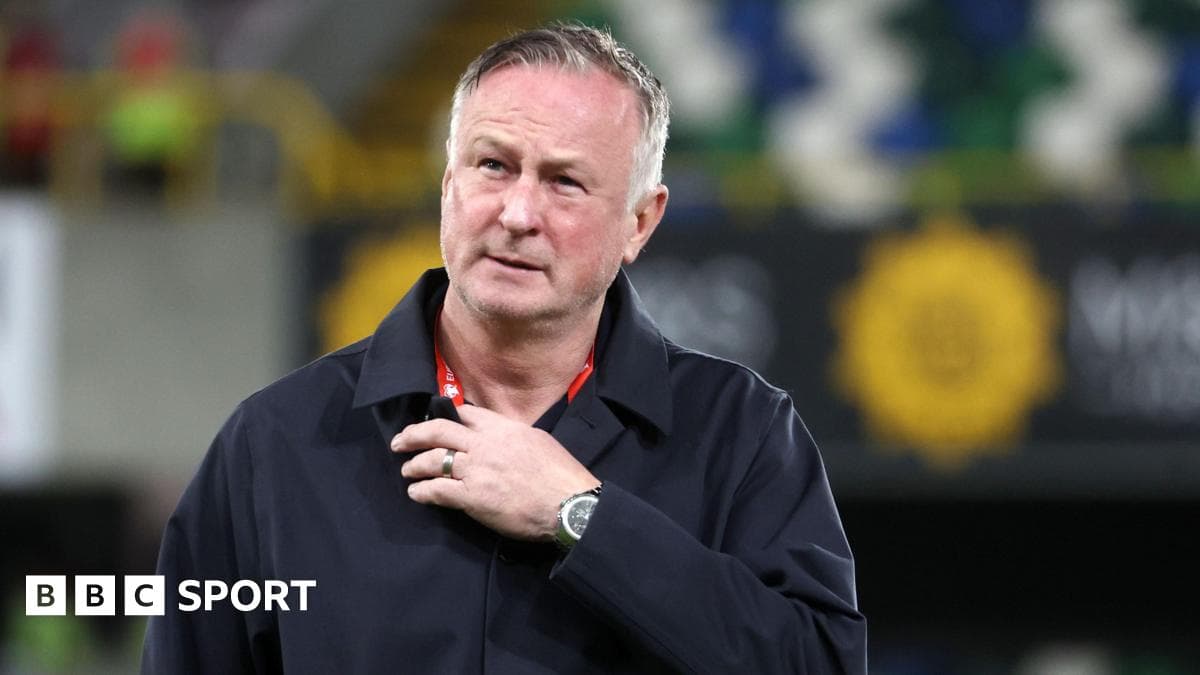
Michael O’Neill’s call to stay with Northern Ireland and turn down a longer-term deal at Blackburn Rovers did not just steady nerves at the Irish Football Association. It reset the direction of an entire project.
A manager who had just dragged Blackburn away from what looked like a relegation trapdoor has chosen the international grind instead of the day-to-day rhythm of club football. That is a statement. From him, and from Northern Ireland.
Country over club
Blackburn wanted him. They had every reason to. O’Neill, 56, walked into Ewood Park on an interim basis and hauled a faltering side to safety in the Championship. He turned what “almost looked like a lost cause”, as Stephen Craigan put it, into a survival story that caught the eye well beyond Lancashire.
Plenty of managers would have cashed that in. Secure a longer contract, settle back into club life, take the next step on the domestic ladder.
O’Neill went the other way. After weighing up his options, he decided his immediate future still belongs to the international game, to the green shirt, to another tilt at a major tournament.
With Euro 2028 coming to Great Britain and the Republic of Ireland, the target is obvious. He has been here before, of course. Euro 2016 in France still hangs in the air for Northern Ireland – the benchmark, the proof that qualification is not a fantasy but a standard to chase.
A young core, a familiar leader
This is not the same group he led to France. The squad is younger, fresher, rawer. It is also, crucially, his.
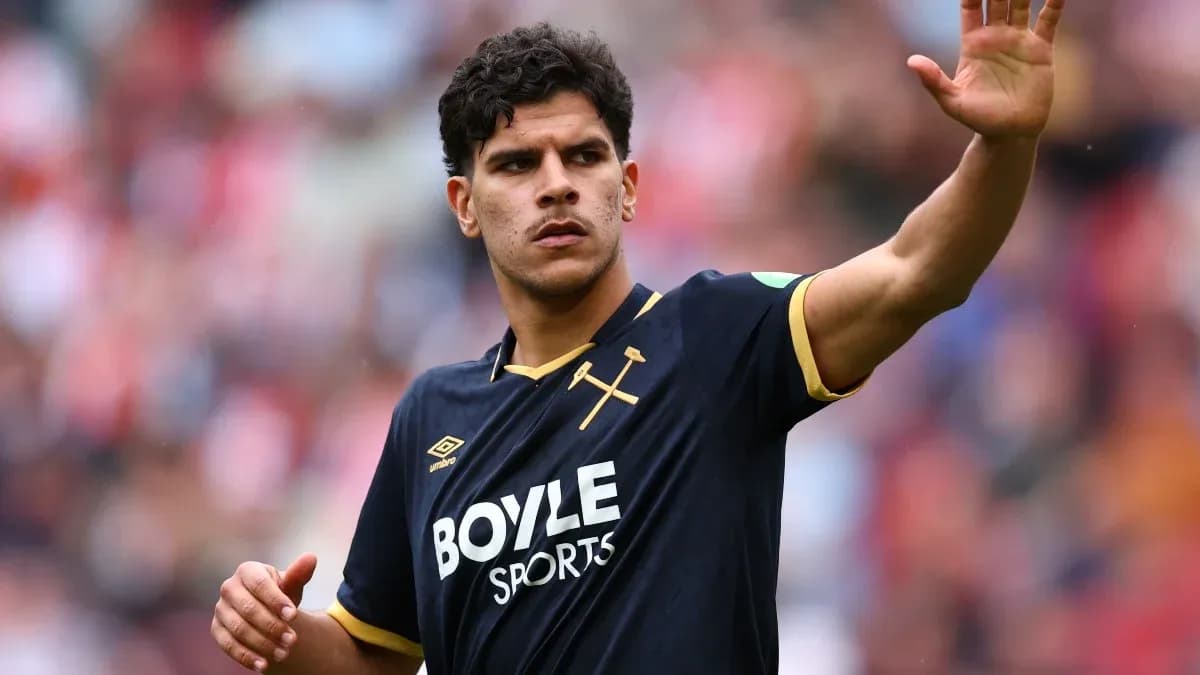
Conor Bradley, Trai Hume, Dan Ballard, Shea Charles – names that signal a different era, one built on energy and promise rather than experience alone. They have injected life into the national side, and O’Neill now has the chance to mould them properly.
“I’m delighted he’s staying. I think the progress of the young group over the past two or three years has been a joy to watch,” said Craigan, the former Northern Ireland defender, speaking to BBC Sport NI.
He did not stop there.
“There’s no doubt there is lots of potential still in them, lots of growth still in them. And at this early stage of their development in international football, a change of manager may just have upset them a little bit with regards to their rhythm and their fluency and any cohesion they have built up over the last couple of years.”
That is the crux. This is not just about keeping a popular coach. It is about preserving momentum at the precise moment a young group is learning what it takes at this level.
Short term, Craigan believes, the decision sets them up for “a couple of good internationals in the summer” and the Nations League campaign in September and October. Longer term, it anchors a generation to a manager who clearly excites them.
Belief, trust and a manager who’s done it
Players talk. They talk in tunnels, in hotels, in mixed zones. When Northern Ireland’s squad speak about O’Neill, a pattern emerges.
“The one thing you always hear when the players are interviewed, they speak very highly of Michael, they like the way he works,” Craigan said. “He has clearly improved a lot of them individually, even with regards to just tactical shape. The players have taken things on board and have made great strides.”
This is where O’Neill’s decision cuts deepest. It is not just the IFA choosing him. He is choosing them, and choosing this squad.
“They know there’s more to come from them. Michael knows there’s more to come from them, otherwise he wouldn’t have agreed to stay,” Craigan added. “So when the players know the manager has belief and trust in them and is excited by what they can give over the next few years, that will give them a huge shot of confidence.”
For a developing side, that sense of shared belief can be as valuable as any tactical tweak. Especially when the manager has already walked the path they are desperate to tread.
“The next step is going to be qualifying for a major tournament and I just think having Michael there beside them, having done that before, will give the players plenty of hope,” Craigan said.
Nations League, World Cup route and the 2028 horizon
The roadmap is already sketched out.
Euro 2028 has long been circled as the summit for this group, the moment when caps become experience and experience becomes expectation. Within that, there are milestones.
“2028 was always the target for this group of players but, within that process, getting promotion to Nations League B was massive, a World Cup play-off spot came along with that, that was a big bonus as well,” Craigan pointed out.
Those steps matter. Nations League B brings tougher opponents and sharper tests. It also offers that extra route into a World Cup play-off – a lifeline no nation in Northern Ireland’s bracket can afford to ignore.
“So there’s lots of experience now, it was all about accumulating caps so that they could get as much experience at international level as they could,” Craigan said.
There is still work to do. Creativity in the final third remains a concern. A reliable goalscorer has yet to fully emerge. Craigan sees those as issues that can evolve with age and time, not structural failings.
“We know they’re heading in the right direction, there are little bits of fine-tuning that have to be done, at the top end of the pitch, being a bit more creative and finding a goalscorer,” he said. “That sometimes comes as players get that bit older, but they look like a really strong unit and I think having Michael leading them will give them great confidence.”
Contract questions and club temptations
O’Neill’s spell at Blackburn has not gone unnoticed. Survival from a bleak position always turns heads. Craigan is convinced other clubs will circle again.
“There is no doubt he will have turned heads, making such an impact in what almost looked like a lost cause,” he said.
That brings the focus back to the IFA boardroom. O’Neill’s current deal still has two years to run, but the logic is clear: if they want him long term, they need to protect themselves.
“Unless the IFA extend his contract there clearly is the potential of another club coming in. They will have a release clause of a certain amount of money. That’s always the case with any manager’s contract, whether it be club or country,” Craigan explained.
His view is blunt. The era of short-term loans to help out clubs should be over.
“But if they did look to extend his contract, which I would be more than happy for them to do, it probably has to be more stringent as regards club football. There would be no more loans involved as regards helping clubs out.
“It would either have to be a clean break or it’s not. I think that’s something the IFA should be looking at from that perspective.”
In other words: commit, on both sides.
“Michael has to think about putting down some roots and saying, ‘I’m going to be an international manager, that’s it’, and the IFA have to say, ‘we want you to stay here for another three years beyond your current two years you have left on your contract, extend it’,” Craigan said.
“But it has to be weighed heavily towards the IFA to try and protect them for every eventuality and I’m sure if Michael gets the terms he would like I don’t see any reason why he wouldn’t sign it.”
Immediate tests, long-term stakes
The next steps are already in the diary. Northern Ireland face Guinea in Cadiz and France in Lille in early June friendlies, before a Nations League group in the autumn with Georgia, Hungary and Ukraine.
Those fixtures carry different weights. The friendlies will test the youngsters against contrasting styles. The Nations League will shape seeding, confidence and, potentially, routes into bigger tournaments.
Above all sits the main prize: qualification for the next European Championships.
“It would have been uncomfortable for them coming into these games. It would have been easy for them not to arrive for international football in June if Michael hadn’t been there and there had been an interim manager in charge,” Craigan admitted.
“It would have looked a little bit untidy but the fact that he has made this decision gives the players a major boost.”
The decision is made. The manager who once took Northern Ireland to a stage many thought beyond them has turned his back on club security to try to do it again.
Now the question is simple: with time, trust and a maturing core, can Michael O’Neill turn this promise into another golden summer?