.svg&w=384&q=75 "Pitchgist logo")
Manchester United Set to Appoint Carrick as Permanent Head Coach
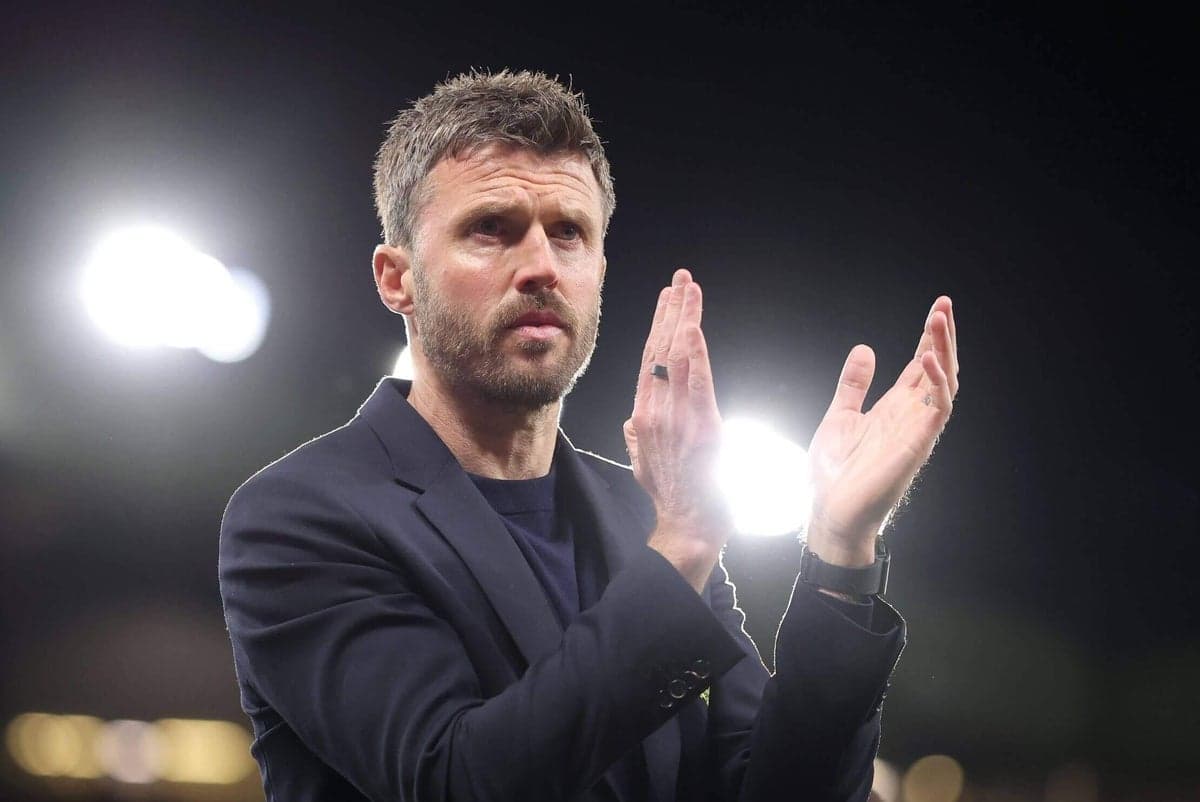
Michael Carrick is on the brink of being handed the keys to Old Trafford for good.
Manchester United’s football leadership will recommend this week that the 44-year-old be appointed permanent head coach, with chief executive Omar Berrada and director of football Jason Wilcox ready to put his name in front of Sir Jim Ratcliffe at an executive committee meeting.
Ratcliffe will make the final call, as he does on all major football decisions. All signals from within the club, though, point in one direction: Carrick stays. The Glazer family, still majority shareholders, are content to let Ratcliffe drive the football operation.
Inside Carrington, that feels like a formality.
Carrick is already sitting in on planning meetings. Players and staff are working on the assumption that the man who steadied the club mid-season will be the one leading them out next year. The mood is less “if” and more “when”.
United have not rushed this. They have tested the market, weighed alternatives, and quietly carried out background checks on a number of candidates, including Andoni Iraola and Unai Emery. The idea was to wait until the end of the campaign before nailing down a decision.
Champions League qualification changed the tempo.
Once United beat Liverpool 3-2 to secure their place among Europe’s elite, the conversation moved from theoretical to practical. Recruitment plans for the summer are already in motion, and being able to tell potential signings exactly who they will be playing for is seen as non‑negotiable.
Carrick’s case has been built on the pitch.
When Kobbie Mainoo, fresh from scoring the winner against Liverpool, told Sky Sports “we want to die for him on the pitch”, it cut through more loudly than any boardroom briefing. That is the kind of dressing-room buy-in United have been missing in recent years.
Ratcliffe has taken a close interest. In the week leading up to that Liverpool game, Carrick met the co-owner, with The Athletic reporting that Ratcliffe was “showing his support”. The meeting underscored a growing sense that this partnership is not a stop-gap, but the start of a project.
Carrick’s second coming
This is Carrick’s second spell as United’s interim figurehead, but the context could hardly be more different.
He returned in January, stepping in after Ruben Amorim and following two games under Darren Fletcher, with United languishing in seventh place in the Premier League — 11 points and five positions behind Manchester City. The club felt flat, drifting, stuck between failed eras.
The response has been sharp. United now sit third, six points clear of Liverpool in fourth with two matches left. The turnaround has not come with a trophy, but with something that has often been more elusive at Old Trafford: clarity.
United crashed out early in the domestic cups and had no European football at all this season after finishing 15th the previous year. That absence has hurt the club’s prestige but given Carrick a clean week-to-week runway. He has used it well.
Next season, United will return to the Champions League for the first time since the 2023-24 campaign, when they failed to escape the group stage. This time, they arrive with a coach who knows the club’s fabric and a squad that, crucially, know exactly what he wants from them.
Carrick’s managerial résumé is still short, but not shallow. He first stepped up at Old Trafford in the autumn of 2021, taking caretaker charge after Ole Gunnar Solskjaer’s sacking. He left with an unbeaten record — two wins and a draw — when Ralf Rangnick was brought in on an interim basis.
He then rebuilt his reputation at Middlesbrough. Taking over a side sitting 21st in the Championship, he drove them to fourth in his first season, underlining his ability to organise a team and change a club’s trajectory quickly.
For United, though, Carrick is more than a promising coach. He is part of the club’s modern history.
Across 12 years as a player, he made 464 appearances, won five Premier League titles and lifted the Champions League. He understands the demands of Old Trafford on a big European night because he has lived them.
A decision that shapes the summer
The timing of United’s decision now takes on a different weight.
On Sunday, after the final home game of the season against Nottingham Forest, Carrick will have the option — as managers often do — to take the microphone and address the crowd. Clarity on his future before that moment would allow him to talk openly about where he wants to take this team.
Old Trafford has seen how a jolt of energy can sweep through the stands when a statement moment arrives. The unveiling of major signings like Raphael Varane and Casemiro turned pre-match routines into events. Confirming Carrick’s status could have a similar effect, not with fireworks, but with conviction.
Leave it too late, and the tone changes.
If the squad disappear off on holiday or into international duty with uncertainty still swirling, the club risks undercutting Carrick’s authority — a familiar misstep. When United hesitated after Erik ten Hag’s FA Cup win in 2024 and shopped around the market, it created doubt rather than control.
There is still work to do. United must open formal talks over a new contract and finalise the structure of Carrick’s backroom staff. The expectation is that the current group will largely continue, but those details matter and cannot be rushed for the sake of a neat announcement before Forest.
The balance, though, is clear.
If Carrick is indeed the chosen man, as all signs suggest, United stand at a moment where decisiveness can lock in momentum rather than risk losing it to hesitation.
They have found a head coach the players would “die for” and a fanbase ready to believe again. The question now is not whether Carrick fits Manchester United — it is whether United are ready to commit fully to the Carrick era.