.svg&w=384&q=75 "Pitchgist logo")
Maheta Molango Warns of Football's 'Survival of the Fittest' Era
Maheta Molango does not raise his voice. He does not need to. The numbers, the injuries, the faces of exhausted footballers do that for him.
“The World Cup should be the culmination of a dream,” the Professional Footballers’ Association chief executive says. “But the reality is that it will be the survival of the fittest. It’s not right.”
This is not a passing complaint about a busy season. This is a union boss warning that the sport is burning through its stars and gambling with its own future.
‘Survival of the fittest’ era
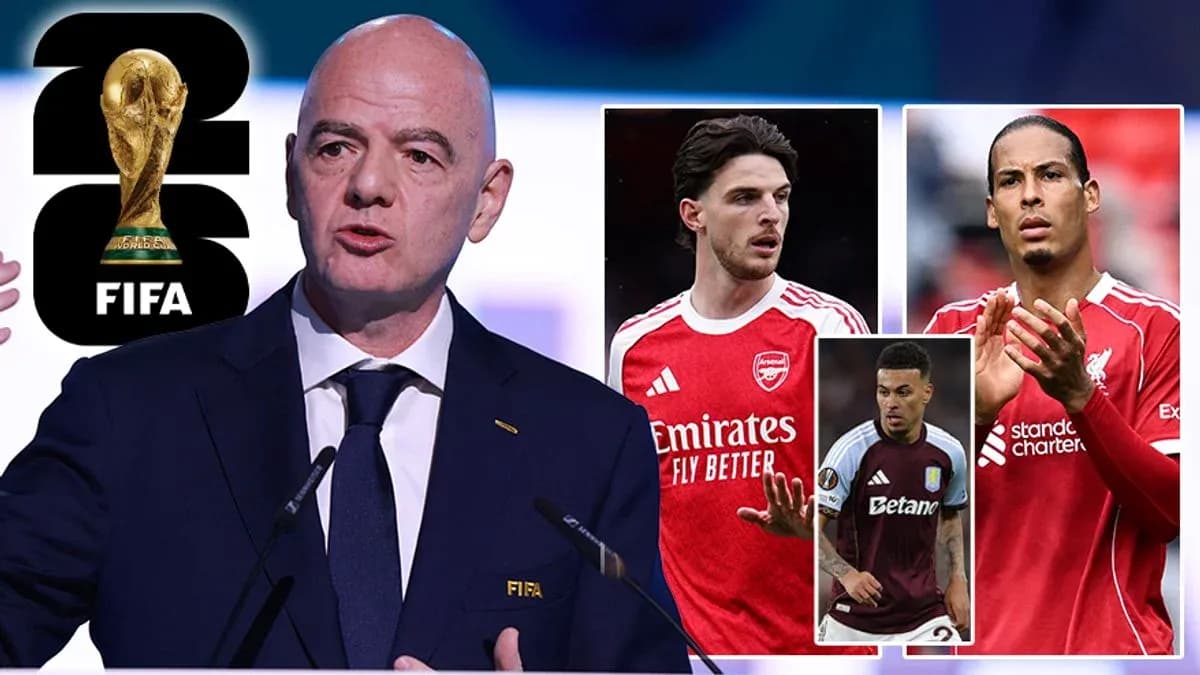
Across Europe’s elite, the calendar has become a grindstone. Opta data shows 19 Premier League players have already passed 4,000 minutes in all competitions this season and are still heading into a World Cup. Eleven of the 20 most-used players across Europe’s top five leagues are from the English top flight.
At the top of that list stands Liverpool’s Virgil van Dijk with 4,761 minutes. His team-mate Dominik Szoboszlai sits fourth on 4,556. Aston Villa’s Morgan Rogers is the leading Englishman, 11th overall with 4,382 minutes.
These are not outliers. They are the new norm.
“Now you see games which are not won by the best team, they are won by the fittest,” Molango says. “The players are superheroes. They are also very well paid. But that does not mean they should be pushed to the limit from a human perspective.”
The warning is blunt. If the human cost does not move people, the product should. “There’s a real risk to the product because people will pay thousands of pounds to watch people ‘walking’ at best.”
Players talking about action
Behind closed doors, the conversations have changed. Players are no longer just grumbling about long flights and tight turnarounds. They are asking what they can do.
“Maybe the players need to self-regulate,” Molango says. “That friendly you have organised, I’m not going to play it. The authorities have decided to encroach, we live in a world of bullies and they think you can just bully your way through.”
He tells the story of one player, a professional to the core. No drinking, no nightlife, meticulous in his preparation. Injured anyway.
“‘I don’t drink, I don’t go out, I could not do more to be fit but I’m injured,’ he said to me. ‘You were right! When you came to see us two years ago about the calendar, we listened, but… you were right.’”
The sense is growing that enough is enough.
“There was one occasion this year in this country where they said to me: ‘Should we think about doing something?’” Molango reveals. “This is a generation of players who are so smart, so switched on, so committed and they see the bigger picture.”
La Liga’s Miami stand – a blueprint
Molango points to Spain as proof that players hold more power than they sometimes realise. La Liga’s attempt to stage a league match in Miami looked like a done deal from the outside. Commercial plans were drawn up, the league pressed ahead.
The players refused.
“They wanted to play a game in Miami. They did their usual and just decided to crack on. The players just said we are not going. In the end, the game was cancelled.
“If there’s one league with strong leadership, it’s La Liga. There was no game because the players realised they are the product. You can sell tickets but we are not going. If the players are not there. There is no game. They need to understand what the players think.”
The message is clear: if football keeps stretching its stars, they will eventually push back.
Rodri’s warning, then an ACL
The alarm bells have been ringing for a while. A Fifpro report into player workload, looking at the 2024-25 season and the expanded Club World Cup, condemned “unprecedentedly long and congested seasons” and called for minimum four-week close-season breaks and winter pauses.
Still the schedule swells. FIFA and UEFA have expanded the World Cup, the Club World Cup and the Champions League, and added the Conference League. England has scrapped FA Cup replays, but kept the League Cup. The calendar breathes only where it is commercially convenient.
In September 2024, Manchester City midfielder Rodri said players were “close” to taking strike action after his own 63-game season. Later that month he ruptured his ACL.
The warning could not have been more stark.
Heat, hard pitches and “dangerous” conditions
This is not only about volume. It is about where and how these games are being played.
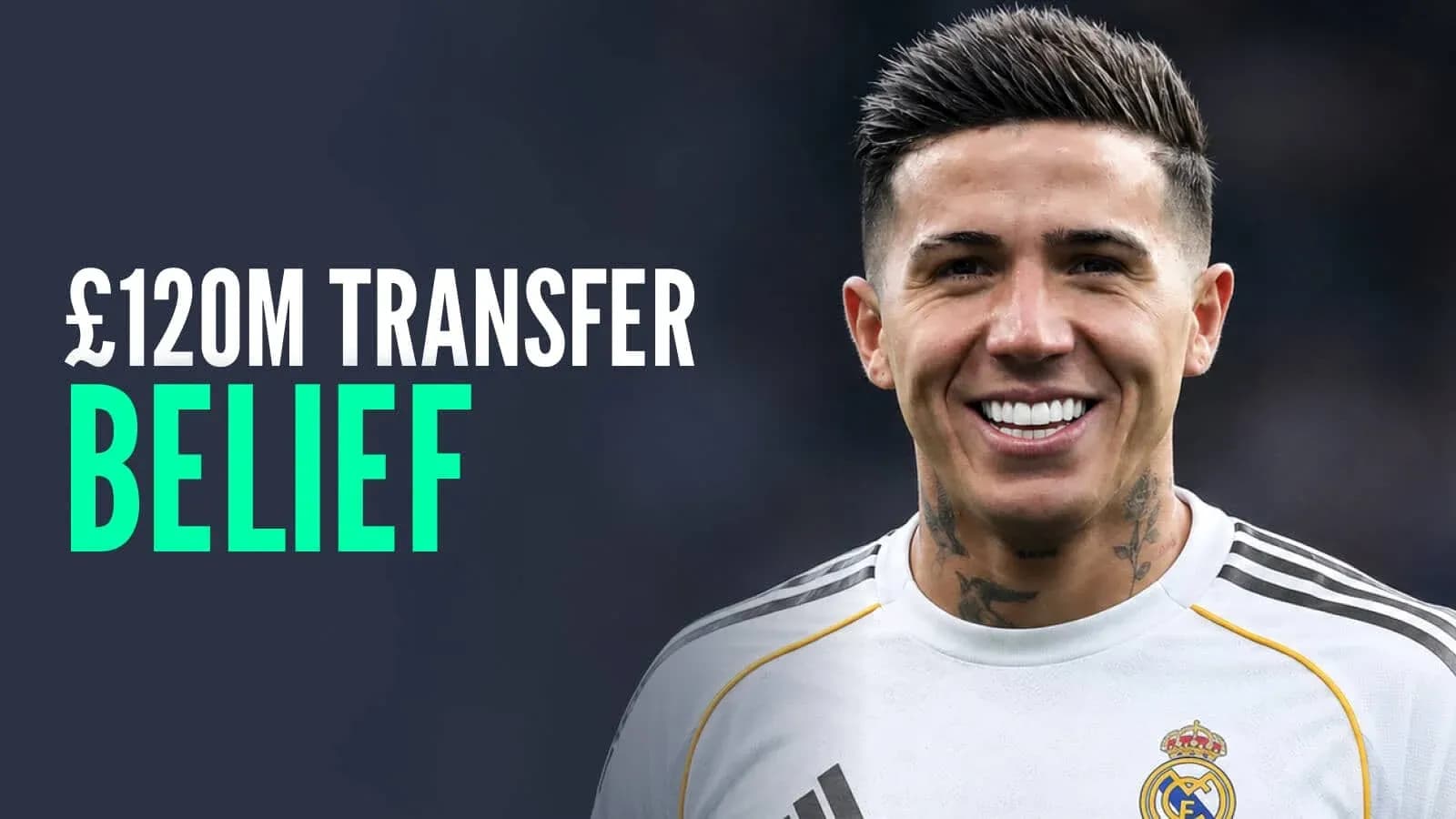
Chelsea midfielder Enzo Fernandez described the temperatures at the Club World Cup as “incredible” and “dangerous”, admitting they left him feeling “really dizzy”. Molango heard the same from others.
“The temperatures, climate and lunchtime kick-offs were a huge concern,” he says. He credits FIFA for at least listening on some kick-off times and venues, but the anxiety has not gone away.
He saw it for himself at the Premier League Summer Series in the United States. “I went to a game in Philadelphia at 3pm and with the temperatures, I couldn’t breathe. The games were back to back and the difference between the early and the later games were like night and day.”
Players told him they were struggling to breathe. The surfaces did not help.
“The grass is so dry because they are American Football pitches. You go to Atlanta and the pitch is so dry. They are not playing NFL.”
Elite footballers, asked to perform at full tilt on baking, unforgiving turf, in conditions that would test pre-season fitness, never mind players already deep into a marathon year.
Kane, Rice, Bellingham – stars who remember the pyramid
The PFA’s strength, Molango argues, lies in the fact that its members range from global icons to League Two stalwarts – and that the biggest names still care about the base of the game.
“You need to remember that most of them come from the football pyramid,” he says. “Even the national team. Harry Kane has played for Leyton Orient. I don’t need to explain to him what it means. I don’t need to explain it to Kyle Walker. Declan Rice was rejected from an academy.
“They get it. Jude Bellingham played in the Championship with Birmingham City. I don’t need to tell him what it means. They get it. It’s not just a fight for them because it’s also a fight for whatever comes next.”
He loves a phrase he heard from the Lionesses: “We want to leave the shirt in a better place.” Names like Kim Little and Leah Williamson come up as examples of players thinking beyond their own careers.
“I’ve got captains calling me and some are not even in the starting XI but they call me because they care. Both on the men’s and women’s side.
“What is for sure, the PFA is here for the right reasons. People will not just bully through when they want. Luckily, we live in a country with laws and that will always be the last resort. The days of thinking the players are the weakest link are over. They are the strongest link.”
Declan Rice and the 70-game reality
Amid all this, the demands on England’s core players grow. Arsenal midfielder Declan Rice is the example Molango keeps coming back to.
Rice, 27, has already logged 4,246 minutes in all competitions this season, the 10th highest Premier League player and the second-highest Englishman behind Villa’s Rogers. On current trajectory, he could reach 68 games before a ball is kicked at the World Cup. Push deep with club and country and a 70-game season looms.
Molango’s point is brutal in its simplicity: nobody will care.
“Who will have sympathy for Declan Rice? Everyone forgets the 68 games. If he’s lucky then he could get to 68 games even before the World Cup. Who remembers that? No-one. They will be busy saying: We need to win the World Cup.”
Rice will be judged on whether he dominates a midfield, not on whether his body is screaming from 10 months of relentless football.
A game that forgot its core
For Molango, this is football’s central contradiction. The entire industry orbits the players, but they are often an afterthought in the rooms where decisions are made.
“We need to put the game back into the centre of the industry,” he says. “This is like Apple having a board meeting and talking about everything about the next iPhone. There’s no point in talking about the shop or the sales person but it’s pointless if the next iPhone is bad.
“When we go to meetings in football, it’s the same. We talk about everything but the players. We talk about everything apart from what happens on the pitch. We need to get football back at the centre of the game.”
The data, he insists, is not vague. “The data says a maximum of 50 to 60 games a year. It’s a maximum of 45 back-to-back. A minimum of one month’s rest each summer.”
The response? The calendar is “locked” until 2030.
“But when it comes to adding games, it’s no problem. But when it comes to reducing games, it’s locked. It doesn’t work like this. They want it all. The people in the stadium. The broadcast and TV rights. The authorities are massively underestimating the way players have evolved over the years.”
The next World Cup is being sold as the biggest ever. More teams. More matches. More content. Somewhere in that noise, the people actually playing those games are asking how much more they can give.
The question now is not whether they are being pushed to the limit. It is what happens when they finally refuse to go any further.