.svg&w=384&q=75 "Pitchgist logo")
Klopp Takes Over Germany: A Major Rebuild Begins
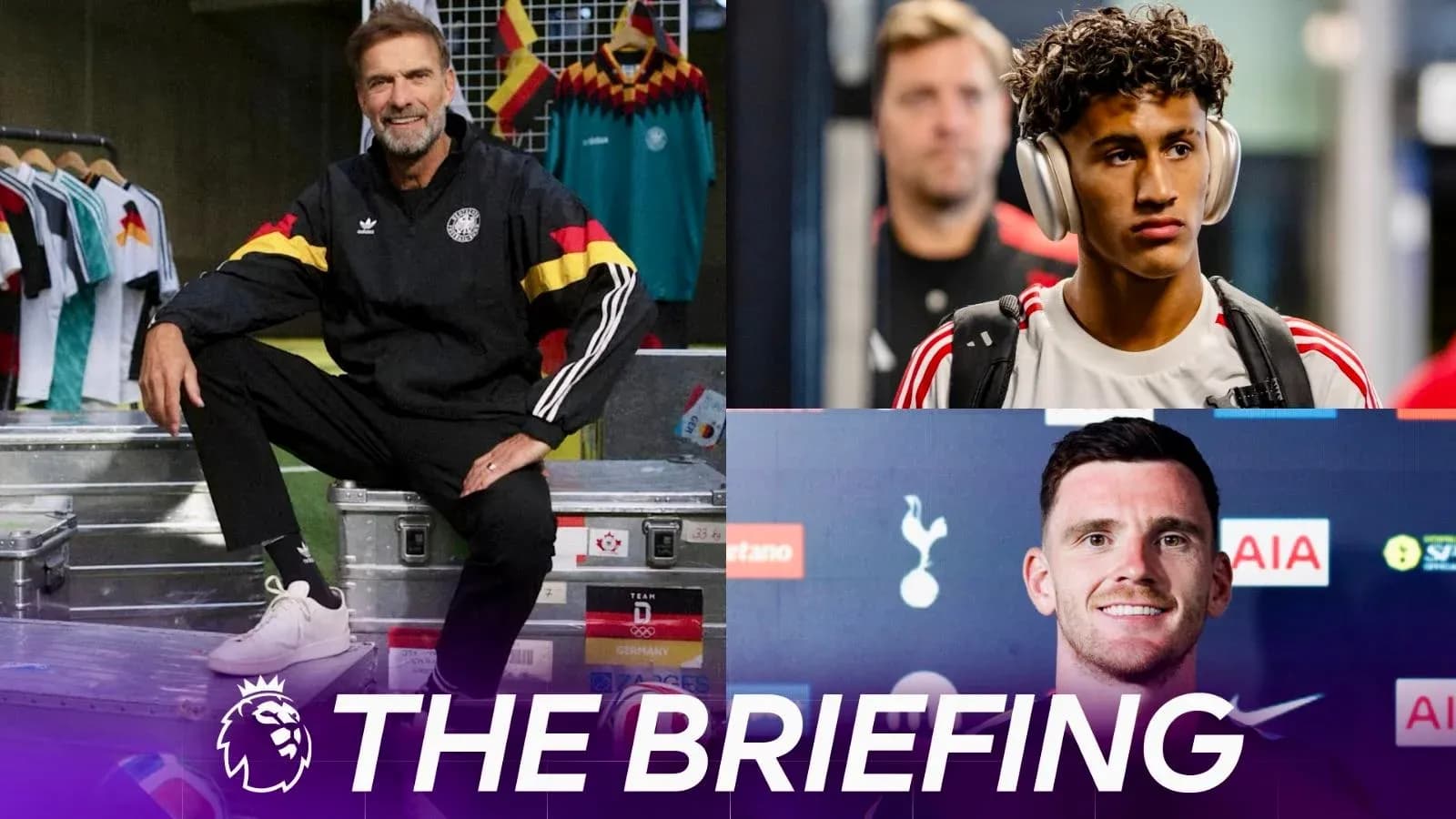
Jurgen Klopp is back. Not at Anfield, not prowling a Premier League technical area, but at the helm of a wounded giant that has lost its way.
Germany have confirmed Klopp as their new head coach on a contract running until the end of the 2030 FIFA World Cup, handing the 57-year-old the most politically charged, emotionally loaded job of his career. It is his first return to day‑to‑day coaching since he walked away from Liverpool in 2024, drained after nine relentless years.
At Liverpool he collected almost everything: the Premier League, UEFA Champions League, FIFA Club World Cup and a stack of domestic and European honours that restored the club to the elite. He left citing fatigue, insisting the tank was empty.
Now he steps into a very different challenge.
A fallen powerhouse, a brutal exit
Germany are not simply between cycles. They are at one of their lowest ebbs in modern history.
Julian Nagelsmann resigned last month after a dismal round-of-32 exit to Paraguay, a defeat that cut far deeper than a bad night at the office. It underlined how far the four-time world champions have drifted from their own standards.
Klopp is tasked with dragging them back. He will lead Germany through the next UEFA European Championship and the 2030 FIFA World Cup, with a mandate that goes beyond tactics and team selection. This is a cultural reset.
He will not do it alone. Former Liverpool assistants Pep Lijnders and Peter Krawietz are joining him, reuniting the core of the backroom team that transformed Liverpool’s fortunes. Per Mertesacker will become the German Football Federation (DFB)’s new sporting director in January, leaving behind his role overseeing Arsenal’s academy at the end of the 2025/26 season. The structure around Klopp is being built to last.
“Like a movie” – and an inevitability
Klopp arrives from a different vantage point. Since late 2024 he has served as Red Bull’s global head of soccer, a strategic role away from the touchline. Even from that distance, the pull of the national job never really went away.
“Over the last few days it was almost like a movie happening to myself,” he said, reflecting on the whirlwind that brought him to the DFB.
“I have always surmised the job of Germany head coach is really big, but now it is really dawning on me what being the national team head coach is all about.
“For many, many years it was unimaginable for me to assume this position. As the years went by, it became more or less evident that sooner or later I would be asked to do this job. Now I think the time is right.”
The time will be tested quickly. His first game in charge comes in September, against the Netherlands. Waiting on the other side: Virgil van Dijk, the captain who once anchored his Liverpool defence. Old allies, new stakes.
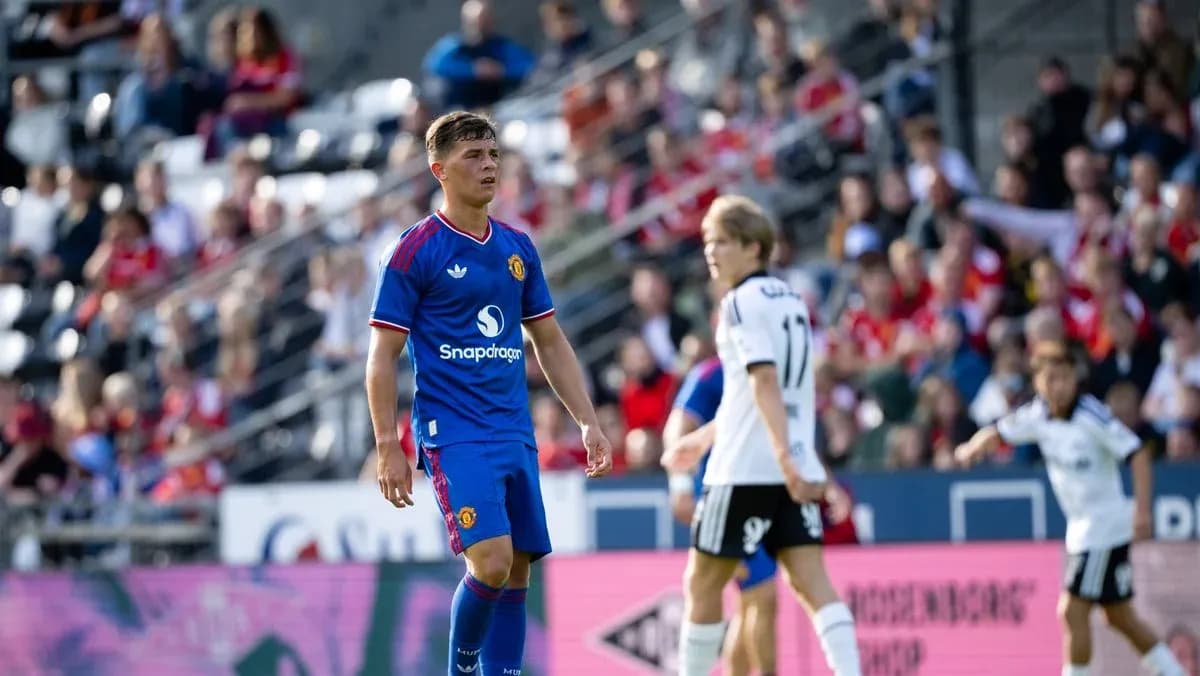
In Trondheim this week, Manchester United supporters may catch their first glimpse of a future headline act.
JJ Gabriel, just 15, has been named in the senior squad for Friday’s pre-season friendly against Rosenborg. He travels as part of a 25-man group, a teenager stepping into an adult dressing room with barely a year of Under-18 football behind him.
His rise has been ferocious. Last season he was named Under-18 Premier League player of the season despite starting the campaign at 14. The rules meant he could not feature in a Premier League matchday squad – academy players must have turned 15 before the end of August to be eligible – so his work stayed largely out of the public eye.
Inside the academy, though, he was impossible to ignore. Gabriel scored 29 goals in 32 appearances for the Under-18s, driving United to the FA Youth Cup and Premier League Under-18 Cup finals. A winger by trade, he spent much of the season operating centrally, adapting his game while still a schoolboy.
He could not be named in senior squads, but he was a regular presence at first-team training. The club has been careful not to rush him, even as the numbers piled up.
“JJ’s a big talent,” manager Michael Carrick said last season. “It’s pretty obvious to know that. And he’s had a really good season for the Under-18s. We obviously think an awful lot of him, but patience is important in managing everything that comes with working with him.”
United know their history with prodigies. The youngest player to appear in a competitive match for the club remains David Gaskell, who debuted in 1956 at 16 years and 19 days. Gabriel does not turn 16 until October.
For now, Trondheim is not about records. It is about a first taste of the environment he may one day lead.
Newcastle double down on youth with Bamba coup
While some clubs chase marquee names, Newcastle United are betting heavily on tomorrow.
Their latest move is the signing of 20-year-old central midfielder Aladji Bamba, who only made his professional debut for Monaco last season. It is a transfer that fits a clear pattern.
Bamba’s arrival drags the average age of Newcastle’s summer recruits down to 19.5. He joins goalkeeper Ewen Jaouen (20) from Reims, winger Bazoumana Toure (20) from Hoffenheim and central midfielder Sean Steur (18) from Ajax in a window defined by youth and potential.
The backdrop is stark. Sandro Tonali has left for Tottenham Hotspur. Anthony Gordon has gone to Barcelona. Newcastle have responded not by replacing like-for-like stars in their prime, but by building a new core.
Bamba may prove central to that plan. Naturally more defensive-minded, though capable of operating higher up the pitch, he profiles as a possible long-term successor to Tonali in the heart of midfield.
The numbers from Ligue 1 last season back that up. Among midfielders who played at least 500 minutes, Bamba ranked in the top five for duels won (9.1 per game on average), tackles (3.6), successful take-ons (1.6) and aerial duels won (1.9). He competes, he recovers, he carries the ball. He looks like a player built for the intensity Newcastle demand.
This is a club leaning into a project: younger, hungrier, with the risk that comes when potential is asked to replace proven quality.
Robertson trades 26 for 3 out of respect for King
In north London, a different kind of statement has been made. Not with a tackle or a goal, but with a shirt number.
Andy Robertson, freshly signed by Tottenham Hotspur, has chosen not to wear his customary No 26 shirt. The decision is a nod to a club icon: Ledley King.
Robertson has worn 26 for almost his entire domestic career, at Dundee United, Hull City and over nine years at Liverpool. Yet at Spurs, that number has been untouched since King retired in 2012. It has never been formally withdrawn, but its absence has always felt deliberate.
“From my point of view, I wanted to respect that,” Robertson said of King, now a club ambassador. “He was an unbelievable player and has done so many good things for this football club.
“Number 3 means a lot to me – that’s my national team number, I’ve had so many good memories as number 3 for Scotland so when I knew 3 was going to become available, it was a no-brainer for me.”
So No 3 it is. A fresh start, but with a nod to his international career and the history of his new home.
Robertson is expected to make his Spurs debut on their pre-season tour of New Zealand and Australia, with fixtures against Auckland, Sydney FC and Chelsea. The football will come quickly; the dressing-room dynamics already seem to be taking shape.
He has revealed that James Maddison is his closest friend in the squad, and Maddison wasted no time setting the tone. The midfielder posted a photo of Robertson looking less than thrilled on the flight to New Zealand, captioned: “He better liven up if he’s my company for this 26 hour flight.”
Twenty-two hours later came the update: Robertson, smiling. A small moment, but a telling one. The left-back who defined a Liverpool era now has a new number, a new club and, if Spurs have judged this right, a new chapter to write at the sharp end of English football.