.svg&w=384&q=75 "Pitchgist logo")
Howard Webb Defends VAR Decision in West Ham vs Arsenal
Howard Webb did not duck the question. He walked straight into the storm that followed West Ham’s disallowed stoppage‑time equaliser against Arsenal – and backed his officials to the hilt.
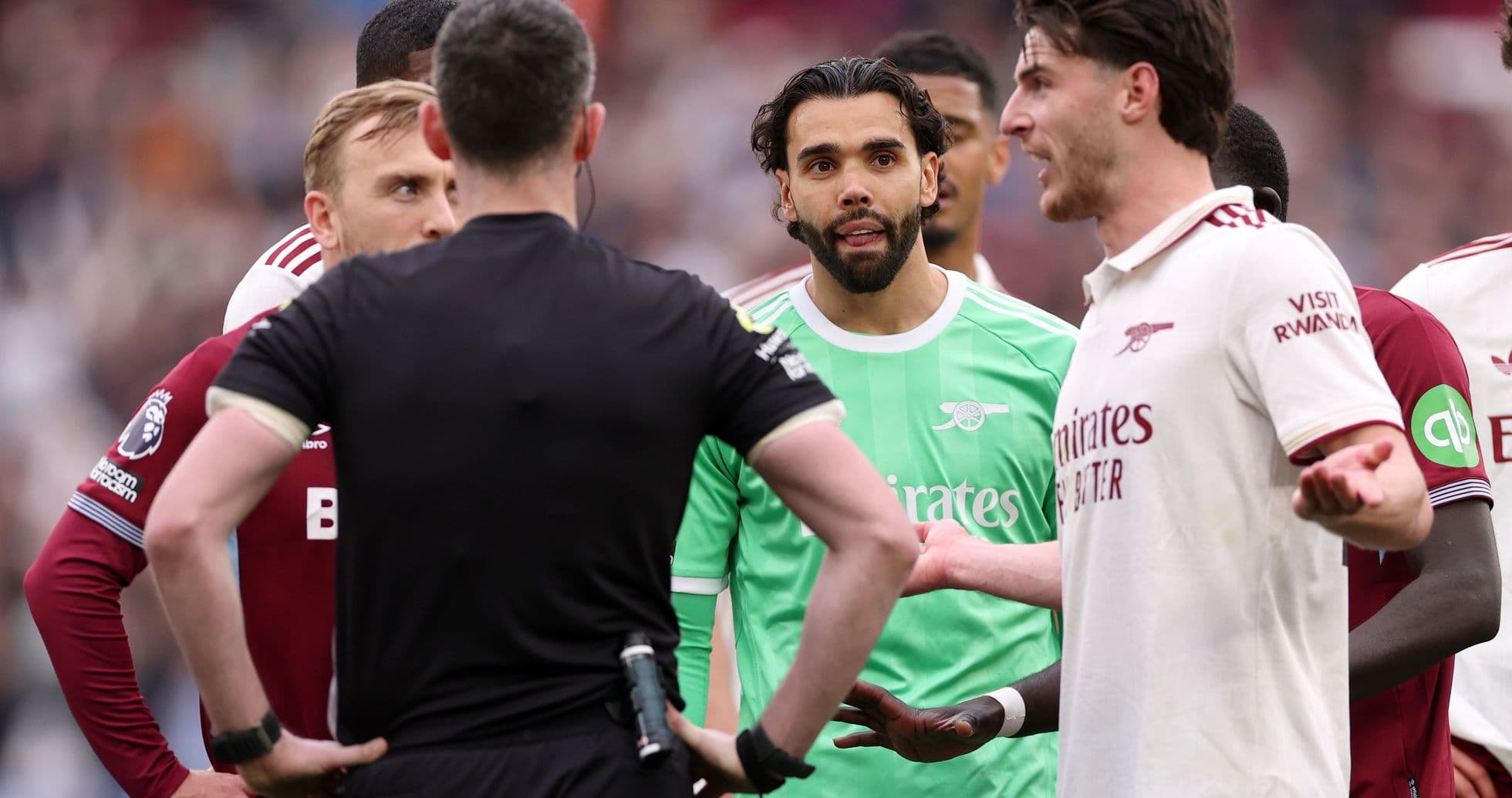
Speaking on Match Officials Mic'd Up, the PGMOL chief declared the decision to rule out Callum Wilson’s late goal “categorically” correct, after VAR intervened to penalise Pablo for a foul on Arsenal goalkeeper David Raya in the fifth minute of added time of the Gunners’ 1-0 win.
‘Categorically yes’: Webb backs the call
The incident came from the kind of frantic, penalty-area scramble that now defines the closing stages of Premier League games. Wilson thought he had snatched a precious point for West Ham, only for the familiar pause, the drawn lines and the slow-motion replays to follow.
This time, Webb was unequivocal.
“Is it a foul on the goalkeeper? Categorically yes,” he said. “We’ve said all season, including in pre-season briefings with the players, that if a goalkeeper is impeded by an opponent grabbing or holding their arms and therefore they can’t do their job, they’ll be penalised.”
That line is key. Goalkeepers, Webb stressed, have been given clear protection when their arms are held or restricted. In his eyes, this was the textbook example.
Inside the VAR booth
The PGMOL released the audio between on-field referee Chris Kavanagh and VAR Darren England, offering a rare, unvarnished look at how the call flipped from goal to foul.
On the pitch, Kavanagh initially awarded the goal. In Stockley Park, England and his team immediately locked onto the contact between Pablo and Raya.
“His hand is holding his arm down. That’s impactful, for me,” England says in the transcript. “The left arm there, is holding, is across the body. He’s across the head and he’s holding the left arm of Raya, there. Which impedes his ability to get to the ball properly.”
From that point, the outcome felt inevitable. With the threshold for goalkeeper interference clearly defined in those pre-season briefings, the intervention was swift, the on-field decision overturned, and Arsenal’s clean sheet – and victory – preserved.
Two managers, two worlds
The fallout underlined just how differently the same moment can look from opposite ends of the table.
Mikel Arteta, steering a title challenge and clinging to every marginal gain, hailed the officials and the technology. He spoke of VAR showing “a lot of courage”, a phrase that tells you exactly how managers now frame these high-pressure calls when they fall their way.
Arsenal sit top with 79 points from 36 games, five clear of Manchester City, who have a game in hand and 74 points. Every decision feels like it tilts the title race, every intervention another small shove in one direction.
For West Ham and Nuno Espirito Santo, the mood is entirely different. His side are stuck in 18th on 36 points, deep in the relegation fight and staring at the financial and sporting abyss that comes with it. From that vantage point, the same decision looks less like “courage” and more like inconsistency.
Nuno did not hide his frustration, criticising what he called a “lack of consistency” in these grappling incidents. To a manager fighting for survival, the question is not just whether this was a foul, but whether similar contacts are punished week in, week out.
A season of grappling and grey areas
Webb acknowledged the tension. This has been a season heavy with wrestling matches in the box, blockers on set plays and all the dark arts that come with specialist set-piece coaching.
“This season’s been a little bit more unique than previous ones about the number of contacts in the penalty area, and it does create a challenge for the officials,” he admitted.
That is the crux of the matter. Players and coaches have pushed the limits on corners and free-kicks, turning every dead ball into a choreographed mêlée. Defenders block runs, attackers pin goalkeepers, and officials must decide, in real time and under intense scrutiny, which contacts cross the line.
The Raya incident is exactly the type of flashpoint that will be used in end-of-season debriefs.
Where the line gets drawn next
Webb revealed that those conversations are coming. At the end of the campaign, the PGMOL will sit down to thrash out clearer guidance on excessive grappling and holding, particularly around the goalkeeper.
Set-piece coaches will keep hunting for marginal gains. That is not going away. The job for Webb and his officials is to redraw the boundaries so that players know what will be punished, and fans understand why a goal stands or falls.
For now, Arsenal keep their three points and their lead. City still lurk with that game in hand. West Ham remain trapped in the bottom three, wondering how different their week might have looked if Pablo had kept his hands to himself for one more cross.
The title race stays alive. So does the argument over where protection ends and over-officiating begins.