.svg&w=384&q=75 "Pitchgist logo")
Ghana's World Cup 2026 Squad: Strengths, Challenges, and Key Players
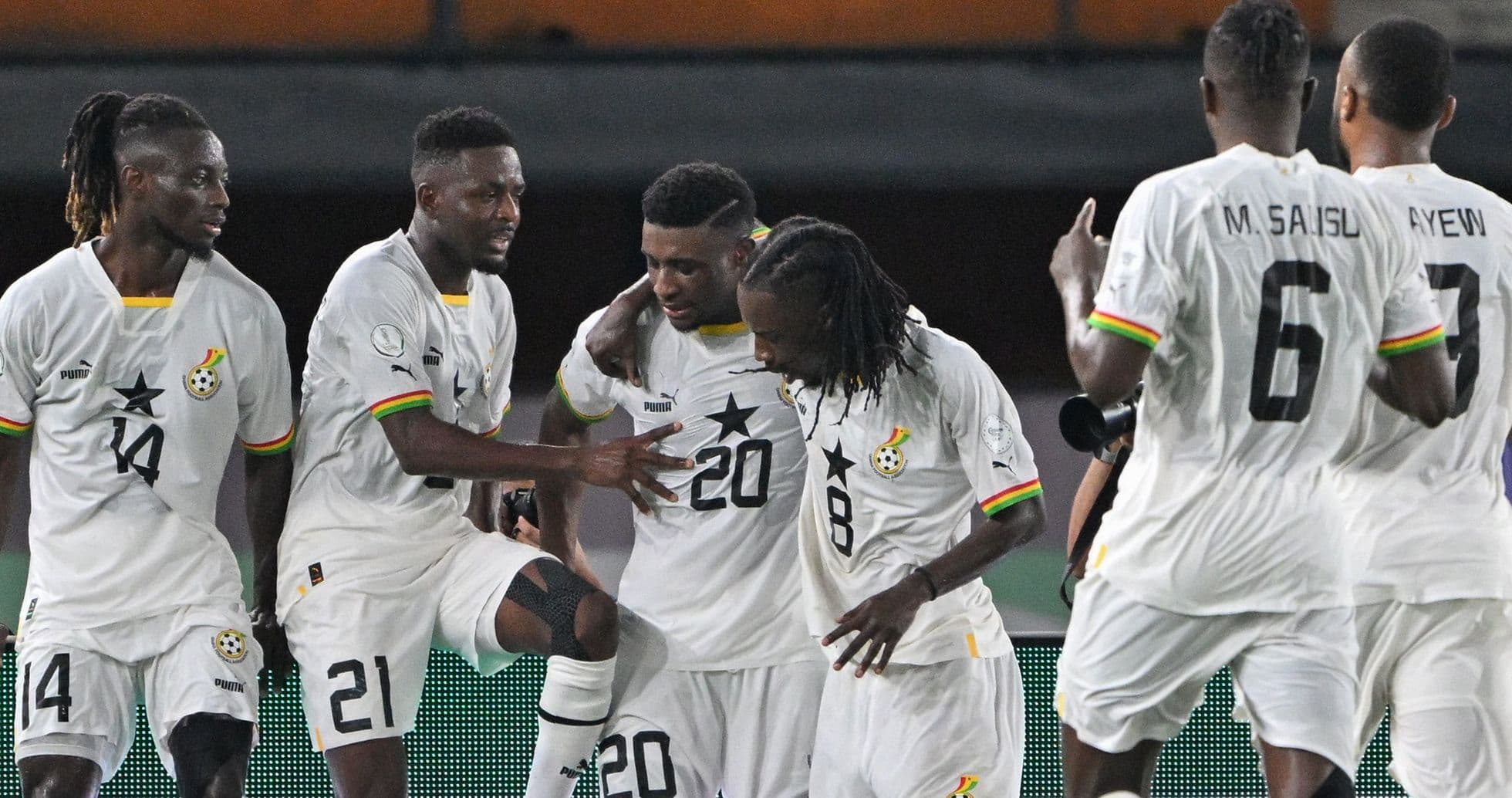
Ghana arrive at the 2026 World Cup with a clear identity: hard to break, dangerous when it matters, and bristling with internal competition. Ten qualifying games, just six goals conceded. The Black Stars built their campaign on a backline that rarely blinked.
Then came the blow.
Aleksander Djiku and Mohammed Salisu had formed the spine of that defence, a partnership that gave Ghana a calm authority under pressure. Salisu’s ACL injury, ruling the Monaco defender out of the tournament, rips a hole straight through the heart of Otto Addo’s plans. Djiku will go to North America as the senior pillar at the back; the question now is who stands beside him when the anthem plays.
Defence: A Wall Rebuilt on the Fly
Gideon Mensah has long owned the left-back berth, a steady, aggressive presence down the flank. His place, though, is no longer untouchable. Derrick Kohn’s rise at Union Berlin has been one of the quieter success stories in the Bundesliga, but Addo has taken note. Kohn’s inclusion in the squad for the trip to USA, Mexico and Canada turns left-back into one of Ghana’s most intriguing battles.
At centre-back, the Salisu gap is where the tension lies. Jerome Opoku of İstanbul Başakşehir offers size and composure and could be the man to step in next to Djiku, now at Spartak Moscow. Ebenezer Annan, Jonas Adjetey, Caleb Yirenkyi and others provide depth, but this is about finding chemistry quickly, not simply filling shirts.
Addo has widened the net. Patric Pfeiffer (Darmstadt 98), Marvin Senaya (Auxerre) and Derrick Luckassen (Pafos FC) have all been called for pre-tournament friendlies. These games are auditions, not warm-ups. One strong performance, one dominant night under the lights, and a fringe defender can turn into a World Cup starter.
Behind them, Benjamin Asare is locked in as No. 1. He will marshal a line that, on paper, still looks solid: Seidu at right-back, Mensah or Kohn on the left, Djiku with likely Opoku in the middle. Ghana’s defensive record in qualifying gives them something priceless heading into a major tournament: belief.
Midfield: Kudus the Star, Partey the Anchor
In midfield, one name towers above the rest. Mohammed Kudus is the headline act. His goal against Comoros sealed Ghana’s ticket to the World Cup, and when the stakes rise, he has a habit of stepping into the spotlight.
His club season has been turbulent. A dismal Premier League campaign with Tottenham, injuries biting at the wrong time, rhythm constantly disrupted. Yet the World Cup offers a reset. For Ghana, Kudus is not the struggling Spurs man; he is the creative heartbeat, the player trusted to unlock tight games and tilt tournaments.
Alongside him, Thomas Partey remains a reference point. Minutes at Villarreal have been limited, but his influence for Ghana has not faded. In qualifying, he knitted play, broke up attacks and offered a calm head when matches frayed. At 2026, he is again expected to sit at the base of midfield, dictating tempo and shielding the defence.
Elisha Owusu of Auxerre adds energy and control, provided he can finally shake off his own injury troubles. He is more than a squad player; fit and firing, he is a contender to start. Ibrahim Sulemana’s timely return for the March friendlies gives Addo another option, while Kwasi Sibo of Oviedo and Kelvin Nkrumah and Prince Owosu from Medeama deepen the pool.
There is heartbreak too. Abu Francis, on track to push for a place, saw his World Cup hopes shattered by a double leg fracture in a friendly against Japan at the end of 2026. His absence narrows the competition but underlines how brutal the final stretch before a World Cup can be.
In Addo’s likely 4-3-3, Partey will anchor, Sibo slots alongside him, and Kudus takes on the advanced role, linking midfield to the front three. That triangle will decide whether Ghana can control games against elite opposition or are forced to chase.
Attack: Firepower Everywhere, Tough Calls Inevitable
Up front, Ghana do not lack stars. They lack room.
Antoine Semenyo is the face of this attack. His rise has been spectacular: a Premier League revelation at Bournemouth, a January move to Manchester City, and a Carabao Cup lifted in March. He brings pace, power and a ruthless streak in front of goal. For Ghana, he is not just a guaranteed pick; he is the man expected to tilt matches on his own.
Jordan Ayew, the captain, brings something different: experience, reliability, and a proven nose for goals when the pressure spikes. Now at Leicester, he finished as Ghana’s top scorer in qualifying with seven goals. This will be his third World Cup. He is expected to lead the line, the armband on his sleeve and a nation’s expectations on his shoulders.
Inaki Williams of Athletic Club adds another dimension: relentless running, sharp movement, and a track record of big moments in La Liga. Between Ayew, Semenyo and Williams, Addo has three forwards who all expect to start. Not all of them can.
Then there is the enduring question of Andrew Ayew. The veteran has not played for Ghana since AFCON 2023, yet his name refuses to fade from the conversation. At 36, his role is under intense debate. Many argue his years of service and leadership warrant one last World Cup seat. Others point to the ferocity of competition and the need to move on. Addo’s decision on the older Ayew will say a lot about the direction of this team.
On the flanks, excitement is guaranteed. Abdul Fatawu Issahaku has lit up Leicester with spectacular goals and fearless attacking play. Kamaldeen Sulemana, now at Atalanta, offers blistering pace and a dribbling style that can shred defences. Christopher Bonsu Baah (Al Qadsiah), Ernest Nuamah (Lyon), Brandon Thomas Asante (Coventry) and Prince Adu (Viktoria Plzen) round out a front line brimming with options.
The likely starting trio? Ayew through the middle, Semenyo as the main attacking spear, and Fatawu Issahaku completing the front three. On paper, it is a blend of experience, explosiveness and raw unpredictability.
The XI Taking Shape
Strip away the debates, and a clear core emerges.
- Asare in goal.
- A back four of Seidu, Opoku, Djiku and Mensah.
- Partey and Sibo anchoring midfield, Kudus given license to roam and create.
- Fatawu Issahaku, Jordan Ayew and Semenyo leading the charge.
Predicted Ghana Starting XI for World Cup 2026 (4-3-3):
Asare; Seidu, Opoku, Djiku, Mensah; Partey, Sibo, Kudus; Fatawu Issahaku, Jordan Ayew, Semenyo.
It is a team built on a defence that has already proved it can shut games down, a midfield with a world-class spark, and an attack stacked with match-winners. The injury to Salisu has forced a rethink, but not a retreat.
The pieces are there. The question now is simple: can this generation of Black Stars turn promise into something that endures long after the lights in North America go out?