.svg&w=384&q=75 "Pitchgist logo")
Chelsea's Path to Glory: The Key to Success in the FA Cup Final
Chelsea stand on the brink of a trophy and another inquest.
They will walk out at Wembley on Saturday for an FA Cup final against Manchester City, a chance to end 2025-26 with silverware and a smile. Behind the scenes, though, the club is still picking through the wreckage of another chaotic season: ninth in the Premier League, two permanent managers gone, a caretaker in Callum McFarlane in the dugout, and a recruitment department scrambling for the next big bet.
The route back to the Champions League is a maze. Chelsea must somehow climb to sixth with two games left, then hope Aston Villa finish fifth and beat Freiburg in the Europa League final. It is a plan with moving parts everywhere, a long shot dressed up as a pathway.
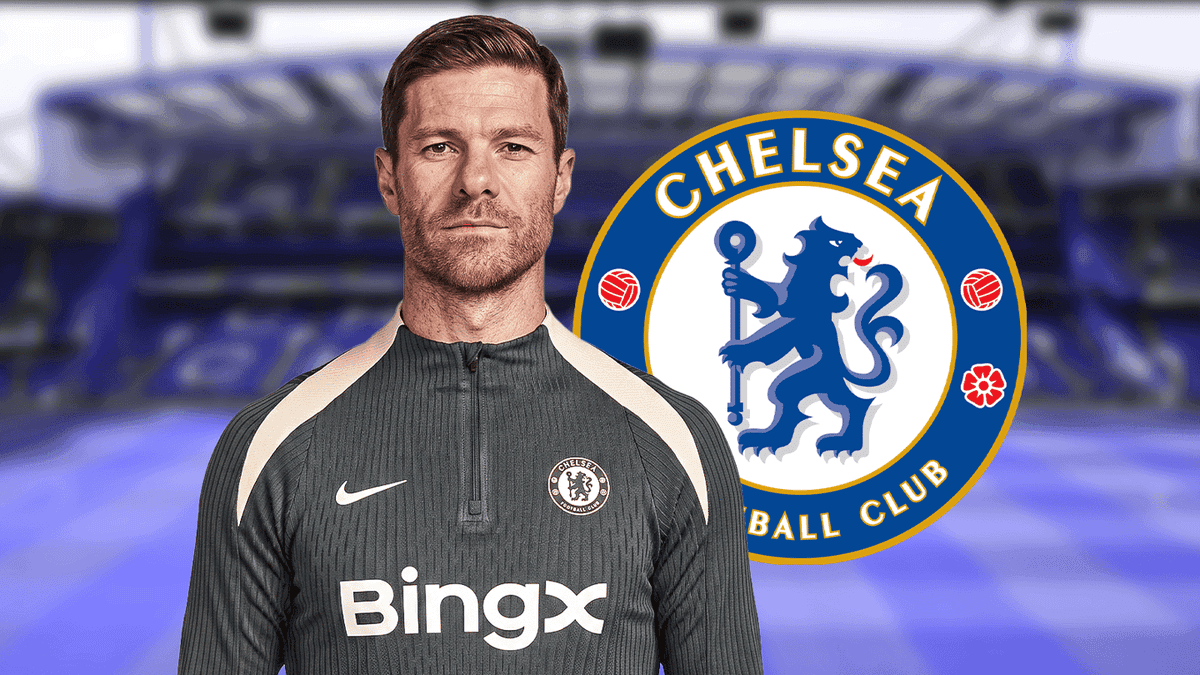
All of which makes the next managerial appointment feel decisive. The owners gambled on moving Liam Rosenior over from Strasbourg and paid for it with a “poor outcome” in both results and direction. They cannot afford a repeat. Among the names circling the vacancy, one stands out: Xabi Alonso, the former Bayer Leverkusen and Real Madrid coach whose stock has rarely been higher.
The Alonso blueprint
Alonso would not arrive with a dogmatic playbook. He has always shaped his ideas around the players at his disposal. But his most eye-catching work has come through variations of a fluid 3-4-2-1, a shape that morphs with and without the ball, that asks defenders to be playmakers and midfielders to be surgeons.
Drop that onto Chelsea’s bloated, unbalanced squad and you get a fascinating thought experiment. A dream XI, if the board back their next man with clarity instead of confusion.
Goalkeeper – Gregor Kobel
Chelsea’s goalkeeping problem has become a saga. Kepa Arrizabalaga, then Edouard Mendy, now Robert Sanchez – each presented as a solution, none convincing enough to close the debate. Sanchez arrived from Brighton & Hove Albion for serious money, but the position still feels like a fault line.
So attention turns to Gregor Kobel, Borussia Dortmund’s 28-year-old No. 1. A commanding presence, steeped in the rhythms of German football, and well known to Alonso from his playing days in the Bundesliga. If Chelsea truly want to reset from the back, Kobel fits the profile: strong in his box, comfortable with the ball, vocal in a way this team has often lacked.
For a coach who builds from a secure base, that kind of anchor is non-negotiable.
Defence – Marcos Senesi, Trevoh Chalobah, Levi Colwill
A back three changes the picture for Chelsea’s full-backs. Marc Cucurella has fought his way into relevance again, but in a 3-4-2-1 he and Malo Gusto risk getting stuck between roles. Too conservative as wing-backs, too exposed as pure defenders. Reece James, when fit, makes far more sense pushed on, where his delivery and power can tilt games.
So the responsibility falls on the centre-backs. This is where Chelsea’s academy and recruitment collide.
If Trevoh Chalobah is finally ready to step up and marshal a defence, and if Levi Colwill can stay on the pitch long enough to grow into the leader many expect him to become, then one marquee addition could complete a formidable trio. Bournemouth’s Marcos Senesi has been mentioned in dispatches, a left-footed defender with timing, bite and a habit of stepping in front rather than backing off.
The snag? Bournemouth themselves are chasing Europe, even flirting with the Champions League places. If the Cherries make it, Senesi will have a serious decision to make: stay as part of their story or jump to a Chelsea side trying to write a new one.
Midfield – Reece James, Pablo Barrios, Moises Caicedo, Said El Mala
Midfield is where the politics of this squad sit closest to the surface. Enzo Fernandez, once the record-breaking centrepiece, has not only struggled to impose himself consistently but irritated sections of the fanbase with comments about where he might like to live in future. The remarks were probably innocent, but they landed badly in a season when Chelsea needed leadership, not noise.
Moises Caicedo, by contrast, looks like the fixed point. He has not been flawless, yet his profile – energy, aggression, range – makes him the obvious pivot around which to build. In an Alonso system, he becomes the heartbeat, the player who snaps into tackles, recycles possession and allows others to roam.
Next to him, Chelsea have been linked with a more technical foil. Pablo Barrios of Atletico Madrid fits that brief. Young, composed, brave on the ball, he comes with a release clause that sits in the stratosphere. Even without triggering it, any deal would be expensive from the first conversation. But that is the level Chelsea have shopped at under this ownership. If they want a midfielder who can both press and play, Barrios ticks the boxes.
Out wide on the right, James as a permanent wing-back feels like the cleanest solution. It removes the need to keep forcing Pedro Neto into a system that has rarely suited his streaky form, and it gives Chelsea a captain in a position where he can directly influence attacks.
On the opposite flank, the search is different: a left-sided prospect who can stretch the pitch and grow with the project. German teenager Said El Mala has broken through at Cologne and reportedly caught Chelsea’s eye. Raw, exciting, and still learning, he would represent the kind of speculative talent play the club have embraced.
Anthony Gordon’s name has also been floated. Direct, fiery, Premier League-proven, he is exactly the sort of high-impact, high-price signing that has become synonymous with this ownership. If Chelsea decide they want an immediate starter rather than a slow-burn project, Gordon would be a very Chelsea move.
Attack – Cole Palmer, Joao Pedro, Morgan Rogers
Up front, the future already has a name: Estevao. The Brazilian is widely seen as Chelsea’s attacking heir, but he is both young and currently injured. That reality forces the club to think carefully about the here and now. They cannot simply wait and hope.
Joao Pedro has at least given this season a focal point. Fifteen Premier League goals in a turbulent campaign tell their own story. While the club will almost certainly explore the market for another striker, it will take a serious operator to justify dislodging the man who has carried their scoring burden.
Around him, the picture sharpens. Cole Palmer has been one of the revelations of the season, his creativity and calm under pressure turning tight games in Chelsea’s favour. Rumours of a move away have surfaced, but logic says the club cannot allow their standout talent to walk just as he begins to hit his stride. Keep him, and he starts. Every week. Simple as that.
Morgan Rogers adds another layer: versatile, intelligent, able to drift between lines and link play. In a 3-4-2-1, those two slots behind the striker become the canvas for Chelsea’s most gifted technicians. Palmer, Rogers, and eventually Estevao – that is a trio you can build marketing campaigns and game plans around.
Strip away the noise and the picture is clear. Chelsea are one smart appointment and a handful of precise signings away from a side that looks coherent again, rather than expensively assembled and emotionally fragile.
The FA Cup final will say something about their resilience in the short term. The choice of manager – and whether they back him with a plan as sharp as this imagined XI – will say far more about where this club is really heading.