.svg&w=384&q=75 "Pitchgist logo")
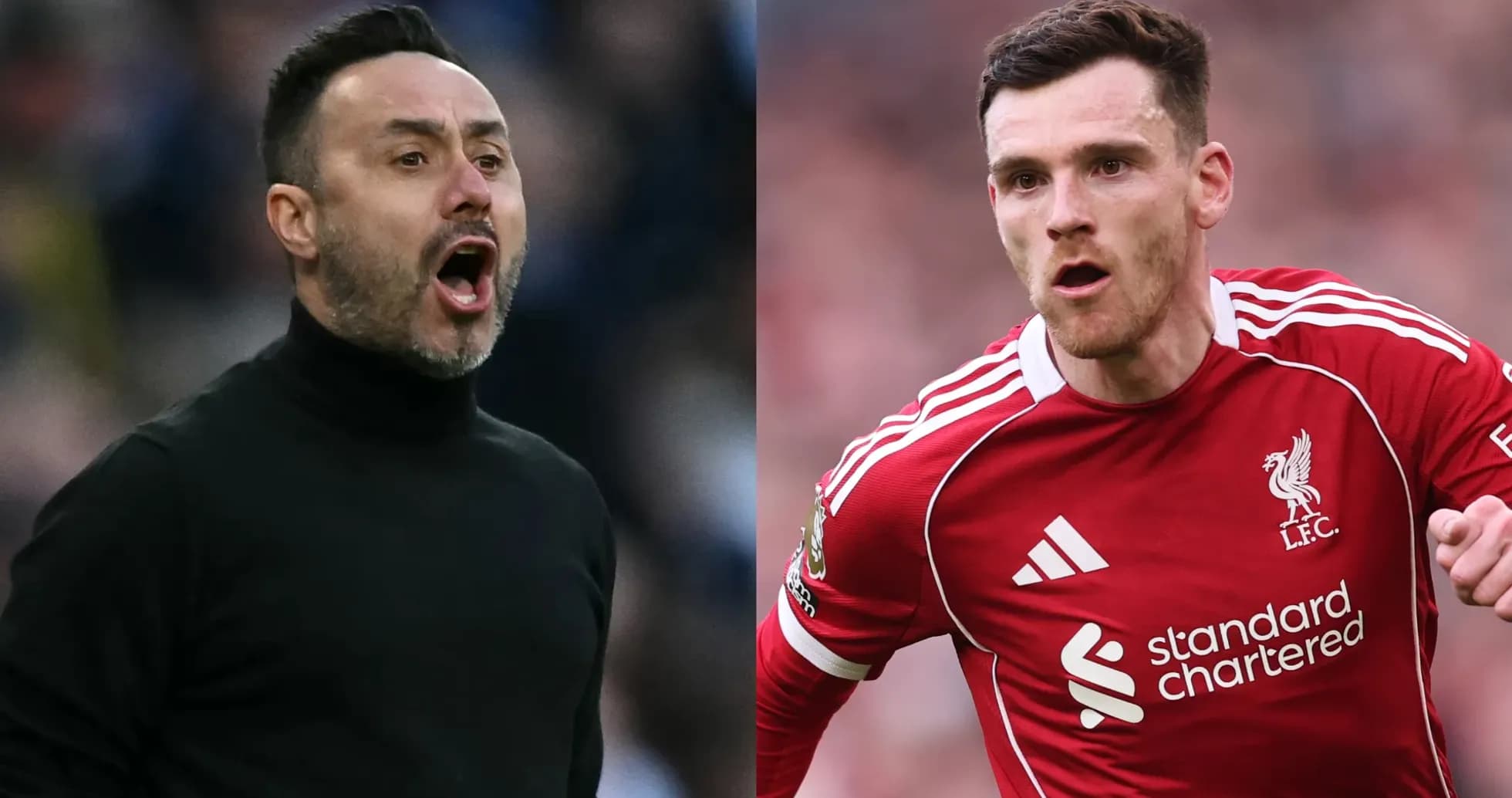
Andy Robertson: Liverpool's Defining Left-Back Joins Spurs
Andy Robertson leaves Liverpool not as a good left-back, not even as a great one, but as a defining figure of an era. For many, he stands as one of the finest in his position anywhere in the world; for Liverpool in the Premier League age, there has been no better.
Stack his achievements against the club’s history and only Alan Kennedy – scorer of two European Cup-winning goals – can really enter the argument. The medals tell you why. Two Premier League titles. A UEFA Champions League. An FA Cup. Two League Cups. A FIFA Club World Cup. Robertson did not just ride the wave of Jurgen Klopp’s revolution; he helped power it.
Built for Klopp, Built for Chaos
Klopp’s Liverpool needed full-backs who could run like wingers, tackle like centre-backs and think like midfielders. Robertson fit that brief to the extreme.
He tore up and down the left with a kind of joyful aggression, driving forward with and without the ball, matching the relentless tempo of that Liverpool side stride for stride. It was a perfect marriage of player and system.
Even rival managers could not ignore him. After a 3-1 defeat to Liverpool in December 2018, then-Manchester United manager Jose Mourinho sounded almost exhausted as he tried to describe what he had just witnessed. Liverpool, he said, played “200 miles per hour with and without the ball,” and Robertson, constantly churning out 100-metre sprints, left him “still tired from looking at” him.
That was Robertson at his peak: a running machine in a red shirt, constantly on the move, constantly on your nerves.
A Left-Back Who Ran Like a Midfielder
The numbers back up the eye test. In 2020/21, Robertson covered 389.3km in the Premier League, the second-longest distance by any full-back, just behind Luke Ayling. He dominated the sprint charts as well, leading all Premier League full-backs for three straight seasons from 2019 to 2022.
Season after season, he simply outworked people.
And it was not just running for running’s sake. His pressing became part of Liverpool folklore. The 13-second sequence against Manchester City in January 2018 – when he harassed Bernardo Silva, Kyle Walker, John Stones, Ederson and Nicolas Otamendi in one ferocious, continuous chase – remains one of the most iconic defensive moments the league has seen. It summed him up: tireless, fearless, utterly committed.
Spurs fans will warm to that very quickly. They have always appreciated players who show edge as well as elegance. Robertson brings both.
Creativity From Deep and Wide
Energy is one thing. End product is another. Robertson delivered both.
Only two full-backs in Premier League history have managed 10 or more assists in three separate seasons: Trent Alexander-Arnold and Andy Robertson. They did it together, in 2018/19, 2019/20 and 2021/22, redefining what modern full-backs could be.
For Liverpool, the pair effectively became playmakers from the flanks. Robertson’s assist totals in those three campaigns – 11, 12 and 10 – sit alongside Alexander-Arnold’s 12, 13 and 12. That is not a supporting role; that is a leading one.
Since arriving from Hull City in 2017 for a reported £8million, Robertson has topped almost every meaningful attacking metric among Premier League left-backs.
- 1st for touches in the opposition box (612)
- 1st for chances created including assists (430)
- 1st for big chances created (88)
- 1st for assists (56 – the most by any Premier League left-back)
- 1st for open-play crosses attempted (973)
- 2nd for successful open-play crosses (191)
- 1st for successful passes ending in the final third (4,000)
Only Lucas Digne has completed more open-play crosses from the left. Among defenders overall, Robertson is second only to Alexander-Arnold in several creative categories.
Is he the greatest left-back the Premier League has seen? Ashley Cole still sets the gold standard for many, and perhaps he keeps that crown. But Robertson is right on his shoulder, closer than most would have dared predict when he first walked in from Hull.
Why Spurs Moved
So why Tottenham, and why now?
Spurs have pounced on a rare opportunity: a proven, elite-level left-back available on a free when his Liverpool contract expires. They tried to get him in January, only for the deal to collapse when Liverpool were unable to recall Kostas Tsimikas from his loan at Roma.
Roberto De Zerbi, newly installed in north London, wanted the move revisited. Spurs, facing reported competition from Juventus, went back in – and this time got their man.
On paper, they are not short of left-backs. Destiny Udogie and Djed Spence are already in the building. But this is about more than depth. Spurs’ dressing room has been short on senior figures and strong role models. Robertson changes that dynamic instantly.
“He brings experience, mentality and qualities,” De Zerbi said when the deal was confirmed. “He’s a big player for us.”
This is a serial winner walking into a club that has just endured back-to-back 17th-place finishes. Robertson is used to high standards, on the pitch and in the dressing room. He knows what a demanding culture looks like and how to enforce it. For a squad that has drifted, that matters as much as any cross or tackle.
What’s Left in the Tank?
Robertson is 32, but this is no farewell tour. He will captain Scotland at the FIFA World Cup 2026 and still has plenty of miles left in those legs.
In 2025/26, he started 11 Premier League matches for Liverpool and came off the bench 13 more times. Across all competitions, he featured in 35 games. He was no bit-part figure.
His heat map from last season shows the same familiar pattern: high and wide on the left, constantly offering an outlet, still attack-minded. He may not hit the penalty area with the same regularity as in his mid-20s, but he continues to stretch the pitch and give his side width and balance.
Crucially for Spurs, his output still stacks up. On a per-90 basis in 2025/26, Robertson outperformed every Spurs defender in tackling, crossing productivity and chance creation.
Compared to Udogie and Spence last season:
- Passes played into the box per 90: Robertson 5.07, Spence 2.67, Udogie 1.75
- Tackle success rate: Robertson 75.00%, Spence 61.36%, Udogie 61.29%
- Successful open-play crosses per 90: Robertson 0.92, Spence 0.44, Udogie 0.34
- Chances created per 90: Robertson 1.54, Spence 0.81, Udogie 0.44
Those are not the numbers of a fading force. They belong to a player who can walk into a new dressing room and immediately argue his case to start.
De Zerbi’s Kind of Player
De Zerbi wants intelligent, technical footballers who can think quickly and play with courage. His teams demand bravery on the ball and aggression without it. Robertson fits that blueprint.
He will give Spurs an experienced voice on the pitch, a relentless presser out of possession and a reliable supply line into the box. He will demand more from those around him. He will not accept standards slipping.
This is not the blockbuster, marquee signing that dominates summer headlines. It is something subtler and, potentially, more important: an astute piece of business that raises the floor as well as the ceiling.
Robertson may not be at the absolute peak of his powers anymore, but his class, mentality and competitive edge remain intact. The question now is simple: in a new shirt, at a new club, can that same burning drive drag Spurs up with him?